BizisTech | No.1 Ecommerce Marketing Agency USA

#AmazonBusiness

Blog

How Can I Determine Whether My Amazon Business Needs an Agency?

Running an Amazon business can start as something you can handle on your own. As sales go up things get more complicated. Sellers often have to deal with product listings, ads, inventory, customer reviews, account health, competition and performance data at the same time. Knowing when to keep doing everything yourself and when to get help is a decision for any business. An agency can offer knowledge, clear steps and ongoing help.. You should only hire one if it fits your real needs not just because other sellers are doing it. Here are some signs that might help you decide. Your Amazon Business Is Taking Up Too Much of Your Time One of the signs that you might need help is when running your store takes up most of your day. If you spend a lot of time changing listings checking ads watching inventory looking at reports and fixing account problems you may not have time left for developing products and thinking about the future of your business. Professional help can take over daily tasks so you can focus on the big decisions that help your business grow over time. Your Sales Are Not Growing Anymore A business doesn’t need an agency just because sales are low.. If sales stay the same for a long time it might mean your current plan isn’t working. Check your traffic how many people buy from you how your ads are doing, where you rank, your prices, how your products look and what customers are saying. If you’ve already tried fixing these areas but still can’t see what’s holding you back experts might find things you haven’t thought of. Your Advertising Is Getting Harder to Manage Amazon ads need checking and smart changes. Campaigns, targeting, budgets, keywords, bids and results all need attention. If your ad costs keep going up but your sales and profits stay the same it’s time to get help. A team with experience can look at how your adsre doing and build a plan that matches your goals instead of just spending more money. You Are Having Trouble Managing Inventory Inventory issues can hurt your Amazon business fast. Running out of stock can slow sales while having much can use up money you need elsewhere. If its hard to predict what people will buy, plan when to restock and keep track of what you have professional help might make things easier. This is especially true if you are selling in than one place. For example managing your Walmart account along with your Amazon business adds work that needs careful handling. Your Product Listings Need Work Product listings aren’t something you can set and forget. What customers look for what competitors. What’s trending can change over time. If your listings get traffic but don’t sell well you might need to look at titles, descriptions, images, keywords, pricing and how your products are shown. An agency that knows how marketplaces work can spot problems and set up a plan to keep your listings strong. Your Account Health Needs Help Your account health should always be a top concern. Issues with policies listing limits, problems with property, performance alerts and other account problems can be stressful when you handle them alone. If you often face account issues or don’t know how to deal with important messages expert help can keep you from making expensive mistakes. You Are Expanding to Places Running one marketplace is already a lot. Adding places makes things even harder. When Amazon sellers start looking at places they often need help with inventory, listings, ads, reports and strategy. Experience with Walmart account management can also be useful if you want to build an online business without one place taking over your time. You Have a Lot of Data. Don’t Know What to Do With It Amazon gives you a lot of information about sales, traffic, ads, customers and product performance. Just having data doesn’t mean you know how to use it to make choices. If you download reports every day but can’t see what to do an agency could help you turn that data into real plans. The goal shouldn’t just be getting reports. The goal should be understanding what the numbers mean and using that to make your business better. Your Business Is Growing Faster Than Your Team Can Handle Growth’s a good problem but if it’s too fast it can expose weak spots in how you work. More orders mean planning for stock. More products mean listings to keep up with. More ads mean campaigns to watch. More customers mean service to handle. At this point giving some tasks to others can help you keep things running well while still growing. You Want to Focus on Big Ideas Business owners should spend their time on choices instead of getting stuck in daily tasks. If you want to focus on products, branding, partnerships, customer relationships or growing your business letting someone else handle the daily work might make sense. This is also true when you start offering services like Walmart account management. Help, from professionals can let you build sales channels while still keeping control of your overall business. How to Know if an Agency Is Worth It Before you hire an agency figure out how much your current way of doing things is costing you. Think about the time you spend managing your account wasted ad money, lost sales, inventory problems listing issues and mistakes from not knowing. Then compare those costs to what you could get from help. A good agency should do more than just handle your account. It should talk clearly set goals, plan strategies check performance regularly and explain what is happening and why. Start With Your Biggest Problem You don’t need to outsource everything. If ads are your issue start there. If listings are your problem work on that first. If inventory and operations are getting hard get help with those first. As your needs change you can see if managing everything
Blog

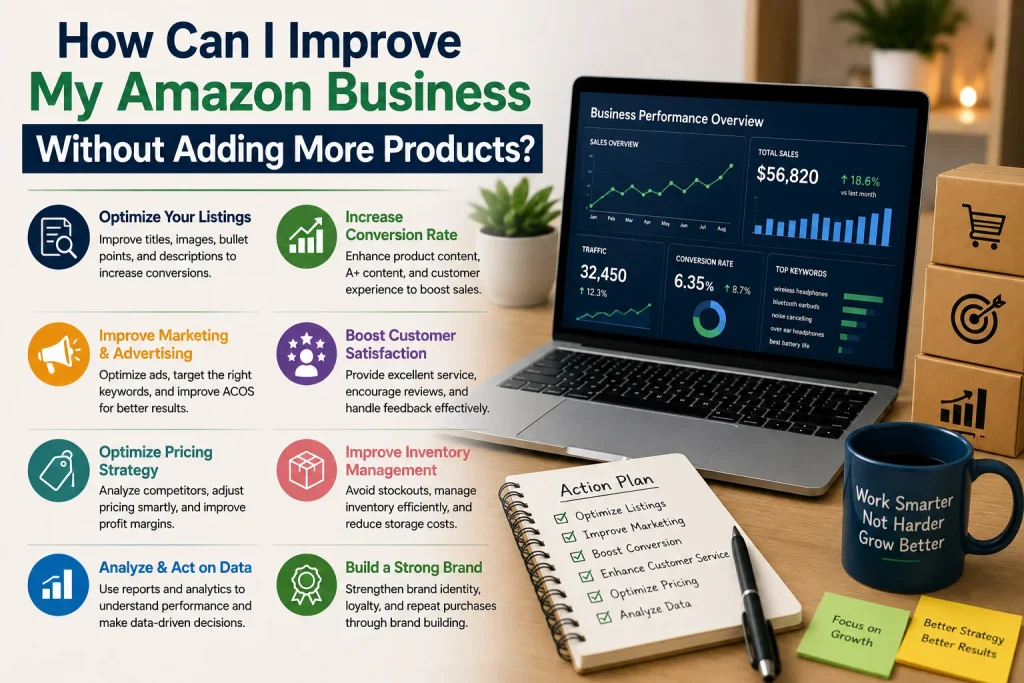
How Can I Improve My Amazon Business Without Adding More Products?

Growing an Amazon business does not always mean adding items to your catalog. Often the best chances for growth lie in the products you already sell. By improving listings raising conversion rates managing inventory tightening advertising and learning what customers want you can earn money without the expense and hassle of new product launches. A focused optimization plan lets sellers draw value from their current catalog and build a steadier stronger business. Optimize Your Existing Product Listings Your current listings can often sell more if you optimize them. Look over titles, descriptions, bullet points, images and search terms to make sure they clearly show what the product offers. High‑quality images should display the product from angles and help customers see its features. Your text should answer questions and explain why this product is worth picking. Regular changes to listings can raise visibility and conversion all without adding products. Improve Your Conversion Rate Getting visitors is helpful but turning those visitors into buyers is what really drives growth. Study how your current products perform and find listings that attract traffic but make orders. Search for issues in pricing, presentation, images, reviews or information. Small fixes in these areas can make a difference when done consistently. A higher conversion rate also means your current advertising budget can bring results. Manage Inventory More Efficiently Inventory directly affects profit and customer happiness. Running out of an item can break sales momentum while holding too much slow‑moving stock can raise storage costs and lock up money. An Amazon FBA inventory management service can help sellers watch stock levels predict demand, plan restocks and cut the risk of stockouts or overstock. Of just ordering more inventory focus on knowing which products need restocking when they need it and how much is truly needed. Make Your Advertising More Efficient You do not always have to raise advertising spend to boost sales. First look at how your current campaignsre doing. Find campaigns that bring sales and cut wasteful spend where you can. Check search terms, bids, targeting and results often. Moving money to campaigns can lift results without raising your total spend. The goal should be advertising efficiency, not just more spending. Strengthen Your Customer Review Strategy Reviews shape customer confidence. Can strongly affect buying choices. Notice repeated feedback. Use it to spot weaknesses in your products or listings. If customers keep citing packaging, instructions, size, quality or other problems think about fixing the root cause. A better customer experience can lift ratings. Boost long‑term performance of your current product. Use Your Sales Data Effectively Your Amazon business gathers useful data on sales, traffic, ads, inventory and customer habits. Than guessing use this data to spot where improvement can happen. Seek your products, falling products, seasonal trends, ad patterns and inventory health. Data can show where your existing catalog holds hidden potential. Better reporting and analysis can turn business data into real growth chances. Improve Your Pricing Strategy Pricing should be checked often not set. Compare your price to rivals while looking at your costs, product quality, customer expectations and profit margins. A good price can boost conversion. Slashing prices without knowing profit can damage your business. The aim is to balance attracting buyers with keeping margins. Build Stronger Brand Presentation A brand feel can make your current products more valuable. Upgrade your storefront, photography, brand messages and overall look so customers see an identity across your catalog. Strong branding can also set your products apart from ones and make customers buy from your brand again. Reduce Unnecessary Business Costs Revenue growth is part of improving an Amazon business. Cutting costs can equally boost profit. Check storage fees, ad waste, operating costs, returns, damaged stock and other regular expenses. An Amazon FBA inventory management service can help plan stock and cut costs tied to excess inventory and poor restocking. When you cut costs more of your current revenue can become profit. Focus on Your Performing Products Not every item gets the same attention. Pick the products that already have demand, good margins, positive reviews and growth chance. Put time and money into improving these products instead of spreading effort all over the catalog. Strengthening winners can often beat hunting, for items. Keep Improving of Constantly Expanding Adding items can open new chances but it also brings extra inventory, marketing costs, work and rivals. Before expanding ensure your current items perform at their best. An Amazon FBA inventory management service can back this plan by keeping stock while you focus on better sales, profit and customer happiness. Final Thoughts Improving an Amazon business does not need a flow of new items. Sellers can grow a lot by fine‑tuning listings raising conversion rates handling ads better managing inventory boosting customer experience and using data to make smarter choices.

Blog

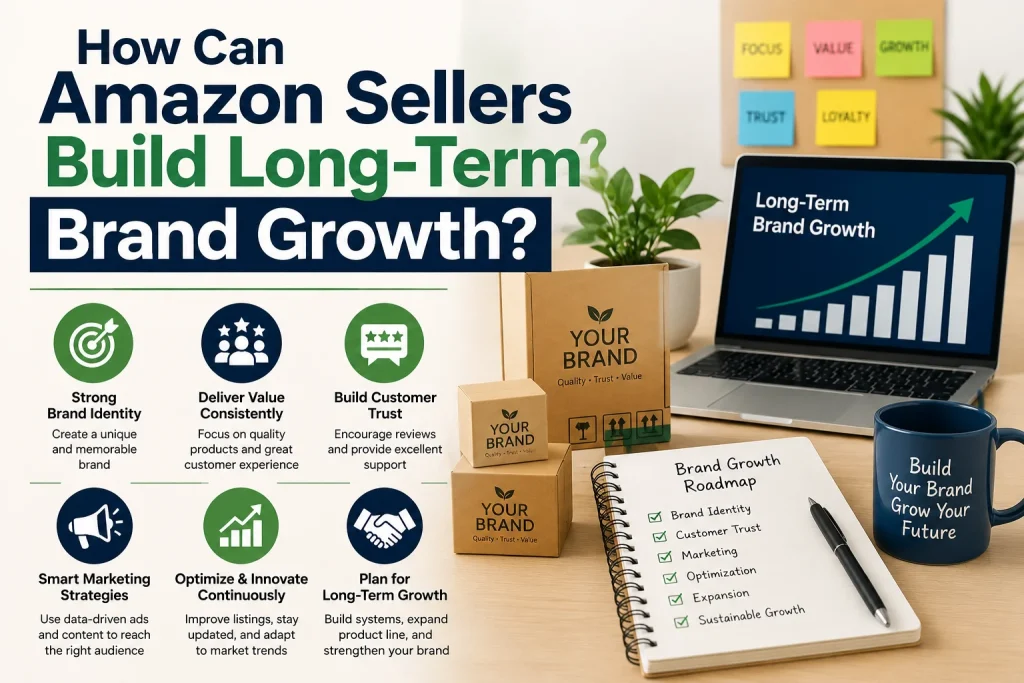
How Can Amazon Sellers Build Long-Term Brand Growth?

Building a successful Amazon business is not only about generating sales today. Long term growth comes from creating a recognizable brand that customers trust, improving the customer experience, and making smart decisions based on market data. Sellers who focus only on short term sales may struggle when competition increases, advertising costs rise, or customer expectations change. A strong brand strategy helps sellers create a business that can grow steadily over time while developing customer loyalty and a stronger position in the marketplace. Start With a Clear Brand Identity Every successful brand needs a clear identity. Sellers should understand what their brand represents, who their ideal customers are, and why customers should choose their products instead of competing options. A consistent brand identity should be reflected across product packaging, listings, images, product descriptions, and customer communication. When customers repeatedly see a familiar message and visual style, the brand becomes easier to recognize and remember. The goal should be to build a brand that customers associate with quality, reliability, and a specific solution to their needs. Protect Your Brand From the Beginning Brand protection becomes increasingly important as a business grows. Sellers should take ownership of their intellectual property and establish proper brand protection before investing heavily in marketing. An Amazon Brand Registry service can help eligible brand owners establish greater control over their brand presence and access useful brand protection features. Proper registration can also support a more organized approach to managing brand content and protecting product listings. For growing sellers, brand protection should not be treated as a one time task. It should remain part of the overall brand management strategy as new products and marketplaces are introduced. Focus on Product Quality Long term brand growth starts with the product itself. Strong advertising may bring customers to a listing, but product quality determines whether those customers become repeat buyers. Sellers should regularly review customer feedback, returns, complaints, and product reviews to identify areas for improvement. Small product improvements can make a significant difference when they are based on genuine customer needs. Instead of constantly searching for new products, successful brands can also improve existing products and create complementary products that serve the same customer base. Create Listings That Build Trust A product listing should do more than attract clicks. It should answer customer questions, explain the product clearly, and communicate why the product is worth buying. High quality images, informative descriptions, clear product benefits, and relevant search terms can help customers make confident purchasing decisions. Listings should also be reviewed regularly because customer search behavior and marketplace competition can change. Continuous optimization allows a brand to remain relevant instead of depending on an outdated listing strategy. Build Customer Loyalty Long term growth becomes easier when customers return to the same brand. Sellers should therefore think beyond the first purchase and focus on creating an experience that encourages customers to come back. Reliable product quality, accurate product information, responsive customer support, and professional brand presentation can all contribute to customer confidence. A loyal customer is valuable because repeat purchases can create more predictable revenue while reducing the need to depend entirely on acquiring new customers. Use Data to Make Better Decisions Growth should be guided by data rather than assumptions. Sellers should regularly examine sales performance, advertising results, customer behavior, inventory levels, conversion rates, and product performance. This information can reveal which products are growing, which products need improvement, and where marketing budgets are being wasted. Market research should also be continuous. Understanding changing customer preferences and competitor activity can help sellers identify new opportunities before the marketplace becomes overcrowded. Develop a Sustainable Advertising Strategy Advertising is important for increasing product visibility, but long term brands should avoid depending entirely on paid traffic. A sustainable strategy combines advertising with strong organic visibility, optimized listings, customer loyalty, and a recognizable brand identity. Advertising campaigns should be reviewed regularly to identify profitable opportunities and reduce unnecessary spending. The objective should not simply be to spend more but to generate better results from every advertising investment. Expand Your Product Portfolio Carefully Once a brand has established a strong foundation, expanding the product portfolio can create additional growth opportunities. However, expansion should be based on customer demand and brand relevance rather than adding random products. New products should complement the existing brand and provide useful solutions for the same or related audience. A carefully planned product portfolio can increase customer lifetime value and create multiple revenue opportunities within one brand. Maintain Strong Inventory Management Inventory problems can quickly damage a growing brand. Running out of stock can reduce sales momentum, while excessive inventory can increase storage expenses and tie up valuable capital. Sellers should use historical sales data, seasonal trends, product performance, and expected demand to plan inventory more effectively. Maintaining the right inventory balance helps brands remain available to customers while protecting profitability. Monitor Brand Reputation A growing brand should continuously monitor how customers perceive it. Reviews, feedback, ratings, customer questions, and complaints can provide valuable information about the overall customer experience. Instead of viewing negative feedback only as a problem, sellers can use it as an opportunity to identify weaknesses and improve their products or services. Consistent attention to reputation can help strengthen customer confidence and support sustainable growth. Keep Improving With Market Changes The Amazon marketplace continues to evolve, so a strategy that works today may not deliver the same results in the future. Customer behavior, competition, search trends, advertising costs, and marketplace expectations can all change. Successful sellers regularly review their strategies and make improvements instead of waiting for performance to decline. An Amazon Brand Registry service can be one part of this broader strategy by supporting brand protection and helping sellers make better use of available brand management capabilities. Think Beyond Short Term Sales The most valuable Amazon brands are built with a long term mindset. Sellers should focus on creating products customers want, delivering reliable experiences, protecting their brand identity, and continuously improving their marketplace presence. An Amazon

Blog

How Can I Find a Profitable Amazon Niche With Low Competition?

Finding an Amazon niche with low competition is one of the most important decisions a new seller can make. Choosing the niche can create opportunities for steady sales, healthier profit margins and long term business growth. However the goal is not simply to find a product that has competitors. A successful niche should combine customer demand, manageable competition, reasonable costs and enough room for your product to stand out. Start With Customer Demand A profitable niche begins with demand. Even a product with no competition can fail if customers are not actively searching for it. Research products that solve problems improve existing experiences or serve specific customer needs. Look for products with interest rather than relying entirely on short lived trends. Pay attention to search activity, sales performance, customer discussions and purchasing patterns. A niche with demand is usually a stronger opportunity than one that becomes popular for only a short period. Look for Specific Customer Problems One of the ways to discover less competitive opportunities is to focus on problems rather than broad product categories. This approach can help you discover underserved segments where customers have limited choices and existing products may not fully satisfy their expectations. Study Your Competitors Competition analysis is essential before investing money in inventory. Do not judge competition by the number of sellers. Examine competing products. Look closely at their customer reviews, pricing, product quality, images, descriptions, features and overall presentation. Negative reviews can be especially valuable because they reveal problems customers are experiencing with existing products. If several competing products have weaknesses you may have an opportunity to create something better. Find Gaps in Existing Products A profitable niche often exists where customer expectations are higher than what current products provide. Read both negative reviews to identify repeated complaints. Customers may mention materials, confusing instructions, inconvenient designs, weak packaging, limited sizes or missing features. These complaints can become ideas for product improvements. The strongest niche opportunities are often not new inventions. They are existing products that can be improved in ways. Check Profit Potential Before Choosing a Niche demand does not automatically mean high profitability. Before selecting a product estimate the cost of selling it. Consider product sourcing, packaging, shipping, marketplace fees, advertising, returns, storage and other operating expenses. Then compare these costs with the expected selling price. A product that generates sales but leaves very little profit may not be worth pursuing. Look for opportunities where healthy margins can remain after all major expenses are considered. Evaluate Keyword Opportunities Keywords provide clues about customer interest and competition. Research the phrases shoppers use when searching for products in your niche. Look for search terms that show clear buying intent. Long and descriptive phrases can sometimes reveal customer segments that larger sellers have overlooked. Once you identify keywords they can also guide your product positioning and content strategy. An effective Amazon Listing Creation service can help turn this research into titles, descriptions and product content designed around relevant customer searches. Consider Products With Room for Differentiation A niche becomes more attractive when you can offer something different. Your advantage could come from materials, better design, useful features, stronger packaging, a more convenient size, a better customer experience or a more focused product offering. Avoid entering a market where every competitor offers identical products and competes primarily on price. Price wars can quickly reduce profit margins. Make it difficult for a new seller to build a sustainable business. Watch Emerging Trends Emerging trends can reveal opportunities before a market becomes heavily crowded. Monitor changing customer preferences, seasonal interests, new lifestyles and developing product categories. However do not assume every rising trend will become a business. Research whether demand is growing consistently and whether customers are likely to continue purchasing the product after the initial excitement fades. A balanced approach combines trend awareness with evidence of continuing demand. Validate the Niche Before Investing Before placing an inventory order validate your idea. Compare potential products rather than becoming attached to the first promising option. Review demand, competition, pricing, estimated costs, customer feedback, keyword opportunities and potential selling margins. A structured evaluation can help eliminate products that look attractive at first but carry risks. Professional research can also make this stage more efficient. Data driven market analysis helps sellers identify opportunities while reducing the chances of entering an overcrowded market. Build a Listing That Matches Customer Intent Finding a strong niche is the beginning. Your product still needs to communicate its value to shoppers. An effective Amazon Listing Creation service can help organize product information into persuasive titles, descriptions, bullet points, images and other listing elements. The goal is to make it easy for customers to understand what the product does and why it deserves their attention. Strong listing content should reflect the language customers actually use while communicating the product’s benefits. Focus on Long Term Potential A niche should offer more than a quick sales opportunity. Think about whether the product can support variations, complementary products, improved versions or a broader brand strategy. A niche with expansion potential can provide opportunities as your business grows. This is particularly valuable for sellers who want to build a brand rather than depend on one product. Avoid Chasing the Lowest Competition competition alone should never be the final selection criterion. Low competition may indicate that there is very little demand. The ideal opportunity sits somewhere between demand and competition. You want enough customers to support sales while avoiding markets dominated by powerful brands and highly established sellers. The right balance can create an environment where a well researched and presented product has a realistic chance to gain visibility. Keep Improving After Launch Niche research should not stop once your product goes live. Continue monitoring competitors, customer feedback, search behavior, pricing and sales performance. An Amazon Listing Creation service can also support improvements by helping refine product content as new customer insights and keyword opportunities emerge. Successful sellers treat their niche as an evolving market than a one time decision.

Blog

What Should I Do First When Starting an Amazon Business?

Starting an Amazon business can feel very exciting. However the first steps you take can change how success you have later on. Many new sellers rush to pick a product and make a listing. They often do this without knowing the market the customers, the costs or the competition. I think it is much better to build a base before you spend a lot of money. Your goal should not just be to make one sale. You should try to build an Amazon business that can grow steadily and make money for a time. Start With Market Research The first step is to learn about the market you want to join. You should look at product demand what customers like, who your competitors are, prices, reviews and what is trending now. Try to find products that people want all year round of things that are only popular for a short time. Look closely at what other people’re selling and find ways your product can be better. I always suggest reading customer reviews. They show you problems that other products have not fixed yet. These small details can help you make a product and a better plan to sell it. Choose a Product With Business Potential Once you know the market find a product that can actually make you money. Before you decide think about the cost of the product, shipping, storage, fees from the marketplace, ads and the price you will sell it for. A product might sell a lot. You could still lose money if the costs are too high. You must calculate your profit margins before you buy an amount of stock. You should also think about how big or heavy the product’s if it breaks easily and if there is room to grow. Picking a product that lets you sell versions or similar items makes long term growth much easier. Understand Your Target Customer A good Amazon business starts by knowing the people who will buy your items. You need to know what they need what problems they. Why they pick one item over another. Think about what makes a person trust a seller. Good photos, info useful features, fair prices and great customer service all help people decide to buy. When you truly know your audience it is much easier to write messages that actually matter to them. Build Your Brand From the Beginning sellers should look past just selling one item. Having a brand helps people trust you and helps your business grow. This is why Amazon brand management is so important. It means creating a look that people recognize, protecting your name making your store look good and giving customers an experience. Your brand name, your photos, your packaging and how you talk to customers should all feel the same. When everything matches your business looks more professional. Create a Strong Product Listing Your product listing is one of the vital parts of your Amazon business. Before you go live make sure your title, description, features and photos clearly show why someone should buy from you. Use words that people search for. Keep the writing natural. Do not stuff your listing with many keywords or it will be hard to read. Good photos are a must. Since customers cannot touch your product your photos must show how it looks how big it is and how it works. Plan Your Inventory Carefully You should start planning your inventory before you even launch. If you buy much your money is stuck and storage costs go up. If you buy little you will run out of stock and lose sales. Try to guess how much you will sell based on your research and make a plan to restock. As you grow watch how fast you sell and change your orders based on what’s actually happening. Good planning helps you keep track of your cash and stops your sales from stopping Prepare a Launch Strategy Launching a product is more than turning a listing on. You need a plan to help people actually find your product. Ads can help show your product to the right shoppers. Good listing content will then help turn those shoppers into buyers. Watch how your ads do and change them if they are not working well. Think of your launch as a time to learn. Use your data to see what works and what needs to be fixed. Track Your Numbers From Day One Do not just look at how money you make in sales. You must track your costs, marketplace fees, ad spending, shipping costs and your actual profit. Checking your numbers often helps you catch problems before they cost you much money. It also shows you which products or ads are worth money. Let the data guide your choices of just guessing. Develop Your Brand Once your business is doing well you must protect your brand. Brand protection helps you avoid issues with products or sellers who are not allowed to sell your items. Good Amazon brand management also means watching how people see your brand and always finding ways to make the customer experience better. A strong brand should. Get better as you learn more about your customers. Keep Improving of Expecting Instant Success Success on Amazon rarely happens because of one lucky choice. It usually comes from research, testing and learning. Check your listings often read what customers say watch your ads and keep an eye on your competitors. Making changes all the time can lead to big results later. The best sellers treat their Amazon business like a ongoing job rather, than a quick project. Final Thoughts The first thing you should do when starting an Amazon business is not just to upload a product and wait. You should start by researching picking a product that makes money knowing your customers checking your costs and making a plan to launch.

Blog

How Do I Know if My Amazon Business Is Actually Profitable?

Running an Amazon business can look good when sales are going up orders are coming in and the money seems to be flowing in.. High sales do not always mean high profits. Many sellers find out that advertising costs, Amazon fees, product costs, shipping, storage, returns and other daily expenses can take a chunk out of their real earnings. Knowing how much money your business is actually making is important if you want to make choices and build a business that lasts. Start With Your Money The first thing to do is figure out how much money your business is really making. Don’t just look at sales. Check your revenue after refunds, returns, discounts and other things that take away from your sales. For example if your store has a lot of sales but has a lot of returns or discounts your real money might be much less than the number on your sales report. Tracking your money gives you a clear starting point to see if your business is making a profit. Calculate All the Costs for Each Product Just knowing the cost of your product isn’t enough. You need to add up all the costs involved in getting that product ready to sell and sending it to the customer. Think about costs like making the product, packaging, shipping, customs, storing and preparing the product. Try to link these costs to each product as much as possible. Once you know the cost of each item you can see if your selling price gives you enough space for a good profit. Include Amazon Fees and Shipping Costs Amazon fees and shipping costs can really affect how money you make. Depending on how you run your business you might have selling fees, shipping charges, storage costs, referral fees and other charges from the platform. If you ignore these costs a product that isn’t profitable might look like its doing well. Check your fees often. Calculate how much profit is left after all the costs are taken out. Check How Your Ads Are Performing Ads can bring in sales. They can also take away from your profit. That’s why sellers should not just look at how much money ads bring in. Check how much you are spending on ads and how money those ads are making. Also look at how much profit’s left after those costs. A good ad plan should help bring in sales that actually make money, not more orders. Regular checks on your ads can help find where money is being wasted and make your ads better. Understand How Much You Really Make Your profit margin shows how money you have left after you pay all your bills. You can think of it as taking all your business costs from your net sales. The amount left is your profit. For instance if your net sales are 10,000 dollars and your total costs are 7,500 dollars your profit is 2,500 dollars. That means your profit margin is 25 percent. Keeping track of this number every month makes it easier to see if your business is actually doing better. Look at Each Product Individually Looking at your whole business can hide problems. One product might be making a lot of money while another is losing money even though its selling. Check each product on its own. Look at its selling price, product cost, shipping costs, ad costs, returns and other costs. This check helps you find your products and decide what to do with the ones that are not doing well. Watch Your Inventory Costs Inventory can quietly hurt your profits. Having much inventory increases storage costs and uses up money that could be used elsewhere. Having little can mean missing out on sales. Managing inventory is about balancing what customers want with what you have in stock. Predicting what customers will want and checking how your inventory is doing can help cut down on storage costs while making sure the products you want to sell are available. Track Your Cash Flow Separately From Profit Profit and cash flow are not the thing. Your business might look like its making money on paper. If the money is tied up in items you haven’t sold or in payments you have to make you might not have much cash to use. Keep track of when money comes in and when it goes out. Having cash flow gives you more control over buying more products running ads and taking advantage of new chances to grow. Know When You Need Help As your Amazon business gets bigger it can get harder to keep track of everything. Sellers need to watch listings, ads, inventory, customer service, reports and how their account is doing all at the time. Working with an Amazon account management agency can help you keep track of all these areas and make choices based on data. A good team can also help find where you are spending much where you can improve your listings and where your business can get better. An Amazon account management agency should focus on results, not just more sales. Profit how well your ads work, how your business runs and long term growth all matter. Make a Profit Review Every Month Make it a habit to check your profits every month. At once a month look at your sales, product costs, Amazon fees, ad costs, shipping expenses, returns, storage costs and other things you pay for. Compare what you see each month to see what is changing. If sales are going up but your profits are not find out why before spending on ads or buying more inventory. If both sales and profits are going up that’s a sign your business is moving in the direction. Focus on Growing the Right Way A successful Amazon business isn’t the one with the sales. It’s the one that keeps making money after all the costs are taken into account. An Amazon account management agency can help you set up

Blog

What Is the Best Way to Grow an Amazon Business in 2026?

Growing an Amazon business in 2026 is not easy. You need to do more than just add products and spend more money on advertising. The competition is tough. Customers expect a lot. You need a plan that connects the quality of your products how well your listings perform, advertising, inventory, customer experience and building your brand over time. A successful Amazon business should be run like an ecommerce operation, not just a bunch of separate tasks. Looking at data can help you find opportunities understand what customers want keep an eye on your competitors and make better decisions to grow your business in a way. Start With Good Market and Product Research The key to growing on Amazon is choosing the products. Before you spend a lot of money on inventory or advertising you should study what customers want how competition there is, prices, reviews, seasonal trends and how much money you can make. You should not stop researching products after you launch one. Markets are always changing successful sellers regularly check how their products are doing and look for new opportunities. Understanding what customers want can also help you improve your products and make versions. Make Listings That Turn Visitors Into Buyers A good product listing can make a difference in sales. Your product title, description, images, key features and other content should clearly show the value of your product. Of just focusing on keywords you should create content that answers customers questions and removes their doubts. Your product images should be quality and show the product from different angles as well as how it can be used. Regularly improving your listings can also help you respond to changes in what customers want and the competition on the marketplace. Use Advertising With a Clear Plan to Make Money Advertising can help you get seen but spending more on ads without checking if you are making money can quickly reduce your profits. In 2026 you should focus on how your ad campaignsre structured the right search terms, how well your ads convert, the cost of advertising and the return on your investment. Start by finding the products that already sell well. Then use advertising to get visibility while your organic sales grow alongside your paid traffic. Your goal should not be just to get clicks. Your goal is to make sales and get your products seen over time. Keep Your Inventory at Healthy Levels Managing your inventory is another part of growing on Amazon. Running out of stock can stop your sales while having much inventory can tie up your money and increase your storage costs. You should use your sales, seasonal demand, advertising plans how long it takes your suppliers to deliver and your current inventory levels to make better forecasts. A good inventory process lets you keep your products available without overstocking. Strengthen Your Brand Growing on Amazon over time gets easier when customers know and trust your brand. You should create a brand experience across your listings and customer interactions. Content that focuses on your brand can show the quality of your products your company values, the benefits of your products and why customers should choose your brand over others. A strong brand can also help you compete less on price and encourage customers to buy from you Monitor Customer Feedback and Reviews Customer feedback gives you information about what is working and what is not. You should look at your reviews. Find common complaints concerns about product quality, delivery problems and customer questions. Of just seeing negative feedback as a problem you can use it to improve. Common complaints might show you ways to improve your packaging, product design, instructions or customer communication. Making products and giving customers a better experience can help you do better over time. Use Data to Make Better Decisions Successful Amazon businesses are increasingly driven by data. You should regularly look at your sales, conversion rates, traffic, advertising results, inventory levels, customer feedback and profits. The point of looking at numbers is not just to collect them. It is to understand what they mean and use them to make decisions. For example if you have a lot of traffic but not many sales it might mean your listing needs improvement. If you have a lot of sales but not much traffic it might mean you need to improve your visibility. Consider Getting Professional Ecommerce Help Managing every part of your Amazon business can get hard as your catalog grows. If you sell on ecommerce channels you might also need help with running your stores, managing products, marketing and monitoring performance. A professional Shopify store management agency can give you ecommerce expertise if you sell on both Amazon and your own online store. Having a presence outside Amazon can give you another way to engage with customers and grow your sales. A Shopify store management agency can also help you organize your ecommerce operations while you continue to grow your Amazon business. Focus on Growing Sustainably Rather Than Looking for Quick Wins The best way to grow on Amazon in 2026 is to focus on sustainable progress. You should avoid relying on temporary discounts, aggressive advertising or short-term sales tactics. Instead focus on improving your products making your listings better building customer trust keeping your inventory healthy controlling your advertising costs and developing a brand. If you sell on Amazon and your own ecommerce channels you can also benefit from managing them. A Shopify store management agency can help you keep your ecommerce presence strong while Amazon remains an important marketplace for reaching new customers. Keep Improving Your Strategy Amazon is always changing, which means a strategy that works today might need to be adjusted tomorrow. You should regularly look at marketplace trends what your competitors are doing, customer behavior, product performance and profits. The strongest businesses are willing to try approaches measure the results and improve their processes. A Shopify store management agency can also be helpful for brands that

Blog

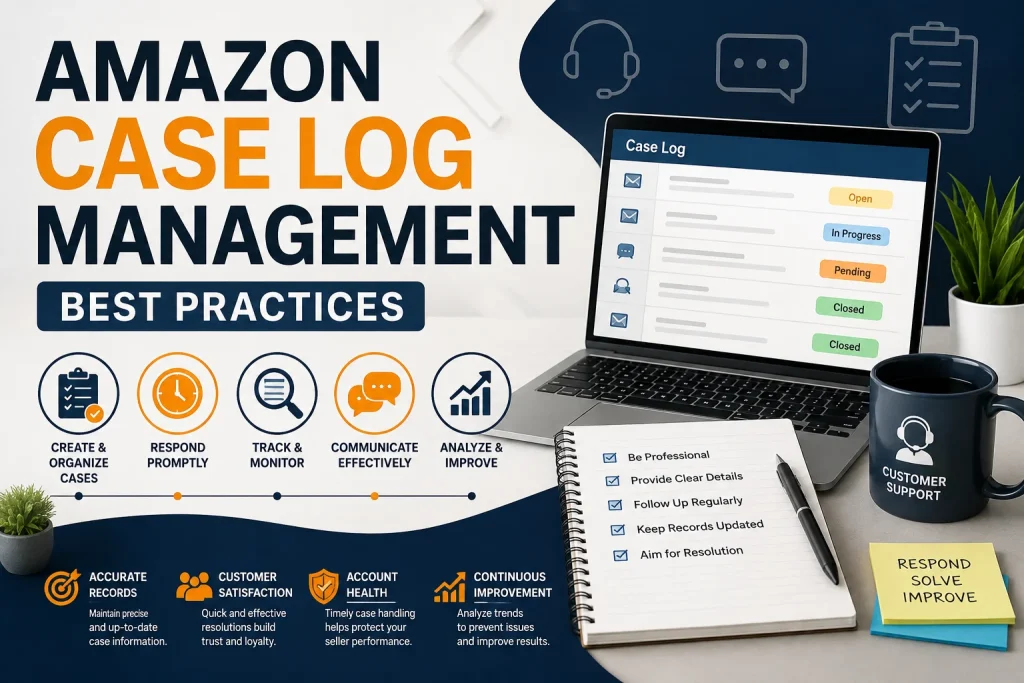
Amazon Case Log Management Best Practices

Managing an Amazon seller account involves more than just keeping an eye on sales and whats in stock. Sellers often talk to Amazon support about how their account’s doing problems with product listings rules they need to follow money they should get back protecting their brand and other everyday issues. When these talks aren’t kept in order important details can get lost. Amazon case log management is a way to keep track of every support case. It helps sellers remember what happened what was done and what still needs to be done. A good case log helps sellers stay on top of their account and know what to do next. What Is Amazon Case Log Management An Amazon case log is a place where all the support cases and talks with Amazon are kept in one spot. It can have the case number, what the problem was, when the talk happened what Amazon said, any papers sent what was done and where the case stands now. Of looking through old emails or trying to remember what was said before sellers can use the case log to quickly see what happened with an issue. This becomes really helpful when the same problem comes up more than once. Good case management fits well into a plan for managing an Amazon account. This plan includes watching performance following rules, managing product listings keeping track of inventory and dealing with customer issues. Keep Every Case Properly Documented One of the important things is to keep full details for every case. Write down when the case started, why you reached out what Amazon said and what needs to be done Keep copies of papers and other info that go with the case. That can include invoices, pictures order details rules you need to follow or any other proof that helps with the problem. Having records makes it easier to follow up and stops sellers from having to explain the same thing over and over. Categorize Cases by Issue Putting cases into groups makes managing them much easier. Common groups might be account health, product listings, money issues, inventory, shipping, brand rights, product rules, money back requests and protecting the brand. Sorting cases this way helps sellers see what problems happen often and what parts of their business need work. For brands that deal with brand rights or who owns the product a brand registry amazon service can also help keep things organized and protect brand rights better. Track Case Status and Follow Up Dates Starting a support case is the first step. Sellers should check if each case is still open waiting for a reply, solved or needs work. Every case thats not done should have a date to check back. This simple step stops cases from being forgotten and helps sellers respond quickly when Amazon asks for more. A good case log makes it easy to see which issues need attention away and which ones are already fixed. Maintain Consistent Communication Talking clearly and in a way makes working with Amazon easier. When replying to Amazon sellers should explain the problem directly. Give the right info without extra stuff. Don’t send explanations in different replies. Before writing a response look at what was said so the new reply matches what was already said. This is especially important for account or rule issues where different teams might look at the same problem. Record Successful Resolutions When a case is done don’t just mark it as closed. Write down how it was fixed and what steps kept it from happening Over time these records can become a team guide. Sellers can look back at solutions before starting a new case and maybe fix similar problems faster. Good resolutions can also help teams see patterns and improve how they handle their Amazon account every day. Use Case History to Identify Recurring Problems Case logs are not just for support talks. They can also give business clues. If the same listing problem keeps happening the listing might need fixing. If inventory problems come up often the way inventory is handled might need to change. If rules issues happen again and again the way papers or products are handled might need to be checked. A good case log turns each support talk into business info. Connect Case Management With Brand Protection Brand owners often deal with problems like sellers, brand rights listing changes and other brand protection issues. Keeping records of these problems makes future talks easier. A brand registry amazon service can help with this by making it easier to manage registration needs and use brand protection tools better. The goal is not just to fix each case but to build a system that helps protect the brand and keep the account running Review Case Logs Case management should be something that happens all the time not just when a big problem comes up. Looking at the case logs once a week. Once a month helps find cases that are not done repeated problems, slow replies and weak parts of the business. Checking cases also helps sellers understand how their account is doing and what their support experience has been. Regular checks can turn case management into something that helps the business of just fixing problems after they happen. Protect Sensitive Information Case records might have business info order details, account info, invoices and other private stuff. Sellers should keep this safe. Only let the right people see it. Using the names and filing system makes it easier for teams to find the right papers when a case needs more work. Create a Simple Case Management Workflow A good system starts when a problem is found. The issue should be written down a support case should be made if needed any proof should be gathered and every reply should be kept. The case should be watched until its done. After its fixed the team should write down what happened and decide if anything in their process needs

Blog

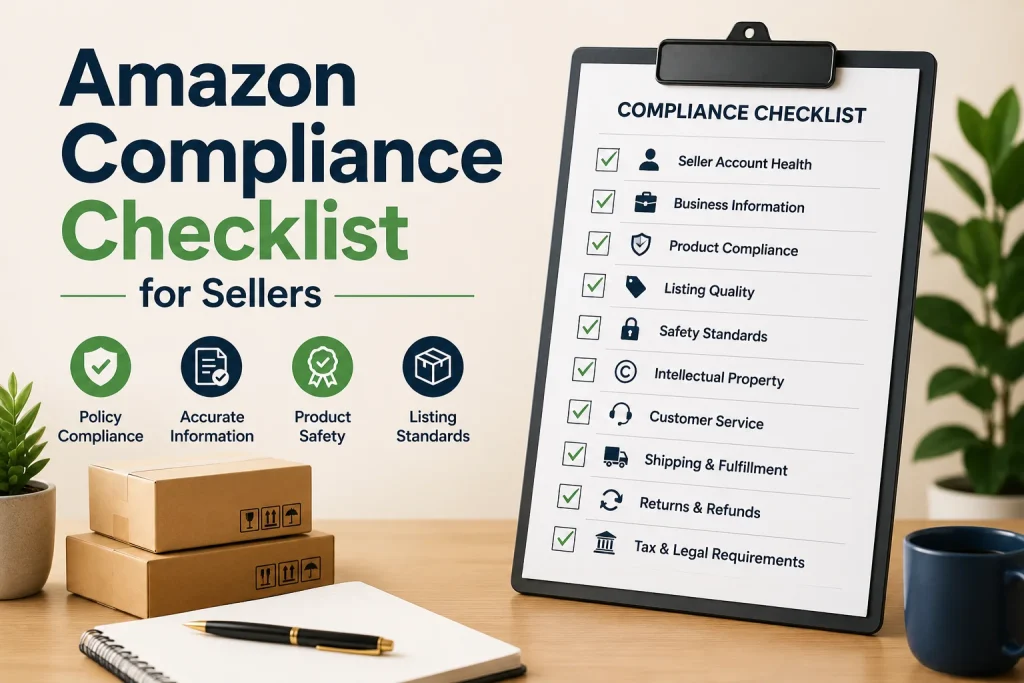
Amazon Compliance Checklist for Sellers

Selling successfully on Amazon requires more than creating listings and driving sales. Sellers must also follow marketplace policies maintain product information protect customers and respond quickly when compliance issues arise. A strong compliance process helps protect account health while creating a reliable shopping experience. Amazon regularly evaluates seller performance, policy compliance, product information and customer experience. Keeping these areas under control can reduce the risk of listing restrictions, policy violations or account problems. Amazon also provides account health and policy compliance tools that help sellers identify issues and take action. Understand Amazon Seller Policies The first step toward compliance is understanding the policies that apply to your business and products. Different categories can have requirements so sellers should review the rules relevant to their products before listing or launching them. Pay attention to product restrictions listing requirements, intellectual property rules, customer service expectations and seller performance standards. Amazon explains that account health reflects whether a seller is meeting the policies and performance expectations required to sell in its store. Verify Product Compliance Before selling a product confirm that it meets all safety and regulatory requirements. Certain products may require testing, certifications, warnings, labels or supporting documentation. Keep compliance documents organized and easy to access. Depending on the product and marketplace documentation may include invoices, certificates, test reports, safety information or other evidence requested during a compliance review. Amazon states that products without safety or regulatory documentation may face listing removal and can create account health concerns. Keep Product Listings Accurate Accurate product information is a part of seller compliance. Review product titles, descriptions, images, bullet points, specifications, variations and other listing information regularly. Avoid making claims that cannot be supported. Product information should accurately represent what customers will receive. Misleading descriptions incorrect specifications or unsupported claims can create customer complaints and policy concerns. A regular listing review can help sellers identify information before it becomes a larger problem. Monitor Account Health Regularly Account health should never be treated as something to check after receiving a warning. Make it part of your business routine. Review policy violations, performance notifications, customer experience indicators and other account health information. When an issue appears investigate its cause. Take corrective action promptly. Amazon describes its Account Health Rating as a way to assess the risk of account deactivation based on policy compliance and other factors. Maintain Authentic Product Documentation Product authenticity is another area of compliance. Sellers should maintain purchase records and supplier documentation that demonstrate where products came from. Work with suppliers and keep invoices organized. Documentation should be clear, accurate and connected to the products being sold. Strong record keeping can make it easier to respond if Amazon requests information about product authenticity. Review Intellectual Property Requirements Sellers should make sure their products and listings respect intellectual property rights. This includes trademarks, copyrights, patents, brand names, images and other protected materials. Do not use another brand name, image, logo or copyrighted content without authorization. Before adding branded products to your catalog verify that your sourcing and listing practices are legitimate. Keep Customer Experience Standards High Compliance is closely connected with customer experience. Product quality problems, inaccurate descriptions, late shipments, cancellations and unresolved customer issues can affect seller performance. Monitor customer. Return patterns to identify recurring problems. If several customers report the issue investigate the product or fulfillment process instead of treating each complaint as an isolated event. Manage Reports and Performance Data Seller reports can provide information for maintaining compliance and identifying operational weaknesses. Reviewing business, inventory, payment, advertising and performance information can help sellers make decisions. Amazon Reports Management can turn amounts of marketplace data into practical insights. Regular report analysis can help identify performance changes, inventory concerns, sales patterns and areas that require attention. For sellers managing products or marketplaces Amazon Reports Management can also support more structured performance monitoring and help teams focus on the most important business indicators. Keep Inventory and Fulfillment Under Control Inventory problems can affect both customer satisfaction and seller performance. Regularly review stock levels, fulfillment performance, shipment accuracy and product availability. Avoid allowing products to remain unavailable for periods when demand is strong. At the time excessive inventory can create unnecessary storage costs and operational challenges. A consistent inventory review process can help sellers maintain operations while reducing avoidable fulfillment issues. Respond Quickly to Compliance Notifications Ignoring a compliance notification can make a manageable problem more difficult. Sellers should review notifications carefully understand what caused the issue and determine what evidence or corrective action may be required. If an appeal or corrective action plan is necessary provide information and address the underlying problem. Simply submitting a response without fixing the root cause may lead to repeated issues. Create a Regular Compliance Routine A practical compliance routine can make marketplace management much easier. Sellers should regularly review account health, product documentation, listings, supplier records, customer complaints, inventory performance and policy notifications. Amazon Reports Management can support this process by helping sellers evaluate performance information and identify areas that deserve attention. Consistent monitoring allows sellers to make decisions instead of waiting until a serious issue develops. Final Thoughts Amazon compliance should be viewed as a business responsibility rather, than a one time task. Sellers who regularly review policies maintain accurate listings organize documentation monitor account health protect property and improve customer experience can build stronger marketplace operations.

Blog

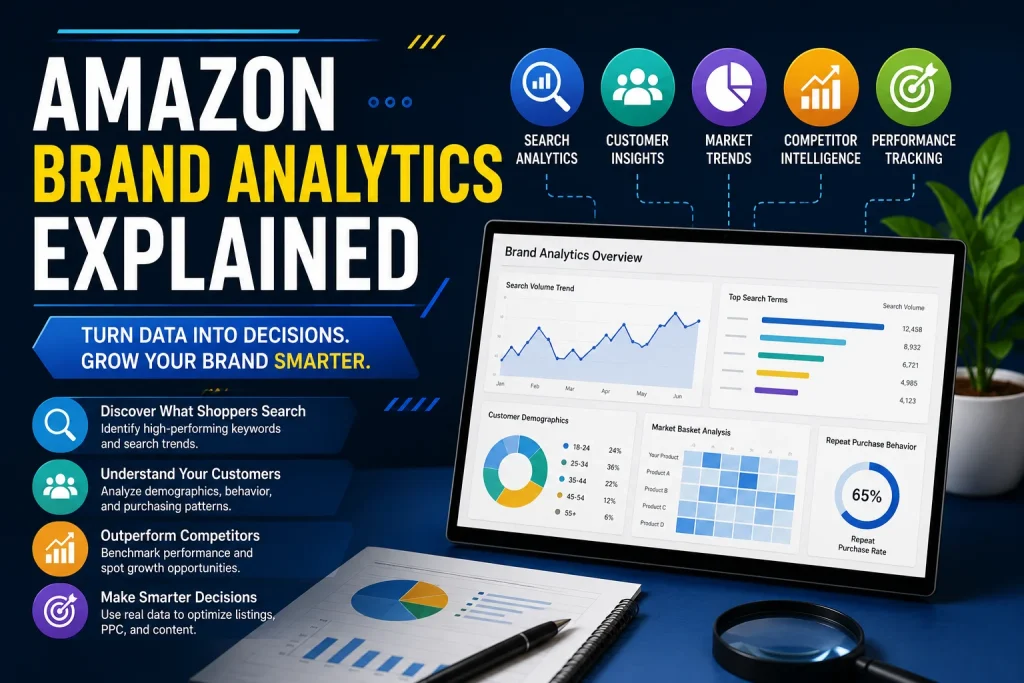
Amazon Brand Analytics Explained

Amazon Brand Analytics gives sellers and brand owners valuable information about how shoppers discover products, interact with listings, and move toward purchasing decisions. Instead of relying only on sales numbers, sellers can use analytics to understand customer behavior and identify opportunities for improvement. For growing brands, understanding this information can make everyday decisions more strategic. From improving product visibility to refining advertising campaigns, the right data can reveal what is working and what needs attention. What Is Amazon Brand Analytics Amazon Brand Analytics is a collection of insights available to eligible brand owners that helps them understand customer activity and product performance. The information can provide a clearer picture of search behavior, purchasing patterns, customer engagement, and competitive performance. The main purpose is to turn marketplace data into useful business decisions. Rather than guessing which products deserve more attention, sellers can examine actual customer behavior and use those findings to improve their strategy. Why Amazon Brand Analytics Matters Running an online store without studying performance data can make growth unpredictable. A product may receive strong traffic but generate few sales, while another product may convert well but receive limited visibility. Analytics helps identify these differences. By studying customer behavior, sellers can understand which products attract attention, which search terms are valuable, and where customers may be leaving before completing a purchase. These insights can then support better listing optimization, product positioning, advertising decisions, and inventory planning. Data can also help brands recognize changing customer preferences before those changes become obvious through sales alone. Important Insights to Monitor Several types of information can be especially useful when evaluating brand performance. Search behavior can show what customers are looking for and which products receive attention from those searches. This can help sellers understand demand and discover opportunities for relevant products. Customer engagement can provide clues about how effectively product pages communicate value. If customers are visiting a product but not purchasing, the listing may need improvements in its content, images, pricing, or overall presentation. Purchase behavior can reveal which products are performing well after attracting shoppers. Comparing traffic with sales can help sellers distinguish between visibility problems and conversion problems. Competitive information can also help brands understand how their products perform compared with other options in the same category. Using Analytics to Improve Product Listings One of the most practical uses of analytics is improving product listings. Suppose a product receives substantial customer attention but produces fewer purchases than expected. This could indicate that the listing is not convincing shoppers after they arrive on the product page. A seller can review the title, images, product description, key features, pricing, and overall presentation. The goal is to make the listing clearer and more relevant to customer expectations. Analytics should not be viewed as a replacement for good listing content. Instead, it provides evidence that can help determine which parts of the listing deserve improvement. Using Analytics for Better Advertising Decisions Advertising becomes more effective when campaign decisions are supported by reliable data. Sellers can examine which products attract customers, which search terms generate interest, and where advertising performance may be weaker. This is where amazon ads management services can become valuable for brands that need structured campaign analysis and optimization. Data from brand performance can help guide decisions about targeting, budget allocation, keyword selection, and campaign adjustments. The goal should not simply be to spend more on advertising. The focus should be on understanding which opportunities have the potential to produce profitable growth. Finding Customer Trends Customer behavior changes over time. Seasonal demand, new competitors, changing preferences, and product trends can all influence performance. Regularly reviewing analytics allows sellers to identify these changes earlier. A product that performs strongly during one period may require a different strategy during another. For example, increasing interest in a particular product category may indicate an opportunity to strengthen inventory, improve content, or increase promotional activity. Declining interest may suggest that the brand needs to review its positioning or identify new customer needs. Connecting Analytics With Business Goals Analytics becomes more useful when it is connected to specific business goals. If the goal is to increase sales, sellers should focus on the relationship between visibility, customer engagement, conversion, and profitability. If the goal is to improve brand awareness, attention should be given to customer discovery and product engagement. If the goal is to improve advertising efficiency, sellers should examine campaign performance alongside sales and customer behavior. This approach prevents sellers from becoming overwhelmed by large amounts of information. Instead of tracking every available number, they can focus on the data that supports their most important objectives. Common Mistakes Sellers Should Avoid One common mistake is looking at individual metrics without considering the complete customer journey. A high number by itself does not always mean strong performance. Another mistake is making major decisions based on a short period of data. Trends become more meaningful when performance is monitored consistently over time. Ignoring product level differences can also create problems. Each product may attract a different type of customer and perform differently within its category. Finally, sellers should avoid making advertising decisions without considering organic performance. Advertising and organic visibility often influence each other, so both should be evaluated as part of a broader strategy. How to Build a Data Driven Strategy A strong approach begins with regular analysis. Review important performance information, identify unusual changes, and determine what may be causing those changes. Next, prioritize the biggest opportunities. A small improvement to a high traffic product may have a greater impact than a major change to a product with very little customer interest. After making improvements, continue monitoring performance. This creates a cycle of analysis, action, measurement, and refinement. Brands using amazon ads management services can also combine advertising data with broader customer and product insights to create more informed campaign strategies. The Role of Continuous Monitoring Amazon performance can change quickly, which makes continuous monitoring important. Customer demand, competition, advertising costs, and product performance can shift over

Scroll to Top