How Amazon Sellers Use Coupons During Product Launch
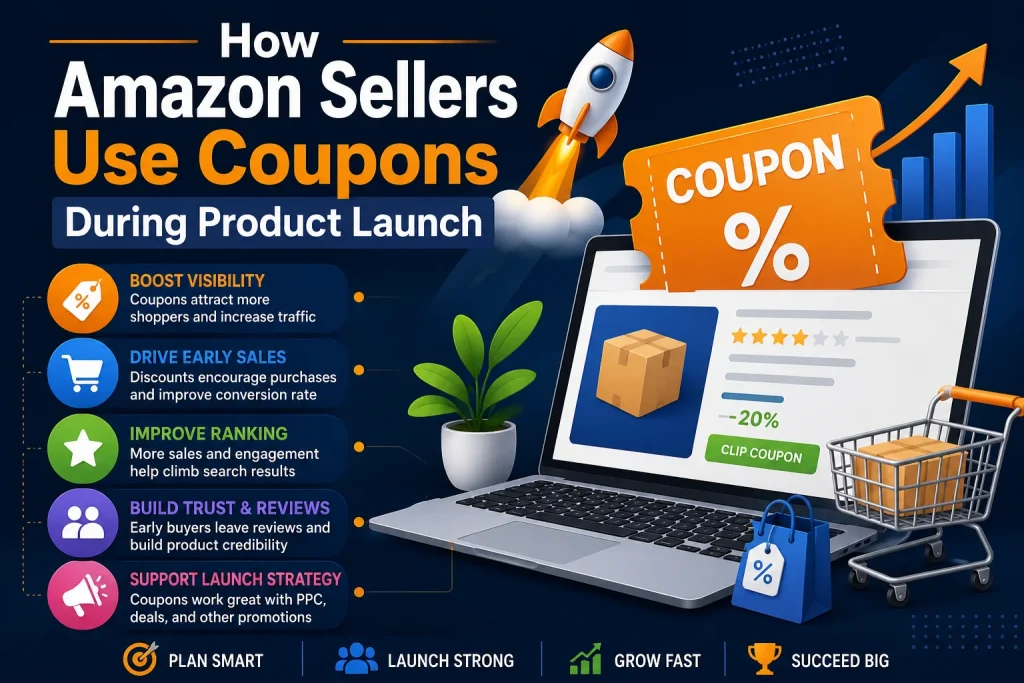
Launching a new product on Amazon is exciting but getting those first sales can be challenging. New products usually have no reviews, limited sales history, and little customer trust. This is where coupons can make a real difference. Smart sellers use launch coupons to attract shoppers, encourage first purchases, and create early momentum for their products. However, offering a discount is not enough. Successful sellers plan their coupon strategy carefully and use it as part of a wider launch approach. Why Coupons Matter During a Product Launch When shoppers see a new product, they often compare it with products that already have reviews and strong sales history. A coupon gives new sellers a way to make their offer more attractive. A discount can encourage customers to take a chance on a new product. Even a small saving may help a shopper choose a newly launched item instead of a similar product with a higher price. Coupons can also support early sales velocity. More sales may help a product collect valuable performance data and improve its overall position over time. Sellers can then study customer behavior and make better decisions for their next marketing steps. Sellers Use Coupons to Attract First Buyers The first customers are extremely important during a product launch. They help create the initial sales activity that a new product needs. Many Amazon sellers use coupons to reduce the hesitation that comes with buying a product without many reviews. Customers may be more willing to test a new product when they feel they are receiving a better deal. This strategy is especially useful in competitive product categories. Instead of trying to compete only on price, sellers use a temporary discount to create an attractive launch offer while they build their product presence. Choosing the Right Coupon Discount One of the biggest mistakes sellers make is offering a discount without considering their profit margin. A coupon should support growth without creating unnecessary losses. Before launching a coupon, sellers should calculate their product cost, Amazon fees, advertising expenses, and expected profit. The goal is to find a discount that looks valuable to customers but still fits the launch budget. Some sellers choose a moderate discount for a longer launch period. Others use a stronger offer for a shorter time to create quick interest. The right approach depends on the product category, competition, and launch goals. Coupons and Amazon Advertising Work Together Coupons are often more effective when combined with a focused advertising strategy. An advertisement can bring shoppers to the product page, while the coupon gives them an additional reason to consider buying. For example, a customer may notice a product through a search result or advertisement. When that shopper sees an available discount, the chance of clicking and purchasing may increase. This is why sellers should not treat coupons as a separate launch activity. Product pages, advertising, pricing, and promotions should work together. A well organized strategy can create a smoother customer journey from product discovery to purchase. How Sellers Create a Launch Coupon Strategy Successful sellers usually plan their coupon strategy before the product goes live. They first define the main goal of the promotion. Some sellers want to generate initial sales. Others want to attract price sensitive shoppers or create awareness in a competitive niche. After setting the goal, sellers decide the discount level and promotional period. They also monitor sales activity and customer response throughout the launch. This type of data focused approach is important for long term growth. The same careful planning used in Walmart account management can also help sellers understand the value of structured ecommerce strategies across different marketplaces. Avoiding Common Coupon Mistakes Coupons can be helpful, but poor planning may reduce their impact. One common mistake is offering a discount that is too small to attract attention. If customers do not see a clear benefit, the promotion may not influence their buying decision. Another mistake is using a large discount without checking profitability. Sellers should always understand how the promotion affects their overall launch budget. Some sellers also forget to monitor results. A coupon should be evaluated based on sales, conversion activity, and customer response. If the promotion is not producing the expected results, sellers may need to adjust their approach. Coupons Can Support Long Term Product Growth A product launch is not only about making quick sales. It is about building a strong foundation for future performance. Coupons can help sellers attract early customers and gather important marketplace data. When combined with strong listings, effective advertising, and ongoing performance tracking, promotions can become part of a larger growth strategy. Businesses that manage multiple ecommerce channels also understand the importance of organized planning. The same strategic mindset behind Walmart account management can help sellers create more structured promotional campaigns and make better decisions based on performance. Final Thoughts Amazon sellers use coupons during product launches because discounts can reduce customer hesitation and help new products gain early attention. The key is to use coupons strategically instead of treating them as a quick solution. A well planned coupon can support early sales, work alongside advertising, and help sellers understand customer behavior. With careful budgeting and regular performance monitoring, coupons can become a valuable part of a successful product launch strategy.