BizisTech | No.1 Ecommerce Marketing Agency USA

#OnlineBusiness

Blog

What Should I Look for Before Choosing a Product to Sell on Amazon?

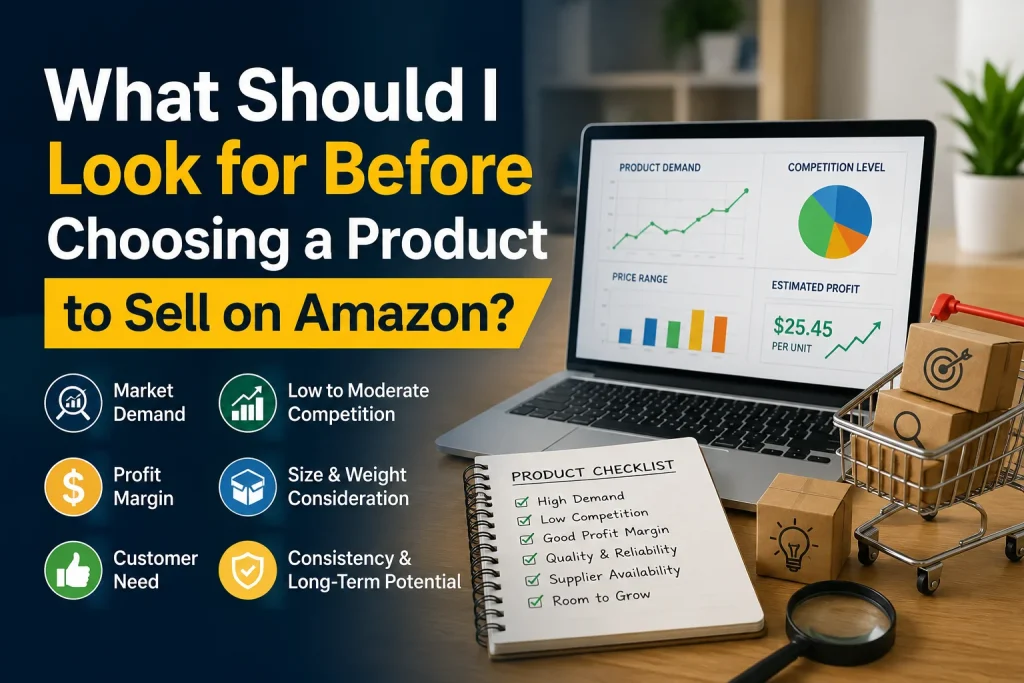
Choosing the product is one of the most important decisions an Amazon seller can make. A product with demand, healthy profit potential, manageable competition and room for improvement can create a solid foundation for long term growth. On the hand choosing a product simply because it looks popular can lead to high costs, slow sales and unnecessary competition. Before investing money in inventory sellers should carefully evaluate important factors. Product research should focus on customer demand, competition, profitability, product quality, sourcing and future growth potential. Start With Customer Demand The first question to ask is whether customers are actively searching for the product. A product may look attractive. If people are not consistently interested in buying it generating sales can be difficult. Look for products that have demand rather than products that depend entirely on short lived trends. Examine search activity, sales patterns, customer interest and competing products. Seasonal products can still be profitable. Sellers should understand when demand rises and falls before making an investment. Study the Competition Carefully Competition can determine how difficult it will be to establish a product. Examine the leading products in your chosen category. Study their prices, reviews, features, images, descriptions and overall customer experience. Pay attention to weaknesses. Poor product quality, descriptions, weak images, limited features or repeated customer complaints can reveal opportunities for a better product. The goal is not necessarily to find a category with no competition. Instead look for a market where demand exists but customers are not completely satisfied with the options. Calculate Profit Before Buying Inventory Sales volume does not always mean profitability. A product that generates orders can still lose money if its costs are too high. Calculate the expected selling price and subtract product costs, shipping, Amazon fees, advertising expenses, storage costs, returns, packaging and other business expenses. This gives you a picture of the potential profit. It is also wise to consider expenses. A product with narrow profit margins can become unprofitable when advertising costs increase or supplier prices change. Look for Opportunities to Improve the Product A product opportunity often comes from solving a problem better than existing products. Read customer reviews of competing products. Identify common complaints. Customers may mention problems with durability, design, size, packaging, usability, materials or instructions. These complaints can provide ideas for product improvements. Ask yourself whether you can create something that offers an experience. Even small improvements can make a product more appealing when they address customer frustrations. Consider Product Size and Shipping Costs Product dimensions and weight can have an effect on profitability. Large or heavy products may require expensive storage and transportation while fragile products can create additional risks through damage and returns. For sellers products that are relatively easy to package, store and transport can be easier to manage. Before choosing an item estimate the logistics cost rather than focusing only on the supplier price. Check Product Restrictions and Compliance Some products have requirements before they can be sold. Depending on the category and marketplace sellers may need documentation, certifications, testing or approval. Checking these requirements before placing an order can prevent surprises later. A product that looks profitable may become difficult to sell if compliance requirements are complicated or unexpected. Evaluate the Supplier Carefully A product can still become a problem if the supplier cannot maintain consistent quality. Before committing to an order investigate the suppliers experience, communication, production capabilities, minimum order requirements, lead times and quality control process. Request samples whenever possible. A sample allows you to evaluate the product instead of relying entirely on photographs or descriptions. Reliable sourcing can help reduce quality issues, customer complaints, returns and delays. Think About Branding and Differentiation A product should have flexibility for you to create a recognizable brand. Consider whether you can improve its packaging presentation, features, accessories or overall customer experience. Differentiation becomes especially important when many sellers offer products. A clear reason for customers to choose your product can make marketing and long term growth easier. Consider Listing Potential Before Making a Decision A great product still needs a presentation. Before choosing an item consider whether you will have information, images, benefits and features to create a compelling product page. Good product research should also consider the keywords customers use when searching. A planned amazon listing optimization service can later help improve titles, product descriptions, images, bullet points and relevant search terms so the product has a stronger chance of reaching the right audience. This is why product selection and listing strategy should not be treated as separate activities. A product with benefits and strong search relevance can provide more opportunities for effective marketing. Consider Long Term Potential Do not evaluate a product by its potential for immediate sales. Think about where the product could go over the several years. Ask whether you could introduce variations, sizes, colors, bundles, accessories or related products. A product that can become part of a product line may offer greater long term value than a one time opportunity. Market trends should also be considered. Products with declining demand may not be suitable for a long term business even if they currently generate sales. Review the Numbers Before Making the Final Decision Before committing to inventory create an estimate of your expected sales, costs, profit margins, advertising requirements and break even point. Avoid making decisions based on optimistic sales estimates. Use calculations and consider what happens if sales are slower than expected. This approach helps you understand the risk before putting significant capital into inventory. Prepare the Product for a Strong Launch Once you have selected a product preparation should begin before inventory arrives. Research relevant search terms understand the target customer, plan product photography develop content and study competitor positioning. An effective amazon listing optimization service can support the process by improving the product page around customer search behavior and conversion opportunities. However optimization cannot compensate for a product that has demand or poor economics. The product itself must first have a foundation. Final Thoughts

Blog

What Should I Look for Before Choosing a Product to Sell on Amazon?

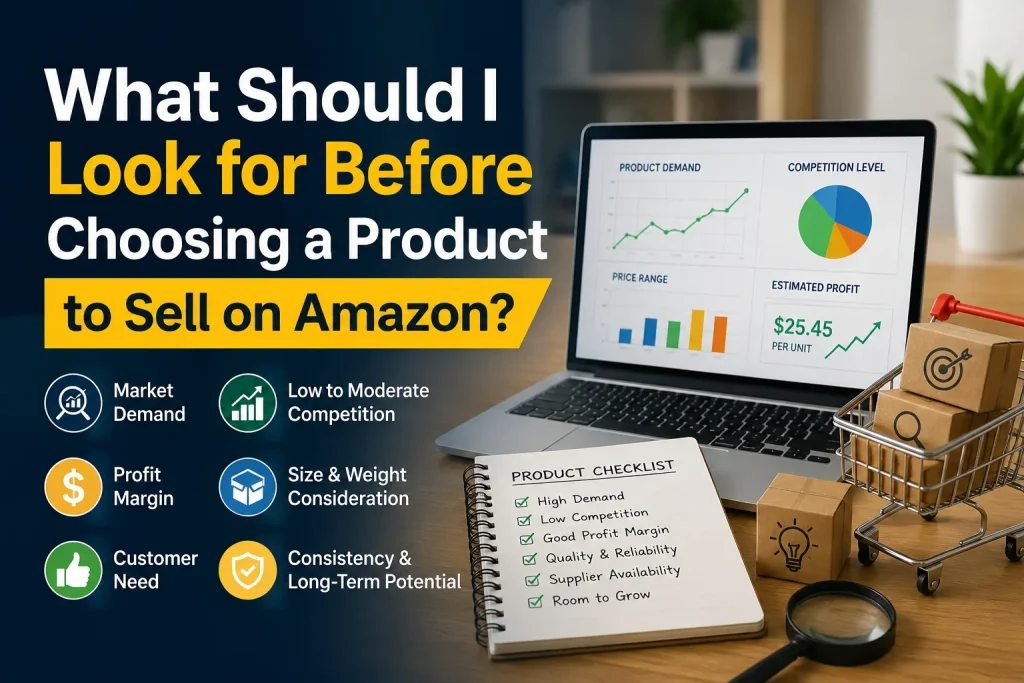
Choosing the product is one of the most important decisions an Amazon seller can make. A product with demand, healthy profit potential, manageable competition and room for improvement can create a solid foundation for long term growth. On the hand choosing a product simply because it looks popular can lead to high costs, slow sales and unnecessary competition. Before investing money in inventory sellers should carefully evaluate important factors. Product research should focus on customer demand, competition, profitability, product quality, sourcing and future growth potential. Start With Customer Demand The first question to ask is whether customers are actively searching for the product. A product may look attractive. If people are not consistently interested in buying it generating sales can be difficult. Look for products that have demand rather than products that depend entirely on short lived trends. Examine search activity, sales patterns, customer interest and competing products. Seasonal products can still be profitable. Sellers should understand when demand rises and falls before making an investment. Study the Competition Carefully Competition can determine how difficult it will be to establish a product. Examine the leading products in your chosen category. Study their prices, reviews, features, images, descriptions and overall customer experience. Pay attention to weaknesses. Poor product quality, descriptions, weak images, limited features or repeated customer complaints can reveal opportunities for a better product. The goal is not necessarily to find a category with no competition. Instead look for a market where demand exists but customers are not completely satisfied with the options. Calculate Profit Before Buying Inventory Sales volume does not always mean profitability. A product that generates orders can still lose money if its costs are too high. Calculate the expected selling price and subtract product costs, shipping, Amazon fees, advertising expenses, storage costs, returns, packaging and other business expenses. This gives you a picture of the potential profit. It is also wise to consider expenses. A product with narrow profit margins can become unprofitable when advertising costs increase or supplier prices change. Look for Opportunities to Improve the Product A product opportunity often comes from solving a problem better than existing products. Read customer reviews of competing products. Identify common complaints. Customers may mention problems with durability, design, size, packaging, usability, materials or instructions. These complaints can provide ideas for product improvements. Ask yourself whether you can create something that offers an experience. Even small improvements can make a product more appealing when they address customer frustrations. Consider Product Size and Shipping Costs Product dimensions and weight can have an effect on profitability. Large or heavy products may require expensive storage and transportation while fragile products can create additional risks through damage and returns. For sellers products that are relatively easy to package, store and transport can be easier to manage. Before choosing an item estimate the logistics cost rather than focusing only on the supplier price. Check Product Restrictions and Compliance Some products have requirements before they can be sold. Depending on the category and marketplace sellers may need documentation, certifications, testing or approval. Checking these requirements before placing an order can prevent surprises later. A product that looks profitable may become difficult to sell if compliance requirements are complicated or unexpected. Evaluate the Supplier Carefully A product can still become a problem if the supplier cannot maintain consistent quality. Before committing to an order investigate the suppliers experience, communication, production capabilities, minimum order requirements, lead times and quality control process. Request samples whenever possible. A sample allows you to evaluate the product instead of relying entirely on photographs or descriptions. Reliable sourcing can help reduce quality issues, customer complaints, returns and delays. Think About Branding and Differentiation A product should have flexibility for you to create a recognizable brand. Consider whether you can improve its packaging presentation, features, accessories or overall customer experience. Differentiation becomes especially important when many sellers offer products. A clear reason for customers to choose your product can make marketing and long term growth easier. Consider Listing Potential Before Making a Decision A great product still needs a presentation. Before choosing an item consider whether you will have information, images, benefits and features to create a compelling product page. Good product research should also consider the keywords customers use when searching. A planned amazon listing optimization service can later help improve titles, product descriptions, images, bullet points and relevant search terms so the product has a stronger chance of reaching the right audience. This is why product selection and listing strategy should not be treated as separate activities. A product with benefits and strong search relevance can provide more opportunities for effective marketing. Consider Long Term Potential Do not evaluate a product by its potential for immediate sales. Think about where the product could go over the several years. Ask whether you could introduce variations, sizes, colors, bundles, accessories or related products. A product that can become part of a product line may offer greater long term value than a one time opportunity. Market trends should also be considered. Products with declining demand may not be suitable for a long term business even if they currently generate sales. Review the Numbers Before Making the Final Decision Before committing to inventory create an estimate of your expected sales, costs, profit margins, advertising requirements and break even point. Avoid making decisions based on optimistic sales estimates. Use calculations and consider what happens if sales are slower than expected. This approach helps you understand the risk before putting significant capital into inventory. Prepare the Product for a Strong Launch Once you have selected a product preparation should begin before inventory arrives. Research relevant search terms understand the target customer, plan product photography develop content and study competitor positioning. An effective amazon listing optimization service can support the process by improving the product page around customer search behavior and conversion opportunities. However optimization cannot compensate for a product that has demand or poor economics. The product itself must first have a foundation. Final Thoughts
Blog

What Should I Do First When Starting an Amazon Business?

Starting an Amazon business can feel very exciting. However the first steps you take can change how success you have later on. Many new sellers rush to pick a product and make a listing. They often do this without knowing the market the customers, the costs or the competition. I think it is much better to build a base before you spend a lot of money. Your goal should not just be to make one sale. You should try to build an Amazon business that can grow steadily and make money for a time. Start With Market Research The first step is to learn about the market you want to join. You should look at product demand what customers like, who your competitors are, prices, reviews and what is trending now. Try to find products that people want all year round of things that are only popular for a short time. Look closely at what other people’re selling and find ways your product can be better. I always suggest reading customer reviews. They show you problems that other products have not fixed yet. These small details can help you make a product and a better plan to sell it. Choose a Product With Business Potential Once you know the market find a product that can actually make you money. Before you decide think about the cost of the product, shipping, storage, fees from the marketplace, ads and the price you will sell it for. A product might sell a lot. You could still lose money if the costs are too high. You must calculate your profit margins before you buy an amount of stock. You should also think about how big or heavy the product’s if it breaks easily and if there is room to grow. Picking a product that lets you sell versions or similar items makes long term growth much easier. Understand Your Target Customer A good Amazon business starts by knowing the people who will buy your items. You need to know what they need what problems they. Why they pick one item over another. Think about what makes a person trust a seller. Good photos, info useful features, fair prices and great customer service all help people decide to buy. When you truly know your audience it is much easier to write messages that actually matter to them. Build Your Brand From the Beginning sellers should look past just selling one item. Having a brand helps people trust you and helps your business grow. This is why Amazon brand management is so important. It means creating a look that people recognize, protecting your name making your store look good and giving customers an experience. Your brand name, your photos, your packaging and how you talk to customers should all feel the same. When everything matches your business looks more professional. Create a Strong Product Listing Your product listing is one of the vital parts of your Amazon business. Before you go live make sure your title, description, features and photos clearly show why someone should buy from you. Use words that people search for. Keep the writing natural. Do not stuff your listing with many keywords or it will be hard to read. Good photos are a must. Since customers cannot touch your product your photos must show how it looks how big it is and how it works. Plan Your Inventory Carefully You should start planning your inventory before you even launch. If you buy much your money is stuck and storage costs go up. If you buy little you will run out of stock and lose sales. Try to guess how much you will sell based on your research and make a plan to restock. As you grow watch how fast you sell and change your orders based on what’s actually happening. Good planning helps you keep track of your cash and stops your sales from stopping Prepare a Launch Strategy Launching a product is more than turning a listing on. You need a plan to help people actually find your product. Ads can help show your product to the right shoppers. Good listing content will then help turn those shoppers into buyers. Watch how your ads do and change them if they are not working well. Think of your launch as a time to learn. Use your data to see what works and what needs to be fixed. Track Your Numbers From Day One Do not just look at how money you make in sales. You must track your costs, marketplace fees, ad spending, shipping costs and your actual profit. Checking your numbers often helps you catch problems before they cost you much money. It also shows you which products or ads are worth money. Let the data guide your choices of just guessing. Develop Your Brand Once your business is doing well you must protect your brand. Brand protection helps you avoid issues with products or sellers who are not allowed to sell your items. Good Amazon brand management also means watching how people see your brand and always finding ways to make the customer experience better. A strong brand should. Get better as you learn more about your customers. Keep Improving of Expecting Instant Success Success on Amazon rarely happens because of one lucky choice. It usually comes from research, testing and learning. Check your listings often read what customers say watch your ads and keep an eye on your competitors. Making changes all the time can lead to big results later. The best sellers treat their Amazon business like a ongoing job rather, than a quick project. Final Thoughts The first thing you should do when starting an Amazon business is not just to upload a product and wait. You should start by researching picking a product that makes money knowing your customers checking your costs and making a plan to launch.

Blog

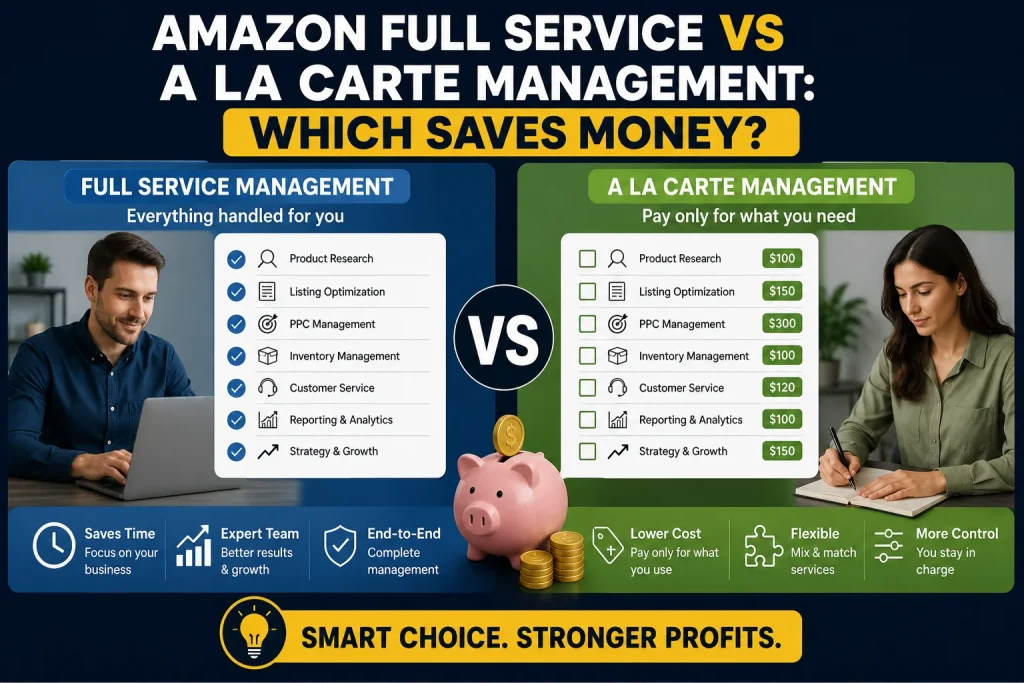
Amazon Full Service vs A La Carte Management: Which Saves Money?

Many Amazon sellers get to a point where managing their store gets too hard. They have to handle listings, ads, inventory and customer service. At that point they often compare two options: full service Amazon management and a la carte management. The main question is, which one saves money and helps the store grow? The answer depends on how much you sell what skills you have in-house. How much help you need with things like Amazon PPC management listing optimization and inventory planning. What Is Amazon Full Service Management? Amazon full service management is when one team handles most of your Amazon store operations. Of hiring different people for ads, listings, inventory and customer support you work with one partner for everything. Typical services include: * Creating and optimizing product listings *. Forecasting inventory * Handling orders and customer support * Managing Amazon PPC. Campaigns * Reporting performance and planning growth This option is great for sellers who want to reduce their workload and have a strategy. What Is A La Carte Amazon Management? A la carte Amazon management lets sellers choose the services they need. Of paying for a full package you can hire help for specific tasks and keep the rest in-house. Common a la carte services include: * Optimizing product listings * Managing Amazon PPC * Auditing inventory * Researching keywords * Monitoring account health This approach gives sellers flexibility and control over their budget. Cost Comparison When comparing costs look beyond the fee. The real cost includes wasted ad spend, missed sales and the time spent coordinating providers. | Factor | Full Service | A La Carte | | Monthly fee | Higher fixed package Lower upfront cost | | Services included | Most account tasks | Only selected tasks | | Coordination needed | Minimal | Seller manages providers | | Best for | Growing or busy sellers | Small sellers with in-house skills | When Full Service Saves More Money A full service package may seem pricey but it can save money when your Amazon business is growing fast or needs daily management. It’s often the value when: * You have products or a large catalog. * Your ad budget is big. Needs constant optimization. * You don’t have an in-house team for listings, ads and inventory. * You want one strategy across all parts of your account. For example poor Amazon PPC management can quickly waste ad budget. A full service team that manages ads daily may reduce spend and improve sales. When A La Carte Saves Money A la carte management can be more affordable for sellers who only need help in a few areas. It works best when: * You have a product catalog. * You can manage listings or inventory internally. * You only need help with one service, like Amazon PPC management. * You want to keep expenses low. For a seller with few products paying for a full service package may include services they don’t need. Hiring help for PPC campaigns or listing optimization can be a smarter financial choice. Hidden Costs to Consider The monthly fee isn’t always the cheapest option. Sellers should also consider: * Time cost: Coordinating freelancers or agencies can take hours every week. * Inconsistent strategy: Different providers may not work toward the growth plan. * Missed opportunities: Delayed inventory planning or weak listings can reduce sales. * Advertising waste: Poor PPC optimization can increase costs quickly. A full service provider may reduce these hidden costs by handling the account as one system. Which Option Should You Choose? Choose service management if: * Your store is growing rapidly. * You want to outsource Amazon operations. * You need PPC, listing, inventory and account management support. Choose a la carte management if: * Your store is small or newly launched. * You already have in-house support for some tasks. * You only need help with a service. Final Verdict For sellers with limited needs a la carte management usually saves more money. For growing sellers, with catalogs and limited internal resources full service management often provides better long-term value especially with effective Amazon PPC management.

Blog

How to Calculate ROI From Your Amazon Advertising Spend

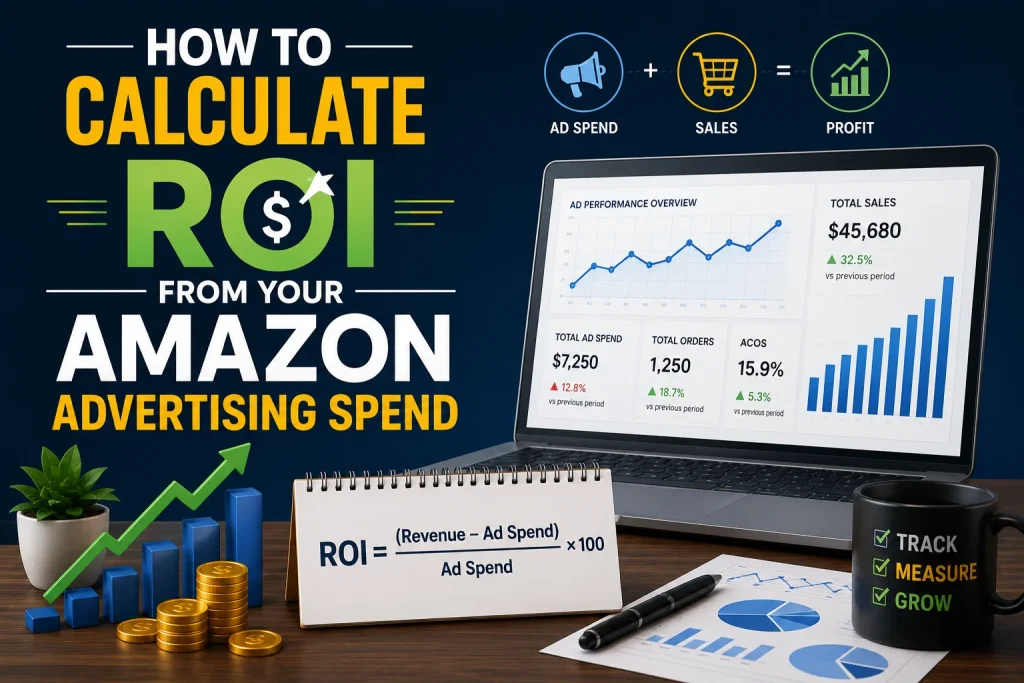
Running ads without checking if they work is like driving without a map. Many Amazon sellers spend money on ads hoping to sell more. They don’t know if those ads are making a profit. Understanding your Return on Investment or ROI helps you make ad decisions and grow your business. At Bizistech we believe good ads are based on facts, plans and constant improvement. Knowing how to calculate ROI helps sellers find winning ads cut spending and increase profit over time. What Is Amazon Advertising ROI ROI measures how money you make compared to how much you spend on ads. Of just looking at clicks or views ROI tells you if your ad budget is making you money. A good ROI means your ads make money than they cost. A low or bad ROI means you need to change your ads. The Simple Formula for ROI Calculating ROI is easy. ROI equals Profit divided by Ad Cost multiplied by 100. For example if your ad costs $500 and makes $2000 in sales with $1000 in profit your ROI shows how well your ad is doing. The higher the ROI, the better your ads are working. Know the Difference Between Revenue and Profit One big mistake sellers make is calculating ROI based on sales. Revenue is what customers pay while profit is whats left after paying all business costs. To calculate a ROI include costs like product cost Amazon fees, shipping, storage fees and ad costs. Using profit of revenue gives a clearer picture of ad success. Track the Right Performance Metrics ROI makes sense with other important ad metrics. * Watch your conversion rate to see how many visitors buy. * Monitor click-through rate to measure ad engagement. * Check ad cost compared to sales to keep spending under control. * Review cost per click to see how efficiently your budget is used. These numbers help explain why your ROI is going up or down. Improve Campaign Performance with Better Optimization Even if your ROI is just okay you can improve it. * Focus on keywords that make sales. * Remove keywords that waste money. * Test product. Descriptions to build customer trust. * Adjust bids based on ad performance. Professional Amazon brand management also helps sellers improve product visibility strengthen brand identity and increase conversion rates leading to ad results. Why Product Listings Affect ROI Your ad can attract shoppers but your product listing turns them into buyers. * Clear product. Descriptions. * Attractive images. * Competitive pricing. All contribute to conversion rates. Better listings reduce wasted ad spend. Combining ads with effective Amazon brand management creates a better customer experience and improves business performance. Avoid ROI Mistakes Many sellers struggle with ROI because they overlook details. * Some increase ad budgets fast. * Others ignore trends or don’t monitor ad performance. * Many forget to calculate profit Review campaigns regularly. Make data-driven decisions. Use Data for Long Term Growth Ad success isn’t about finding one ad. It’s about learning and improvement. Analyze reports, compare ad performance find products and reinvest in strategies that work. Businesses that combine ads with professional Amazon brand management build stronger brands and grow steadily. Why Businesses Choose Bizistech Bizistech helps sellers get the most, from every ad dollar through ad management detailed analysis and constant improvement. With expert guidance businesses make informed ad decisions and strengthen their Amazon brand management strategy for long-term success. Final Thoughts Calculating ROI from your Amazon ad spend is a skill. It helps you understand where your money works and where it doesn’t. By tracking profit monitoring metrics, optimizing campaigns and maintaining quality product listings you can turn ads into a business growth source.

Blog

Amazon Agency Pricing: What Should You Really Pay in 2026?

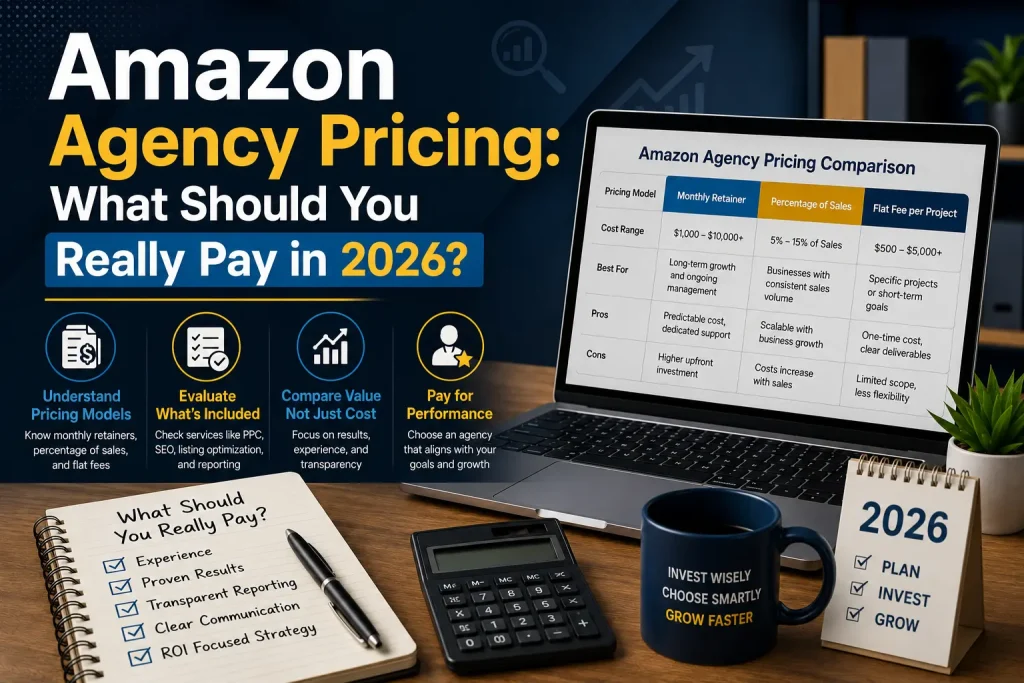
Choosing the Amazon agency is one of the most important decisions for any seller who wants to grow consistently. While many agencies promise results their pricing can vary significantly. Some offer monthly packages with limited services while others charge premium rates for complete account management. The real question is not how an Amazon agency charges but whether the value matches the investment. As online competition continues to increase in 2026 understanding Amazon agency pricing will help you avoid costs and select a partner that supports long term business growth. Companies like Bizistech focus on providing ecommerce solutions that help sellers improve performance increase visibility and manage their stores more effectively. Why Amazon Agency Prices Are Different No two Amazon businesses are alike. A new seller launching one product has different needs compared to an established brand managing hundreds of listings. Several factors influence agency pricing including * Product catalog size * Number of marketplaces * Advertising budget * Inventory management * Listing optimization * Customer support requirements * Reporting and analytics * Compliance monitoring Because every business has goals Amazon agencies often customize their pricing rather than offering one standard package. Common Amazon Agency Pricing Models 1. Monthly Fixed Fee Many businesses prefer a fixed payment because it makes budgeting easier. This pricing model usually includes account management listing updates, advertising monitoring and regular reporting. 2. Percentage of Advertising Spend Some agencies charge based on your advertising budget. This model works well for businesses investing heavily in sponsored campaigns because the agency focuses on improving advertising performance. 3. Revenue Based Pricing Certain agencies earn a percentage of your sales growth. This approach aligns agency success with business performance. May become expensive as your revenue increases. 4. Custom Enterprise Plans Large brands often require teams, advanced reporting, international marketplace management and strategic consulting. These services usually come with pricing based on business requirements. What Should You Expect to Pay in 2026 Although prices vary quality Amazon management is an investment than an expense. Cheap services often lack the expertise needed to deliver sustainable growth. A professional Amazon account management agency should provide * Complete account monitoring * Product listing optimization * Keyword research * Advertising management * Inventory planning * Performance reporting * Policy compliance support * Growth strategy recommendations of choosing the lowest price compare the overall value and experience offered by an Amazon account management agency. What Makes an Agency Worth the Investment The best agencies focus on improvements rather than simply completing daily tasks. They understand Amazon policies, analyze performance data identify growth opportunities and make improvements that increase profitability. A reliable Amazon account management agency should communicate regularly provide reports and explain every strategy clearly. Costs You Should Watch For Some agencies advertise attractive monthly fees but later charge additional costs for essential services. These extra charges may include * Listing creation * Image optimization * Advertising setup * Keyword research * Brand registry assistance * Catalog corrections * Emergency account support Before signing any agreement request a breakdown of included services. Questions to Ask Before Hiring an Agency Before selecting a partner ask questions such as * How often will reports be shared * Who will manage the account * What services are included * How is performance measured * What happens if Amazon policies change * Can the agency support business expansion Professional agencies answer these questions openly and provide realistic expectations. Why Experience Matters Amazon changes frequently. Search algorithms, advertising features, compliance requirements and marketplace competition continue evolving every year. An experienced Amazon account management agency keeps up with these changes. Adjusts strategies before problems affect business performance. How Bizistech Supports Growing Brands Bizistech offers ecommerce services designed to simplify marketplace management for sellers at different stages of growth. From listing optimization and advertising management to inventory planning and business strategy the company focuses on helping businesses improve efficiency and achieve sustainable results through experienced account management from an Amazon account management agency. Working with an Amazon account management agency allows business owners to spend more time developing products and serving customers while experts handle daily marketplace operations. Final Thoughts Amazon agency pricing, in 2026 should be evaluated based on expertise, transparency and long term value than the lowest monthly fee. A professional Amazon account management agency becomes an extension of your business by improving account health increasing visibility, optimizing advertising and supporting growth.

Scroll to Top