
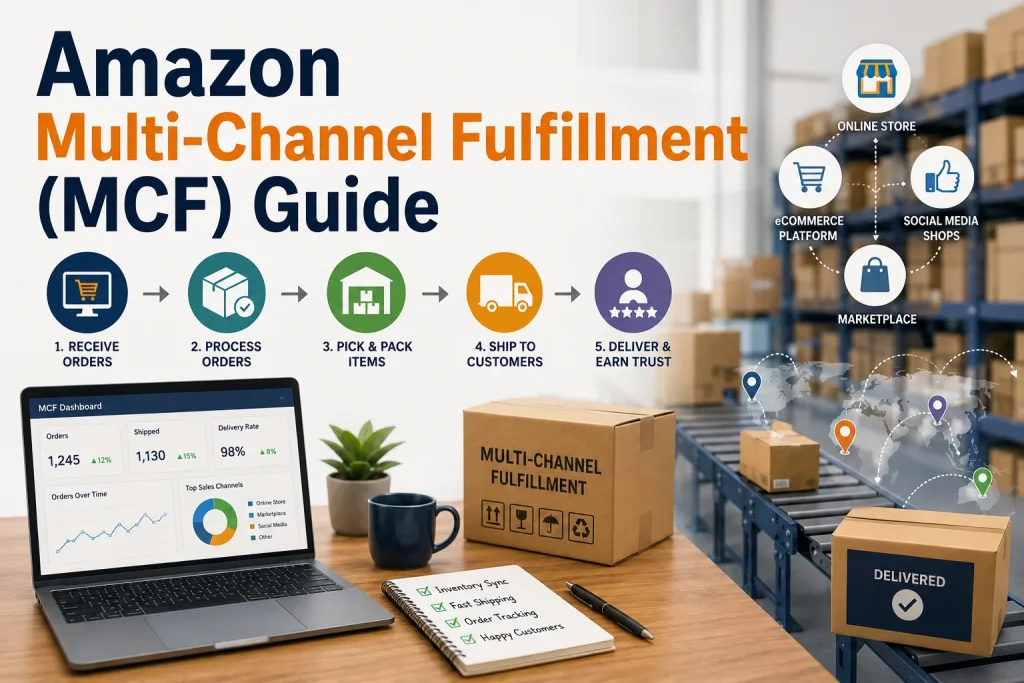
Amazon Multi-Channel Fulfillment (MCF) Guide
Understanding Amazon Multi Channel Fulfillment Amazon Multi Channel Fulfillment, commonly known as MCF, is a fulfillment solution designed for businesses that sell products across multiple ecommerce channels. Instead of managing separate warehouses, packing operations, and shipping processes for every sales channel, sellers can use one inventory system to fulfill orders placed through their website, online marketplaces, social commerce channels, and other sales platforms. MCF helps simplify the operational side of ecommerce by bringing storage, picking, packing, shipping, inventory management, and returns into a more organized fulfillment process. This can be especially valuable for growing brands that want to expand beyond a single marketplace without building their own fulfillment infrastructure. How Amazon MCF Works The basic MCF process starts with sending eligible inventory into Amazons fulfillment network. Once products are available, sellers can create fulfillment orders through the appropriate Amazon system or connect their ecommerce channels through supported integrations. When a customer places an order outside the Amazon marketplace, the order information is sent to the fulfillment system. The product is then picked, packed, and shipped to the customer. This approach allows businesses to maintain a more centralized inventory operation while selling through several channels. Amazon also provides tools for tracking orders, monitoring inventory, managing returns, and reviewing fulfillment reports. Why Businesses Use Amazon MCF Managing fulfillment independently can become complicated as order volume increases. A business may need warehouse space, employees, packaging materials, shipping contracts, inventory software, and dedicated customer support. MCF can reduce some of this operational complexity by allowing businesses to rely on an established fulfillment network. One major advantage is flexibility. Brands can sell through their own ecommerce websites while using the same fulfillment infrastructure that supports their broader ecommerce operation. Another advantage is scalability. When sales increase during seasonal events, product launches, or promotional campaigns, a reliable fulfillment process can help businesses handle higher order volumes without completely rebuilding their logistics operation. Centralized Inventory Management Inventory accuracy is one of the most important parts of successful multichannel selling. Selling through multiple platforms can create problems when stock levels are tracked separately. A centralized fulfillment strategy makes it easier to understand available inventory and plan replenishment. Businesses can monitor sales patterns, identify fast moving products, and make better purchasing decisions. Strong inventory management is also important because excess inventory can increase storage expenses while insufficient inventory can result in missed sales opportunities. The Importance of Strong Product Listings Although MCF focuses primarily on fulfillment, product information still plays an important role in multichannel ecommerce. Customers need accurate product titles, descriptions, images, specifications, and other relevant information before they decide to purchase. A professional Amazon Listing Creation service can help businesses develop clear and informative product content that supports better product presentation. Strong listings can also make it easier to maintain consistency when products are promoted across different sales channels. The goal should be to create product information that answers customer questions, highlights useful benefits, and accurately represents what the buyer will receive. MCF and Multichannel Ecommerce Growth One of the biggest opportunities with MCF is the ability to expand beyond a single marketplace. A brand can build its own website, develop social commerce opportunities, and explore additional ecommerce channels while maintaining a centralized fulfillment approach. This gives businesses greater freedom to build direct relationships with customers instead of depending entirely on one marketplace. For growing brands, this can support a broader ecommerce strategy where marketing, product listings, inventory, fulfillment, and customer experience work together. Best Practices for Using Amazon MCF Businesses should begin by understanding their sales volume and fulfillment requirements. Not every product or business model will have the same needs, so fulfillment decisions should be based on product size, demand, shipping expectations, margins, and customer locations. Inventory should also be monitored regularly. Sales forecasts can help determine when additional stock should be sent into the fulfillment network. Businesses should maintain accurate product information across every sales channel. Using an Amazon Listing Creation service can help ensure that important product details remain clear and professionally presented. Order tracking should be reviewed consistently so that shipping problems can be identified quickly. Returns should also be monitored because return patterns can reveal issues with product quality, descriptions, packaging, or customer expectations. Finally, businesses should review fulfillment reports and operating costs regularly. Growth is valuable only when fulfillment remains financially sustainable. Common MCF Mistakes to Avoid A common mistake is treating fulfillment as a separate activity from inventory planning. If demand increases unexpectedly, insufficient stock can create fulfillment delays and lost sales. Another mistake is failing to calculate the complete cost of fulfillment. Storage, handling, shipping, returns, and other operational expenses should be considered when evaluating profitability. Businesses should also avoid inconsistent product information across sales channels. Customers should receive the same essential product details regardless of where they discover the product. Using an Amazon Listing Creation service without maintaining accurate inventory and fulfillment planning can also limit results. Product content and logistics should work together as part of one ecommerce strategy. How MCF Can Improve Customer Experience Fast and reliable delivery has become an important part of online shopping. Customers increasingly expect accurate order information, reasonable delivery times, secure packaging, and straightforward returns. A well organized fulfillment process can help brands provide a more consistent experience as their order volume grows. However, fulfillment alone does not create customer satisfaction. Product quality, accurate descriptions, competitive pricing, communication, and after sales support all contribute to the overall buying experience. Building a Scalable Fulfillment Strategy A successful MCF strategy should develop alongside the business. Start by understanding current order volume, inventory requirements, customer locations, and fulfillment costs. As sales grow, review product performance and identify which products deserve greater inventory coverage. Seasonal demand should also be considered before major promotional periods. Businesses should regularly evaluate whether their fulfillment strategy continues to support their profit margins and customer expectations. An Amazon Listing Creation service can complement this strategy by helping brands maintain professional product presentation while their fulfillment operation handles the

