
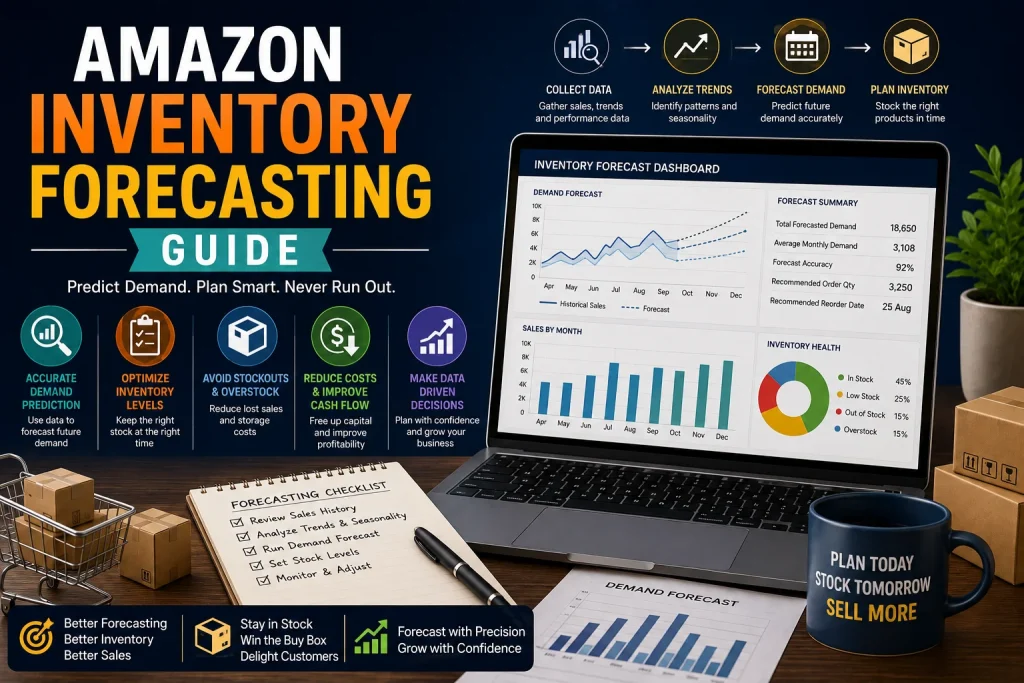
Amazon Inventory Forecasting Guide
Managing inventory successfully is one of the most important parts of running an Amazon business. Having too little stock can lead to missed sales while having too much stock can tie up money and increase storage related expenses. Amazon inventory forecasting helps sellers estimate future demand and make better decisions about when to reorder products and how much stock to keep available. A strong forecasting process allows sellers to move away from guesswork and build a more organized approach to inventory management. By studying sales patterns customer demand seasonal changes and supplier lead times sellers can prepare their inventory before problems occur. What Is Amazon Inventory Forecasting Amazon inventory forecasting is the process of predicting how much inventory a product may need in the future. The goal is to maintain enough stock to meet customer demand without purchasing unnecessary quantities. Forecasting normally involves reviewing previous sales performance current inventory levels sales velocity supplier lead times and expected changes in demand. When these factors are considered together sellers can create a more realistic inventory plan. Why Inventory Forecasting Matters Inventory problems can affect almost every part of an Amazon business. A product that goes out of stock may lose potential sales and momentum. On the other hand excess inventory can consume valuable capital and make it harder to invest in products that are performing better. Accurate forecasting helps sellers maintain a healthier balance between available stock and expected demand. It also makes purchasing decisions more predictable and allows sellers to prepare for periods when sales are likely to increase. Important Data for Inventory Forecasting Historical sales data is one of the most useful sources for forecasting. Sellers should examine how many units a product sells over different periods rather than relying on one short period of performance. Sales velocity is another important factor. Understanding the average number of units sold each day can help sellers estimate how quickly available inventory may be used. Supplier lead time should also be considered. If production shipping and receiving take several weeks sellers need to place orders early enough to prevent inventory shortages. Seasonality is equally important. Some products experience strong demand during holidays special events or particular times of the year. Ignoring these patterns can result in inaccurate forecasts. How to Calculate Future Inventory Needs A simple forecasting approach starts with average daily sales. Sellers can estimate how many units are normally sold each day and then multiply that number by the expected replenishment period. For example a product selling twenty units per day would require around six hundred units for thirty days of expected demand. Sellers should then consider safety stock to protect against unexpected increases in demand or delays in replenishment. The exact amount of safety stock depends on product demand supplier reliability and the seller’s overall business strategy. The objective is to create enough protection without turning the safety stock into unnecessary excess inventory. Using Amazon Data for Better Decisions Amazon provides inventory related information that can help sellers understand product performance and stock requirements. Sellers can review sales history inventory levels sell through performance and other available inventory indicators when making replenishment decisions. These insights become more useful when reviewed regularly. Inventory forecasting should not be treated as a one time activity because customer demand and business conditions can change quickly. The Role of Amazon Product Hunting service Amazon Product Hunting service can support inventory planning by helping sellers identify products and market opportunities with stronger potential. When a seller understands the demand characteristics of a product before investing heavily in inventory it becomes easier to build a realistic purchasing strategy. Amazon Product Hunting service can also help sellers evaluate product trends competition and market demand before committing to large quantities. This information can complement historical sales data when planning inventory for new products that do not yet have a long sales history. For established products Amazon Product Hunting service can provide additional market insight that may help sellers recognize changing demand patterns and adjust their inventory strategy accordingly. How to Manage Seasonal Demand Seasonal demand can make inventory forecasting more challenging. A product that normally sells at a steady rate may experience a major increase during holidays or promotional periods. Sellers should study previous seasonal performance whenever historical data is available. They should also consider upcoming promotions changes in pricing and market trends that could influence customer demand. Preparing inventory early is usually better than waiting until sales begin increasing. Production and shipping can take time so sellers need to consider the entire replenishment cycle before a seasonal period begins. Avoiding Overstock Overstocking may appear safer than running out of inventory but excessive stock can create its own problems. Money becomes tied up in products that may take a long time to sell and storage related expenses can increase. The solution is not simply to keep inventory as low as possible. Sellers should aim for an appropriate stock level based on expected demand replenishment time and business objectives. Regular forecasting allows sellers to identify slow moving products earlier and make better purchasing decisions before excess inventory becomes a major problem. Avoiding Stockouts Stockouts can happen when sellers wait too long before placing a new order. Even if a product is currently selling well there may be a significant delay between ordering from a supplier and making the new inventory available for customers. A reliable forecasting process helps sellers identify when existing inventory may reach a critical level. Reordering before inventory becomes dangerously low gives sellers more time to handle production shipping and receiving delays. Forecasting for New Products New products create a different challenge because there may not be enough historical sales information available. Sellers can use market research competitor performance expected demand and product launch plans to create an initial forecast. The first forecast should be treated as an estimate rather than a fixed prediction. Once real sales data becomes available sellers can compare actual performance with the original expectations and adjust future inventory orders. Amazon Product

