BizisTech | No.1 Ecommerce Marketing Agency USA

#EcommerceGrowth

Blog

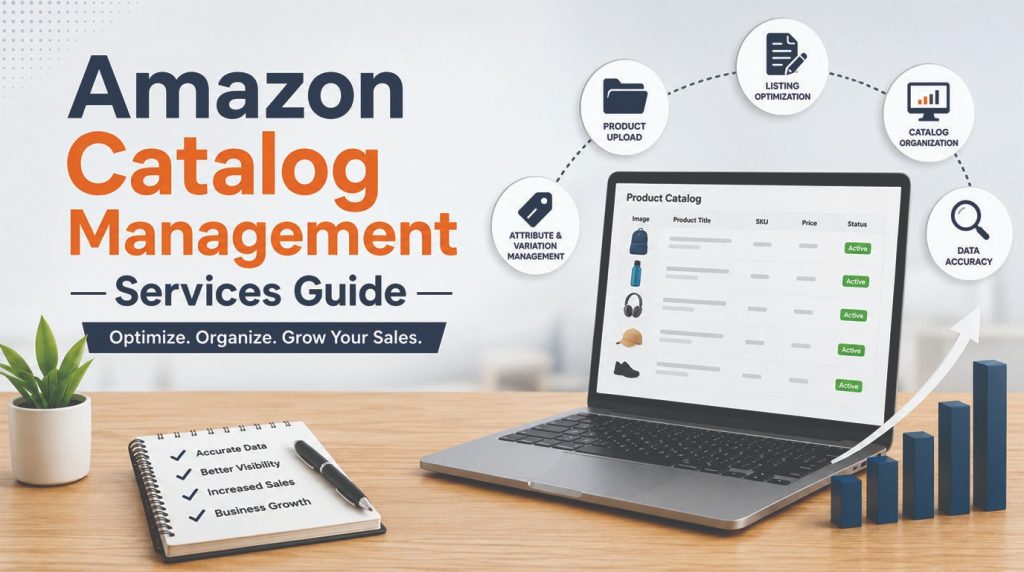
Amazon Catalog Management Services Guide

Managing your Amazon catalog is really important if you want to keep your products visible and competitive. When your catalog is well organized it helps customers find what they are looking for and gives you control over your listings and inventory. As Amazon gets more competitive you need to keep an eye on your catalog all the time not set it up once. You have to make sure your product information is accurate improve your listings and respond quickly when problems come up. Getting help with catalog management can make this process a lot easier. What Is Amazon Catalog Management Amazon catalog management is about keeping the information about your products up to date and making it better. This includes things like product titles, descriptions, bullet points, images and other important details. The goal is to create a catalog that’s consistent and helpful to customers, which will also help your business grow. A strong catalog reduces confusion. Helps your products show up properly on the marketplace. Why Amazon Catalog Management Matters If your catalog is incomplete or inaccurate it can cause a lot of problems. Customers might get confused. You might lose sales. If you manage your catalog well you can keep your information accurate and improve your listings. You can also see whats not working and make changes based on what customersre doing and whats trending on the marketplace. When your catalog is well managed it can help you get visibility build trust with customers and sell more. Key Elements of Amazon Catalog Management Product Information Accuracy Every product should have accurate information. This includes things like titles, descriptions and specifications. Keeping this information up to date can reduce confusion. Make shopping easier for customers. Listing Content Optimization You should review your product content to make sure it’s good. Titles should tell customers what the product is and descriptions and bullet points should explain the benefits and features. High quality images are also important because customers often look at pictures before deciding to buy. Keyword Management You should use keywords in your product content so customers can find what they’re looking for. But don’t overdo it. Make sure your keywords are natural and relevant. Managing Product Variations If you have products that come in sizes, colors or styles you need to manage them carefully. If you don’t it can be confusing for customers. Hurt your sales. Professional catalog management can help you organize your products correctly so customers can easily find what they want. Handling Catalog Issues Sometimes you might run into problems like product information or missing details. You need to fix these problems so they don’t hurt your visibility or sales. The Role of Advertising in Catalog Performance Your catalog and advertising are connected. If your product pages are good your ads will work better because customers will be more likely to engage with them. If you use Amazon ads management services you can align your advertising with your catalog improvements. This can help you get conversions. For growing brands combining catalog optimization with Amazon ads management services can help you get visibility and sales. How Professional Catalog Management Supports Growth Professional catalog management is not about fixing product information. It’s about analyzing, optimizing and maintaining your catalog. A good approach includes reviewing your listings checking product attributes, monitoring changes improving content and analyzing competitors. This approach works with a broader ecommerce strategy that focuses on business analysis, implementation, monitoring and support. Benefits of Outsourcing Catalog Management Managing a catalog can take a lot of time and attention. If you outsource it you can get help from specialists who know what they’re doing. This can help you keep your catalog consistent and let your team focus on things like product development and customer relationships. It can also make it easier to combine catalog management with activities like inventory management and advertising. Best Practices for Amazon Catalog Management You should treat catalog management as a process. Regularly review your product information, update content and monitor your listings. Use data to make decisions and don’t just change things without a reason. Identify whats not working and make improvements based on your business goals. If you use Amazon ads management services you should also see how catalog changes affect your advertising and customer engagement. Choosing the Right Catalog Management Partner When you’re looking for a catalog management partner you should look for experience, transparency and a clear understanding of ecommerce. A good partner should be able to analyze your catalog identify weaknesses make improvements and provide support. Final Thoughts Amazon catalog management is important for building an competitive ecommerce business. You need information, optimized content organized variations, strong images and regular monitoring to create a better experience, for customers and support stronger marketplace performance. Using Amazon ads management services can help you get visibility and sales and it is a great way to improve your ecommerce business.
Blog

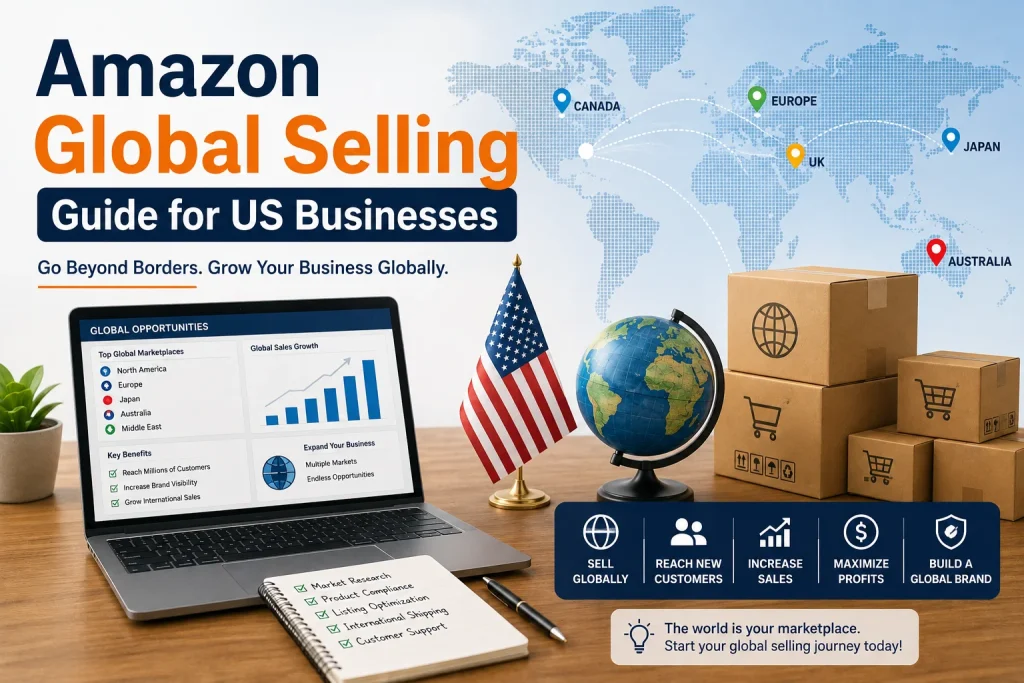
Amazon Global Selling Guide for US Businesses

Selling on Amazon gives US businesses an opportunity to reach customers far beyond the domestic market. Global selling can help brands diversify revenue, enter new markets, and build stronger international visibility. However, expanding into different countries requires more than simply copying an existing product listing. Each marketplace has its own customer expectations, language preferences, regulations, pricing conditions, and fulfillment requirements. Amazon recommends researching target marketplaces, selecting suitable products, completing country specific requirements, creating listings, arranging fulfillment, and continuously managing the business. A successful international strategy therefore combines market research, localization, inventory planning, listing optimization, pricing, and ongoing performance management. Why US Businesses Should Consider Global Selling International marketplaces can provide access to new audiences and additional revenue opportunities. A product that performs well in the United States may also have demand in Canada, Mexico, Europe, Australia, Japan, India, or selected Middle Eastern markets. Global expansion can also help businesses reduce dependence on one marketplace or seasonal sales period. Different countries may experience peak shopping periods at different times, giving brands opportunities to maintain more consistent sales throughout the year. The key is to expand strategically instead of launching products in every available marketplace at once. Choose the Right International Market The first step is deciding where your products have the strongest potential. Consider customer demand, competition, purchasing power, shipping requirements, product regulations, language, taxes, and local shopping behavior. Amazon provides tools that can help sellers evaluate international opportunities and understand demand by country. Businesses should use this information to identify markets where their products have a realistic chance of achieving profitable growth. Start with one or two promising markets, measure the results, and expand gradually when the business model proves successful. Understand Marketplace Requirements Before selling internationally, US businesses need to understand the requirements of each target country. Product standards, safety rules, taxes, customs procedures, labeling requirements, and other regulations can vary significantly. A product that is suitable for the US market may require changes before it can be sold successfully in another country. Researching these requirements before sending inventory can prevent unexpected costs and operational problems. Amazon also recommends reviewing tax, regulatory, product compliance, safety, and listing requirements for every country where a seller plans to operate. Localize Your Product Listings International customers do not always search, compare, or purchase products in the same way as US shoppers. Direct translation alone may not be enough. Your product title, bullet points, description, images, measurements, keywords, and other content should be adapted to the local marketplace. Use terminology that customers naturally understand and make sure measurements are presented in familiar local units. This is where an amazon listing optimization service can provide valuable support. Professional optimization can help businesses adapt product content for different audiences while maintaining a consistent brand identity. Strong localization should focus on customer intent rather than simply translating every sentence word for word. Create a Competitive Pricing Strategy International pricing requires careful planning. Currency differences, marketplace fees, shipping expenses, taxes, duties, fulfillment costs, and local competition can all affect profitability. A product that generates healthy margins in the US may become less profitable overseas if these additional expenses are ignored. Businesses should calculate their complete international cost structure before setting prices. Amazon also provides tools that can synchronize pricing across marketplaces, although sellers can choose to establish separate pricing strategies for individual stores. Select the Right Fulfillment Method Fulfillment is one of the most important parts of global expansion. US businesses generally need to decide whether to fulfill international orders themselves or use Amazon fulfillment solutions. Fulfillment by Amazon can handle activities such as picking, packing, shipping, returns, and customer service. Amazon also offers international fulfillment options that can help eligible sellers reach customers in selected markets. The right approach depends on product size, demand, inventory levels, delivery expectations, margins, and the countries being targeted. Manage Inventory Carefully International expansion can create additional inventory challenges. Sending too much stock to an unfamiliar marketplace can tie up capital, while insufficient inventory can lead to missed sales and poor customer experiences. Use demand forecasts, sales trends, lead times, and seasonal patterns to determine appropriate inventory levels. Begin with manageable quantities and increase stock as reliable sales data becomes available. A centralized inventory strategy can also help businesses avoid unnecessary stock duplication across multiple countries. Optimize for Local Customer Behavior Successful global selling requires understanding how customers in each market make purchasing decisions. Study local competitors, popular search terms, preferred product features, pricing expectations, reviews, and seasonal shopping patterns. Product images may also need cultural adjustments to make the product more relevant to local customers. An effective amazon listing optimization service can help refine marketplace content based on local search behavior and customer expectations while keeping the brand message consistent. Build a Strong International Advertising Strategy Once listings are properly localized, advertising can help introduce products to new audiences. Start with controlled campaigns and use performance data to identify profitable keywords, products, and customer segments. Avoid simply copying a US advertising strategy into another country. Search behavior, competition, advertising costs, and conversion patterns can vary between marketplaces. Monitor advertising performance alongside organic sales so you can determine whether your international strategy is producing sustainable growth. Monitor Performance Across Markets Global selling requires regular performance analysis. Track sales, conversion rates, advertising efficiency, inventory levels, customer feedback, returns, profitability, and marketplace specific challenges. Compare performance between countries to determine where additional investment makes sense. A market with strong sales but weak margins may require pricing or fulfillment changes, while a market with strong conversion and healthy margins may deserve greater inventory and advertising investment. Continuous optimization is essential because international expansion is an ongoing process rather than a one time launch. Common Mistakes US Businesses Should Avoid One common mistake is entering too many markets simultaneously. This can make inventory, compliance, customer service, and advertising difficult to manage. Another mistake is using identical listings everywhere. International shoppers have different languages, search habits, expectations, and cultural preferences. Ignoring local regulations is another

Blog

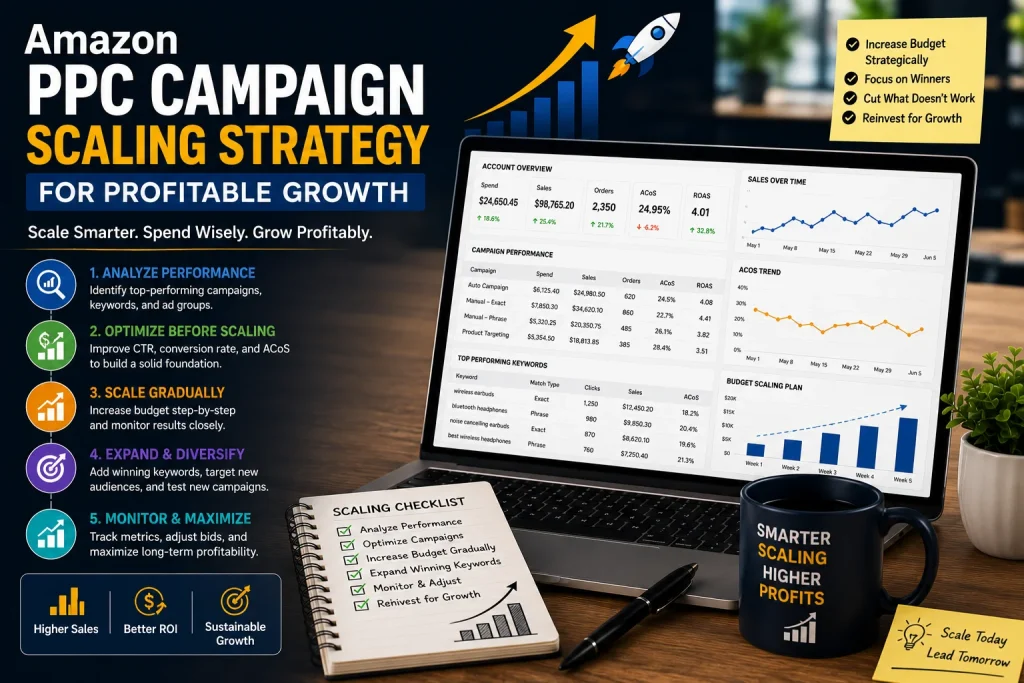
Amazon PPC Campaign Scaling Strategy for Profitable Growth

Running Amazon PPC campaigns is the start of building a successful ecommerce business. The real challenge is when you want to increase sales without losing money. Many sellers make the mistake of spending much on advertising too quickly which often results in higher costs and lower returns. A good plan to grow your campaigns helps you grow steadily while keeping profits healthy. This guide explains how to grow your Amazon PPC campaigns and achieve long term business growth. Build a Strong Foundation Before Scaling Before you spend more on advertising make sure your existing campaigns are doing well. If you grow a campaign that is not working well you will just waste money. Look at how your campaignsre doing including how many people buy something after clicking on your ad, how many people click on your ad how much you spend on advertising and how much you get back from your ads. Your product pages should also be complete with titles, good descriptions, nice pictures and prices that are competitive. Good campaigns give you the confidence to grow successfully. Increase Budgets Gradually One big mistake sellers make is spending as much on advertising overnight. If you increase your budget much it can be hard to understand how your campaigns are doing. Instead increase the amount you spend on advertising a bit every day over several days and watch what happens. This way Amazon can. You can keep doing well. Growing slowly is always better than growing fast. Expand Performing Keywords Not every keyword is worth spending more on. Focus on the keywords that make you money. Spend more on the keywords that do well and less on the ones that do not. This way you can get more people to visit your page without wasting money. This approach makes your advertising money go further. Launch New Campaign Types As your business grows, try types of advertising. Sponsored Products are important. You should also try Sponsored Brands and Sponsored Display campaigns to reach more people and make your brand stronger. Running types of campaigns gives people more chances to find your products when they are shopping. Use Data to Guide Every Decision To grow successfully you need to make decisions based on facts, not guesses. Every time you change something in your campaign it should be because of what the data says. Amazon Reports Management is very helpful here. Looking at your advertising reports helps you find keywords that make money products that are not doing well what customers are searching for and where you can spend your money better. Looking at your reports regularly prevents mistakes. Helps you make smarter decisions. Optimize Bids Continuously The market is always changing. A keyword that does today may not do well tomorrow. Look at your bids often. Change them if you need to. Spend more on keywords that make you money and less on keywords that’re too expensive. Always looking at your bids keeps your campaigns running Remove Wasted Ad Spend Growing successfully is not about spending more. It is also about not wasting money. Find keywords that people click on but do not buy anything and add them to your keywords so you do not waste money on them. Using Amazon Reports Management regularly helps you find these keywords and make your campaigns better. Monitor Profitability of Sales Alone Just because you sell more it does not mean you make money. Many sellers focus on sales. Forget about how much they spend on advertising. Look at how money you make how much you spend on advertising and how well your business is doing overall. This way you can make sure your campaigns are helping your business. Growing your campaigns should always make you money, not just sell more. Test and Improve Regularly good campaigns need to be tested. Try bidding strategies, keywords and campaign structures. Small changes can make a difference in the long run. With Amazon Reports Management you can look at your test results find what works and make decisions. Prepare Inventory Before Scaling If you run out of products during an advertising campaign it can hurt your performance. Before you spend more on advertising make sure you have products, in stock. This way you can keep selling. Your advertising will keep working. You should always plan your inventory and advertising together. Work with Experienced Professionals Growing Amazon PPC campaigns requires experience and constant attention. Working with professionals can help you avoid mistakes and find ways to grow. Experts look at market trends make your campaigns better and use Amazon Reports Management to make decisions that help you make money. Working with professionals allows you to focus on growing your business while keeping your advertising campaigns running Conclusion Growing Amazon PPC campaigns successfully takes time, planning and constant improvement. Of just spending more on advertising you should focus on making your campaigns better growing your good keywords looking at how your campaigns are doing and making decisions based on facts.

Blog

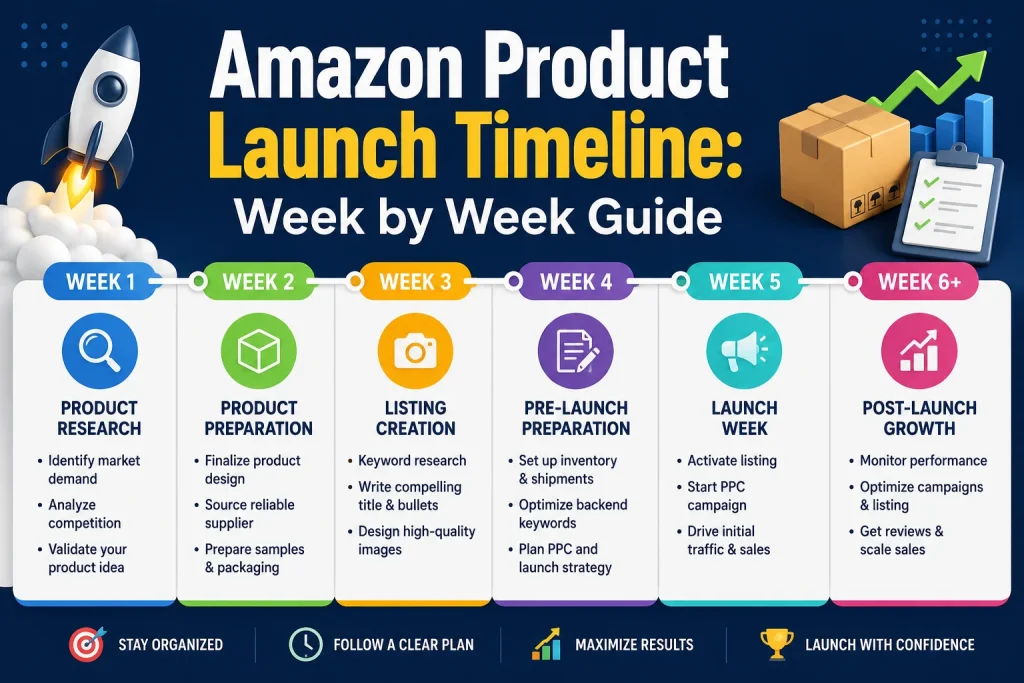
Amazon Product Launch Timeline: Week by Week Guide

Launching a new product on Amazon is exciting but success rarely happens overnight. A strong product launch needs planning preparation and consistent action at every stage. Following a clear Amazon product launch timeline helps sellers stay organized avoid costly mistakes and build momentum from the beginning. Whether you are launching your first product or expanding an existing ecommerce business this week by week guide can help you understand what to focus on before during and after launch. Week One Research and Launch Planning The first week should focus on preparation. Start by understanding your target customer and studying the market. Look at competing products customer reviews pricing and the features buyers care about most. This is also the right time to define your launch goals. Decide whether your priority is sales visibility keyword ranking or building initial product data. Clear goals make it easier to measure progress later. Prepare your launch budget and create a simple action plan. Sellers who work with a Shopify store management agency often understand the importance of organized ecommerce planning across different sales channels. The same structured approach can be useful for Amazon product launches. Week Two Product Listing Preparation Your product listing should be ready before the launch begins. Focus on creating a clear title strong product descriptions and persuasive bullet points. Every part of the listing should explain why your product is useful and how it solves a customer problem. Images are equally important. Use high quality visuals that show the product clearly and explain its main benefits. Your main image should attract attention while additional images help answer common customer questions. During this week review the listing from a buyer perspective. Ask yourself whether a new customer can understand the product within a few seconds. Week Three Keyword and Campaign Setup The third week is about building your visibility strategy. Identify relevant search terms that match your product and customer intent. Avoid targeting random keywords simply because they have high search volume. Prepare your advertising campaigns before the product goes live. Create a testing plan with different keyword targets and match types. Set a realistic budget and decide how you will monitor performance. A Shopify store management agency often uses data driven campaign planning to improve ecommerce performance. Applying this same mindset to Amazon can help sellers make better launch decisions instead of relying on guesswork. Week Four Final Checks and Product Launch Now it is time to complete your final checks. Review your inventory status listing content pricing images and advertising campaigns. Make sure everything is ready before customers begin seeing your product. Once the product is live monitor activity closely. Do not make major changes every few hours. Give your campaigns enough time to collect useful data while watching for serious issues. Your focus during launch week should be visibility and early customer response. Pay attention to impressions clicks conversions and customer questions. Week Five Performance Review and Optimization After the first week of launch it is time to study the data. Identify which keywords are attracting clicks and which are generating sales. Review your advertising performance and compare results with your original goals. If certain keywords are receiving clicks without conversions they may need closer attention. You may also discover that customers respond better to a specific product benefit than expected. This is where ongoing ecommerce experience becomes valuable. A Shopify store management agency understands that performance improvement usually comes through regular testing and optimization rather than one major change. Week Six Scaling What Works By week six you should have enough information to identify your strongest opportunities. Focus more attention on keywords and campaigns that are producing positive results. Avoid increasing your budget too quickly. Scale gradually and continue monitoring your conversion rate and advertising costs. At the same time review your inventory levels so strong demand does not create stock problems. A successful launch is not finished after the first sale. The goal is to create a reliable sales foundation that can continue growing over time. Common Amazon Launch Mistakes to Avoid Many sellers launch without enough inventory or rush their listing preparation. Others spend too much on advertising before understanding their campaign data. Another common mistake is changing everything too quickly. Product launches need patience and consistent monitoring. Sellers should make decisions based on useful data instead of emotional reactions to short term results. Working with a Shopify store management agency can teach businesses the value of structured store management and continuous performance review. These principles are also highly useful for Amazon sellers. Final Thoughts A successful Amazon product launch is built step by step. Week one is about research and planning. Week two focuses on listing preparation. Week three builds the keyword and advertising strategy. Week four launches the product while the following weeks focus on data analysis and growth.

Blog

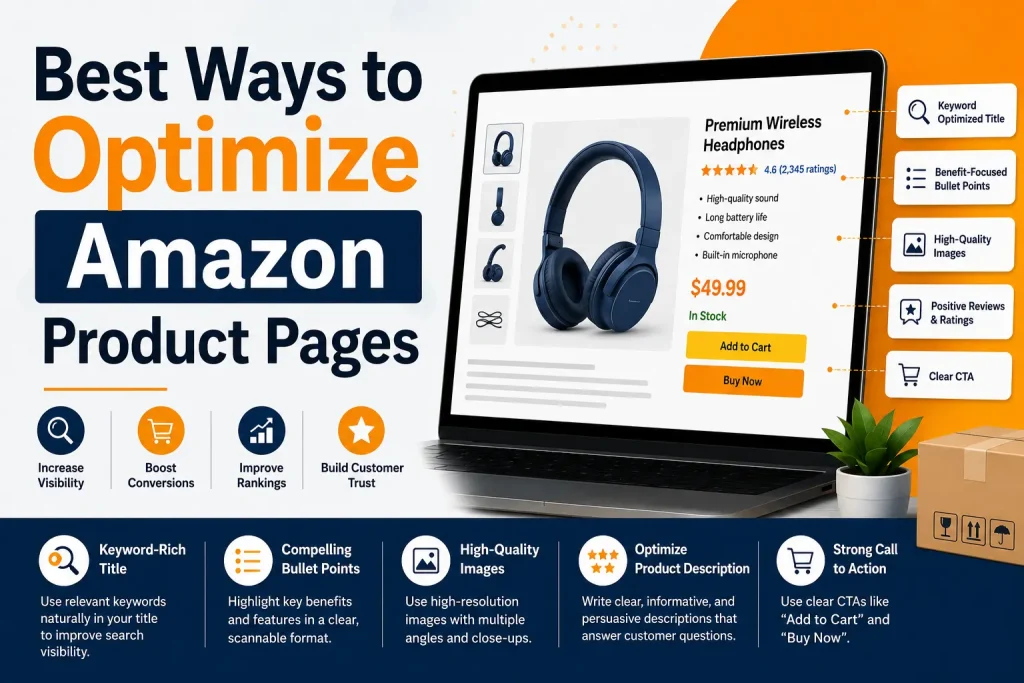
Best Ways to Optimize Amazon Product Pages

Success on Amazon is not about listing a product and waiting for sales. Thousands of competitors offer products so businesses must create product pages that attract shoppers build trust and encourage purchases. A optimized product page improves visibility in search results and increases conversion rates. Every section of the page helps customers make buying decisions. Businesses that invest time in improving their product pages often experience rankings, higher sales and stronger customer loyalty. Professional ecommerce companies know that optimization is a process, not a one-time task. Many growing brands work with a store management agency to maintain consistent product presentation and customer experience across multiple selling platforms. Create a Strong Product The product title is one of the things shoppers notice. It should clearly describe the product. Include relevant keywords naturally. A good title helps customers and the Amazon search algorithm understand what the product offers. * Product name * Brand name * Important features * Color or size if applicable * keyword Don’t stuff unnecessary words into the title. Readability is just as important as keyword relevance. Use High Quality Product Images Images often influence buying decisions than text. Customers can’t physically inspect products so visuals must answer their questions. Include images showing: * Front view * Side view * Close-up details * Product dimensions * Lifestyle usage * Packaging Professional images increase customer confidence. Reduce return rates. Write Clear and Persuasive Bullet Points Bullet points provide information about the products key benefits. Of listing specifications explain how each feature improves the customers experience. Good bullet points focus on: * Product quality * Unique selling points * Ease of use * Durability * Customer benefits Short and informative bullet points are easier to read on desktop and mobile devices. Develop an Engaging Product Description A detailed product description gives shoppers information. This section should explain how the product solves customer problems in a tone. A strong description includes: * Product features * applications * Material quality * Care instructions * Warranty information if available Readable paragraphs make the content easier to understand and keep customers engaged. Optimize Backend Keywords Backend keywords help Amazon understand your product without displaying those words to customers. These hidden keywords improve discoverability when shoppers search using terms. Focus on: * spellings * Related search phrases * Common customer terms Avoid repeating keywords already used in the visible listing. Encourage Customer Reviews Positive reviews build credibility. Improve conversion rates. Buyers often compare ratings before making purchasing decisions. Ways to encourage reviews include: * Delivering quality products * Providing customer service * Following up after delivery * Responding politely to customer concerns customer feedback helps identify areas for future product improvements. Answer Customer Questions The customer question section provides information for future buyers. Prompt and accurate responses reduce uncertainty. Improve trust. Businesses that actively monitor customer questions often experience better engagement and increased sales. Price Products Pricing plays an important role in winning the Buy Box and increasing conversions. Study competitor pricing regularly while maintaining profit margins. Pricing strategies may include: * Limited time discounts * Bundle offers * promotions * Volume pricing Customers appreciate competitive pricing when combined with strong product value. Improve Mobile Shopping Experience A percentage of Amazon shoppers purchase products using mobile devices. Product pages should be easy to read on screens. * Keep paragraphs short * Use language * Prioritize information * Display images Mobile-friendly listings improve customer experience and reduce abandonment. Monitor Product Performance Optimization never stops after publishing a listing. Successful sellers regularly review performance metrics to identify opportunities for improvement. Track indicators such as: * Conversion rate * Click-through rate * ranking * Sales performance * Customer reviews * Return rate Making data-driven improvements helps product pages remain competitive in changing marketplaces. Maintain Consistency Across Sales Channels Many businesses sell on ecommerce platforms alongside Amazon. Maintaining branding, pricing, product information and customer experience strengthens brand recognition. Working with a store management agency allows businesses to streamline inventory management synchronize product information and provide customers with a consistent shopping experience. A shopify store management agency helps businesses grow across online marketplaces. Invest in Continuous Optimization Amazon frequently updates its marketplace, customer behavior changes and competitors constantly improve their listings. Businesses that continuously refine their product pages remain ahead of the competition. Regular optimization includes: * Updating keywords * Improving images * Refreshing descriptions * Testing pricing strategies * Analyzing competitor listings * Monitoring customer feedback Many brands collaborate with a store management agency to strengthen their overall ecommerce strategy. A shopify store management agency ensures growth across different online stores. Conclusion Optimizing Amazon product pages requires attention to every detail. Each improvement contributes to visibility, higher customer confidence and increased sales. Successful brands understand that optimization is a process. By focusing on customer experience using product information monitoring performance and working with experienced ecommerce professionals when needed businesses can build product pages that consistently perform well in competitive marketplaces. Working with a shopify store management agency positions sellers for growth and long-term success, in the evolving world of ecommerce.

Blog

Amazon PPC For Private Label Brands: A Complete Guide

Selling label products on Amazon can be super profitable.. You need to make sure customers can find your products easily. With millions of listings there just relying on organic rankings isn’t enough. That’s where Amazon PPC comes in. It’s a way for private label brands to grow. Amazon Pay Per Click advertising lets sellers show their products to people who are already searching for items. When done right PPC campaigns can increase visibility boost sales and make your brand more popular in a market. What Is Amazon PPC? Amazon PPC is an advertising model where you only pay when someone clicks on your ad. These ads appear in search results, product pages and other places on Amazon. For label brands PPC is really important. It helps get your new products noticed away. It also improves your rankings by increasing sales and customer engagement. Why Private Label Brands Need Amazon PPC Private label sellers face challenges. They often start with recognition and limited customer trust. Amazon PPC helps overcome these obstacles by: * Increasing product exposure * Driving targeted traffic * Boosting sales performance * Improving keyword rankings * Supporting product launches * Building long-term brand awareness Understanding Amazon PPC Campaign Types To get the best results private label sellers need to know about the main campaign types. Sponsored Products Sponsored Products are the commonly used ad format. These ads promote listings and appear in Amazon search results. They are ideal for: * New product launches * Keyword targeting * Increasing sales volume * Improving product visibility Sponsored Brands Sponsored Brands allow sellers to showcase products along with their brand message. Benefits include: * brand awareness * Higher visibility in search results * More traffic to branded storefronts * customer engagement Sponsored Display Sponsored Display ads help sellers reach shoppers both on and off Amazon. These campaigns can: * Retarget customers * Increase repeat purchases * Expand audience reach * Support long-term growth strategies Keyword Research Is the Foundation of Success Effective keyword research is critical for PPC campaigns. Private label sellers should focus on: * High-volume keywords * Long-tail keywords * Competitor keywords * Product- search terms * Customer intent phrases Creating a PPC Campaign Structure A well-organized campaign structure makes optimization easier and improves overall performance. Consider separating campaigns based on: * Product categories * Keyword match types * Brand terms * Competitor terms * targeting * Manual targeting The Importance of Brand Protection As private label brands grow, protecting brand identity becomes increasingly important. Using a Brand Registry Amazon Service helps sellers secure their intellectual property while unlocking valuable advertising features. Optimizing PPC Campaign Performance Launching campaigns is the beginning. Continuous optimization is essential for maintaining profitability. Key optimization activities include: * Monitoring advertising costs * Adjusting bids regularly * Adding keywords * Analyzing conversion rates * Improving product listings * Testing campaign strategies Common PPC Mistakes Private Label Sellers Should Avoid Many sellers waste advertising budgets because of avoidable mistakes. Some common errors include: * Targeting irrelevant keywords * Ignoring keywords * Failing to monitor campaign performance * Setting budgets * Neglecting listing optimization * Focusing on sales instead of profitability How Brand Registry Supports PPC Growth Many advanced advertising opportunities become available after brand registration. A trusted Brand Registry Amazon Service allows sellers to unlock premium marketing tools that improve campaign effectiveness. Measuring Amazon PPC Success Several key metrics help determine campaign effectiveness. Important measurements include: * Advertising Cost of Sales * Click Through Rate * Conversion Rate * Cost Per Click * Return on Ad Spend * Sales Growth Conclusion Amazon PPC is one of the most powerful growth tools available to private label brands. It helps sellers gain visibility attract buyers and increase sales, in highly competitive marketplaces. A Brand Registry Amazon Service can help you focus on this.

Blog

Signs Your Amazon Business Needs Professional Management

Running an Amazon business can be really rewarding. It also comes with many challenges. As competition increases and Amazon updates its policies and algorithms managing a seller account becomes more demanding. Many business owners start their Amazon journey on their own. There comes a point when professional support is necessary to keep growing and making a profit. If your business is facing issues, declining sales or increasing workloads it may be time to consider expert management. Understanding the warning signs early can help you avoid mistakes and position your Amazon business for long-term success. Your Sales Have Stopped Growing One of the signs that your Amazon business needs professional management is stagnant sales. If your products are no longer generating growth despite your efforts there may be underlying issues affecting performance. Professional managers analyze product listings, customer behavior, competitor activity and marketplace trends to identify growth opportunities. They implement strategies that improve visibility, conversions and overall account performance. When sales plateau it often indicates that your current approach is no longer enough to compete in the marketplace. Managing Daily Operations Is Taking Much Time Amazon sellers often find themselves overwhelmed with daily tasks. These tasks include inventory tracking, customer service listing updates, advertising management and policy compliance. As your business grows these responsibilities become increasingly difficult to manage. Spending all your time handling tasks leaves little room for business expansion and strategic planning. Professional management allows you to focus on growth while experts handle the day-to-day operations that keep your account running Your Advertising Costs Keep Increasing Amazon advertising can drive sales. However poor campaign management can quickly consume your budget without delivering results. If your advertising costs continue to rise while your return on investment declines it is an indicator that your campaigns need expert attention. Professional account managers monitor keyword performance, bidding strategies, audience targeting and campaign optimization to maximize profitability. Effective advertising management ensures that every dollar spent contributes toward growth for your Amazon business. Inventory Problems Are Becoming Common Inventory management is crucial for Amazon selling. Running out of stock can hurt rankings and sales. Excess inventory increases storage fees. Reduces cash flow. Frequent stockouts, overstock situations or inaccurate forecasting suggest that your inventory processes need improvement. Experienced professionals use forecasting tools and sales data to maintain inventory levels and prevent costly disruptions to your business operations. You Struggle to Understand Business Performance Amazon provides an amount of data. However many sellers struggle to turn that information into decisions. This is where Amazon Reports Management becomes essential. Professional account managers review sales reports, advertising metrics, inventory performance, customer behavior and profitability data to uncover insights. Through Amazon Reports Management professionals evaluate performance indicators and provide clear recommendations based on real marketplace data. Regular Amazon Reports Management helps identify products, optimize advertising budgets improve inventory planning and strengthen overall business strategy. Product Listings Are Not Performing Well High-quality listings are critical for attracting customers and improving conversion rates. If your products receive traffic but fail to generate sales your listings may need optimization. Common issues include titles, poor keyword targeting, ineffective images and unconvincing product descriptions. Professional managers continuously optimize listings based on market trends and customer behavior to improve visibility and conversions for your Amazon business. Account Health Issues Are Increasing Amazon monitors seller performance metrics. Late shipments, customer complaints, policy violations and negative feedback can damage account health. Even lead to suspension. If you are receiving warnings or struggling to maintain performance standards professional management can help protect your account. Experts stay updated on Amazon policies. Ensure compliance across all aspects of your business reducing the risk of penalties and account-related issues. You Are Expanding Your Product Catalog Launching products requires detailed planning, market research, keyword analysis, inventory preparation and promotional strategies. As your catalog grows managing products becomes increasingly complex. Professional account managers coordinate product launches, optimize listings, monitor performance and ensure each product receives the attention necessary for success. This structured approach increases the likelihood of achieving rankings and sales momentum for your Amazon business. You Are Not Using Data to Make Decisions Successful Amazon businesses rely heavily on data-driven decision-making. Sellers who make choices based on assumptions often miss opportunities. Encounter avoidable challenges. Amazon Reports Management helps identify products, optimize advertising budgets improve inventory planning and strengthen overall business strategy. Businesses that consistently utilize Amazon Reports Management gain a competitive advantage because they can respond quickly to market changes and customer demands. Your Competitors Are Outperforming You If competing products consistently rank higher attract reviews and generate stronger sales it may be time to seek professional guidance. Experienced account managers conduct detailed competitor analysis to understand market trends, pricing strategies, advertising approaches and listing optimization techniques. This information helps develop a strategy that allows your brand to compete effectively and capture a larger share of the market. Conclusion In conclusion Amazon offers opportunities, for sellers. However success requires attention, expertise and strategic execution. If you are experiencing sales, rising advertising costs, inventory challenges, account health concerns or difficulty analyzing performance professional management can make a significant difference. With the help of Amazon Reports Management you can make decisions and drive growth for your Amazon business.

Blog

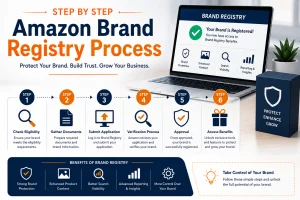
Step by Step Amazon Brand Registry Process

Building a brand on Amazon requires more than just listing products and waiting for sales to happen. As competition grows protecting your brand becomes an important step for long-term success. Amazon Brand Registry is a program that helps brand owners secure their intellectual property improve product listings and get access to advanced marketing features. Many sellers know about the benefits. Are unsure about the exact registration process. This guide explains the step by step Amazon Brand Registry process. How it can make your business stronger while creating more opportunities for growth. What Is Amazon Brand Registry Amazon Brand Registry is a program that helps brand owners protect their trademarks and control their product listings. Once you’re enrolled you get access to tools that improve brand visibility and help prevent sellers from misusing your brand identity. The program gives you control over product content better reporting features and more advertising opportunities that can improve your overall marketplace performance. Why Brand Registry Matters Brand Registry offers important advantages for Amazon sellers. Better Brand Protection: It helps protect your products from sellers and listing hijackers. This ensures customers get products while keeping your brand reputation intact. Enhanced Content Options: Registered brands can create product pages with rich images, detailed descriptions and enhanced content that improves customer engagement. Greater Listing Control: Brand owners have authority over product titles, descriptions, images and other listing elements. Advanced Marketing Tools: Enrollment unlocks promotional features that can help increase visibility and sales. Step 1 Choose a Unique Brand Name Before applying for Brand Registry you need a brand name. The name should be original and capable of receiving trademark protection. Take time to research the marketplace and ensure your chosen brand name isn’t already being used by another company. A strong and unique brand identity creates a foundation for future growth. Many sellers also use an Amazon Product Hunting service during this stage to identify niches and products that align with their brand strategy. Step 2 Obtain a Registered Trademark A registered trademark is one of the requirements for Amazon Brand Registry. Your trademark should match the brand name displayed on your products and packaging. Amazon accepts trademarks issued by approved trademark offices in countries. The trademark serves as proof that you own the brand and helps Amazon verify your application. Step 3 Prepare Your Brand Assets Before beginning the registration process gather all materials. Important assets include: * Trademark registration information * Brand logo * Product images showing the brand name * Packaging images displaying the brand * Business contact information Having these materials ready will make the application process faster and smoother. Step 4 Create an Amazon Brand Registry Account Visit the Amazon Brand Registry portal and sign in using your Amazon account. If you already have a seller account you can use the credentials. Make sure the account information is accurate and up to date before proceeding with the application. Step 5 Submit Your Brand Information After signing in enter the required details about your brand. Amazon will ask for: * Brand name * Trademark number * Trademark office * Product categories * Countries where products are manufactured and distributed Accuracy is extremely important during this stage. Any mismatch between trademark records and application details may delay approval. Step 6 Upload Product and Packaging Images Amazon requires proof that your brand is actively being used on products. Upload images showing: * Brand name on products * Brand logo on packaging * Product labels * Product inserts if available These images help Amazon verify ownership and confirm that the brand exists in the marketplace. Many businesses combine this process with an Amazon Product Hunting service to ensure they are launching products with demand and branding potential. Step 7 Complete Amazon Verification Once your application is submitted Amazon will begin the verification process. A verification code is typically sent to the trademark owner listed in trademark records. You must obtain this code. Submit it through the Brand Registry portal. This step confirms that you are authorized to manage the brand. Step 8 Wait for Approval After verification is completed Amazon reviews the application. Approval times may vary depending on the trademark and application details. Most applications are reviewed within a days to a few weeks. During this period monitor your email regularly in case Amazon requests information. Step 9 Access Brand Registry Features After approval your brand gains access to tools and resources. These may include: * Product content * Brand analytics * Brand advertising * Store creation tools * Counterfeit protection features * Search and reporting tools These resources help strengthen brand visibility and improve marketplace performance. Step 10 Continue Growing Your Brand Brand Registry is the beginning of your Amazon growth journey. Successful brands continually optimize listings monitor competitors improve advertising campaigns and expand product lines. Many businesses rely on an Amazon Product Hunting service to discover opportunities and maintain a competitive advantage in their category. Regular analysis of customer behavior and market trends can help identify products that support long-term growth. Common Mistakes to Avoid Many sellers experience delays because of errors. Common mistakes include: * Using a brand name that does not match the trademark * Uploading product images * Providing business information * Submitting trademark details * Failing to complete verification Careful preparation can significantly increase the likelihood of a successful application. Final Thoughts The Amazon Brand Registry process is one of the valuable investments a seller can make. It provides protection, control and access to tools that support sustainable business growth. By following each step sellers can secure their brand identity and create a stronger presence, in the marketplace.

Blog

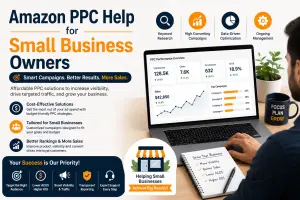
Amazon PPC Help for Small Business Owners

Running a business on Amazon can be exciting.. It can also feel overwhelming when your products are not getting enough visibility. Many sellers invest time and money into launching products. Yet they struggle to generate sales. This is where Amazon PPC becomes one of the important tools for success. According to Bizistech managed PPC campaigns help businesses increase visibility. They improve conversions. Maximize return on investment through data-driven strategies and campaign optimization. For business owners Amazon PPC is more than just advertising. It is a way to compete with brands. You can place your products directly in front of customers who are already searching for items. With the planning even a small budget can produce impressive results. Why Amazon PPC Matters for Businesses * Amazon is a competitive marketplace with millions of sellers. * Without advertising it becomes difficult for new or small businesses to appear in search results. * PPC advertising allows sellers to gain visibility faster. They can attract buyers immediately. Small businesses often face challenges. These include marketing budgets, low brand recognition and weak product rankings. A proper PPC strategy helps overcome these problems. You can target the audience with relevant keywords. Many experienced sellers also believe that PPC is not about ads. It is about understanding data, conversion rates and customer behavior. Discussions among Amazon sellers highlight that successful campaigns require testing. They need keyword optimization and listing improvements. Common PPC Problems Small Sellers Face Many small business owners start running ads without understanding campaign structure or keyword targeting. As a result they spend money. Fail to achieve profitable sales. Some common PPC issues include: * High Advertising Costs: keyword selection and weak bidding strategies can quickly waste advertising budgets. Sellers often target keywords that attract clicks but not conversions. * Low Conversion Rates: Sometimes ads generate traffic. Customers do not purchase the product. This usually happens when product listings are not optimized properly. * Lack of Campaign Monitoring: Amazon PPC campaigns require monitoring. Ignoring campaign performance can lead to spending and declining profitability. The Importance of a Strong Listing Before running PPC ads sellers should ensure their product listings are fully optimized. A professional Amazon listing optimization service can improve product visibility. It can increase conversion rates significantly. When a listing is optimized correctly customers trust the product more. They are more likely to make a purchase. This also improves the performance of PPC campaigns. Amazon rewards listings with engagement and sales. A quality Amazon listing optimization service focuses on keyword placement. They use product descriptions compelling titles and high-quality images. These elements work together to support advertising campaigns. They improve rankings. Smart PPC Strategies for Small Business Owners businesses do not need massive advertising budgets to succeed. They simply need an approach. * Start with Keyword Research: Keyword research is the foundation of every PPC campaign. Sellers should identify keywords that customers are actively searching for. They focus on terms with buying intent. Long-tail keywords are often more affordable. They produce conversions for small businesses because competition is lower. * Use Manual Campaigns Together: Automatic campaigns help discover new keywords and customer search behavior. Manual campaigns provide control over bidding and targeting. Using both campaign types together creates a strategy. It helps improve performance over time. * Monitor Advertising Metrics: Business owners should regularly track PPC metrics. These include click-through rate, conversion rate, advertising cost of sales and return on ad spend. Monitoring these numbers helps identify which campaigns are profitable. They can identify which need improvement. Improve Listings Continuously Even the best ads cannot succeed if the product listing is weak. Many successful sellers combine PPC campaigns with an Amazon listing optimization service. This improves customer engagement. Increases sales performance. Optimized listings also help products rank organically over time. They reduce dependence on paid advertising. How Professional PPC Support Helps Managing Amazon PPC can become difficult for business owners. They are already busy handling inventory, customer service and daily operations. Professional PPC support saves time. It improves campaign performance through expert management and strategic optimization. Bizistech highlights the importance of campaign management. They stress bid optimization, keyword research, A/B testing and continuous monitoring. These are key to achieving long-term advertising success. Professional PPC experts understand how Amazon advertising works. They can identify opportunities that many beginners miss. They also help businesses avoid mistakes. These mistakes waste advertising budgets. In addition to PPC management many sellers benefit from an Amazon listing optimization service.. Listing quality work together for better performance. Building Long-Term Amazon Growth Amazon success does not happen overnight. Small business owners must focus on long-term growth strategies. They should not expect results. A strong combination of optimized listings, targeted advertising, consistent monitoring and customer-focused branding can help businesses build sales over time. Many experienced sellers recommend learning from campaign data. They suggest testing approaches and improving listings regularly. This helps stay competitive in the marketplace. Using an Amazon listing optimization service alongside PPC management gives businesses a foundation for long-term success. Better listings improve customer trust. They increase conversions. Support both paid and organic growth. Final Thoughts Amazon PPC can completely transform the growth of a business when managed correctly. It helps products gain visibility. They attract buyers. Compete with larger brands, in a crowded marketplace.

Scroll to Top