BizisTech | No.1 Ecommerce Marketing Agency USA

#AmazonSelling

Blog

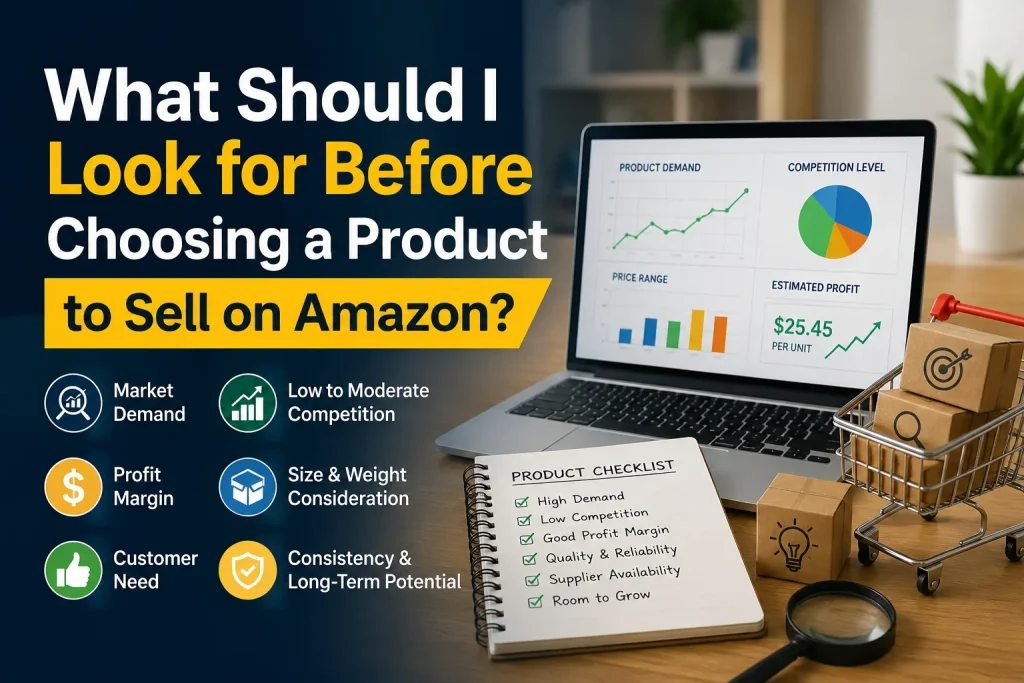
What Should I Look for Before Choosing a Product to Sell on Amazon?

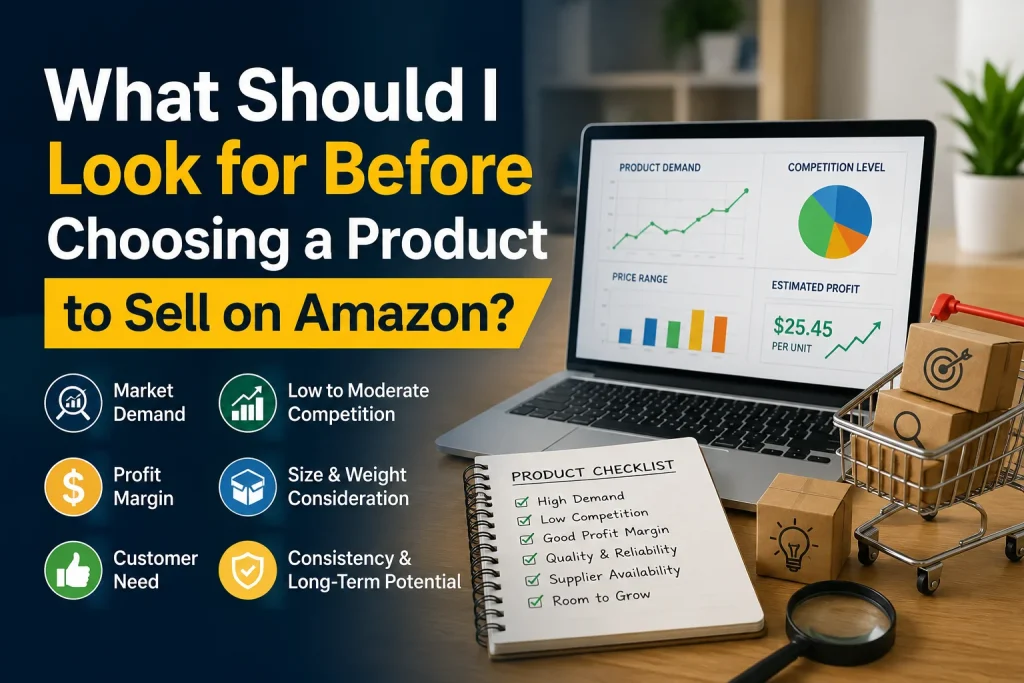
Choosing the product is one of the most important decisions an Amazon seller can make. A product with demand, healthy profit potential, manageable competition and room for improvement can create a solid foundation for long term growth. On the hand choosing a product simply because it looks popular can lead to high costs, slow sales and unnecessary competition. Before investing money in inventory sellers should carefully evaluate important factors. Product research should focus on customer demand, competition, profitability, product quality, sourcing and future growth potential. Start With Customer Demand The first question to ask is whether customers are actively searching for the product. A product may look attractive. If people are not consistently interested in buying it generating sales can be difficult. Look for products that have demand rather than products that depend entirely on short lived trends. Examine search activity, sales patterns, customer interest and competing products. Seasonal products can still be profitable. Sellers should understand when demand rises and falls before making an investment. Study the Competition Carefully Competition can determine how difficult it will be to establish a product. Examine the leading products in your chosen category. Study their prices, reviews, features, images, descriptions and overall customer experience. Pay attention to weaknesses. Poor product quality, descriptions, weak images, limited features or repeated customer complaints can reveal opportunities for a better product. The goal is not necessarily to find a category with no competition. Instead look for a market where demand exists but customers are not completely satisfied with the options. Calculate Profit Before Buying Inventory Sales volume does not always mean profitability. A product that generates orders can still lose money if its costs are too high. Calculate the expected selling price and subtract product costs, shipping, Amazon fees, advertising expenses, storage costs, returns, packaging and other business expenses. This gives you a picture of the potential profit. It is also wise to consider expenses. A product with narrow profit margins can become unprofitable when advertising costs increase or supplier prices change. Look for Opportunities to Improve the Product A product opportunity often comes from solving a problem better than existing products. Read customer reviews of competing products. Identify common complaints. Customers may mention problems with durability, design, size, packaging, usability, materials or instructions. These complaints can provide ideas for product improvements. Ask yourself whether you can create something that offers an experience. Even small improvements can make a product more appealing when they address customer frustrations. Consider Product Size and Shipping Costs Product dimensions and weight can have an effect on profitability. Large or heavy products may require expensive storage and transportation while fragile products can create additional risks through damage and returns. For sellers products that are relatively easy to package, store and transport can be easier to manage. Before choosing an item estimate the logistics cost rather than focusing only on the supplier price. Check Product Restrictions and Compliance Some products have requirements before they can be sold. Depending on the category and marketplace sellers may need documentation, certifications, testing or approval. Checking these requirements before placing an order can prevent surprises later. A product that looks profitable may become difficult to sell if compliance requirements are complicated or unexpected. Evaluate the Supplier Carefully A product can still become a problem if the supplier cannot maintain consistent quality. Before committing to an order investigate the suppliers experience, communication, production capabilities, minimum order requirements, lead times and quality control process. Request samples whenever possible. A sample allows you to evaluate the product instead of relying entirely on photographs or descriptions. Reliable sourcing can help reduce quality issues, customer complaints, returns and delays. Think About Branding and Differentiation A product should have flexibility for you to create a recognizable brand. Consider whether you can improve its packaging presentation, features, accessories or overall customer experience. Differentiation becomes especially important when many sellers offer products. A clear reason for customers to choose your product can make marketing and long term growth easier. Consider Listing Potential Before Making a Decision A great product still needs a presentation. Before choosing an item consider whether you will have information, images, benefits and features to create a compelling product page. Good product research should also consider the keywords customers use when searching. A planned amazon listing optimization service can later help improve titles, product descriptions, images, bullet points and relevant search terms so the product has a stronger chance of reaching the right audience. This is why product selection and listing strategy should not be treated as separate activities. A product with benefits and strong search relevance can provide more opportunities for effective marketing. Consider Long Term Potential Do not evaluate a product by its potential for immediate sales. Think about where the product could go over the several years. Ask whether you could introduce variations, sizes, colors, bundles, accessories or related products. A product that can become part of a product line may offer greater long term value than a one time opportunity. Market trends should also be considered. Products with declining demand may not be suitable for a long term business even if they currently generate sales. Review the Numbers Before Making the Final Decision Before committing to inventory create an estimate of your expected sales, costs, profit margins, advertising requirements and break even point. Avoid making decisions based on optimistic sales estimates. Use calculations and consider what happens if sales are slower than expected. This approach helps you understand the risk before putting significant capital into inventory. Prepare the Product for a Strong Launch Once you have selected a product preparation should begin before inventory arrives. Research relevant search terms understand the target customer, plan product photography develop content and study competitor positioning. An effective amazon listing optimization service can support the process by improving the product page around customer search behavior and conversion opportunities. However optimization cannot compensate for a product that has demand or poor economics. The product itself must first have a foundation. Final Thoughts

Blog

What Should I Look for Before Choosing a Product to Sell on Amazon?

Choosing the product is one of the most important decisions an Amazon seller can make. A product with demand, healthy profit potential, manageable competition and room for improvement can create a solid foundation for long term growth. On the hand choosing a product simply because it looks popular can lead to high costs, slow sales and unnecessary competition. Before investing money in inventory sellers should carefully evaluate important factors. Product research should focus on customer demand, competition, profitability, product quality, sourcing and future growth potential. Start With Customer Demand The first question to ask is whether customers are actively searching for the product. A product may look attractive. If people are not consistently interested in buying it generating sales can be difficult. Look for products that have demand rather than products that depend entirely on short lived trends. Examine search activity, sales patterns, customer interest and competing products. Seasonal products can still be profitable. Sellers should understand when demand rises and falls before making an investment. Study the Competition Carefully Competition can determine how difficult it will be to establish a product. Examine the leading products in your chosen category. Study their prices, reviews, features, images, descriptions and overall customer experience. Pay attention to weaknesses. Poor product quality, descriptions, weak images, limited features or repeated customer complaints can reveal opportunities for a better product. The goal is not necessarily to find a category with no competition. Instead look for a market where demand exists but customers are not completely satisfied with the options. Calculate Profit Before Buying Inventory Sales volume does not always mean profitability. A product that generates orders can still lose money if its costs are too high. Calculate the expected selling price and subtract product costs, shipping, Amazon fees, advertising expenses, storage costs, returns, packaging and other business expenses. This gives you a picture of the potential profit. It is also wise to consider expenses. A product with narrow profit margins can become unprofitable when advertising costs increase or supplier prices change. Look for Opportunities to Improve the Product A product opportunity often comes from solving a problem better than existing products. Read customer reviews of competing products. Identify common complaints. Customers may mention problems with durability, design, size, packaging, usability, materials or instructions. These complaints can provide ideas for product improvements. Ask yourself whether you can create something that offers an experience. Even small improvements can make a product more appealing when they address customer frustrations. Consider Product Size and Shipping Costs Product dimensions and weight can have an effect on profitability. Large or heavy products may require expensive storage and transportation while fragile products can create additional risks through damage and returns. For sellers products that are relatively easy to package, store and transport can be easier to manage. Before choosing an item estimate the logistics cost rather than focusing only on the supplier price. Check Product Restrictions and Compliance Some products have requirements before they can be sold. Depending on the category and marketplace sellers may need documentation, certifications, testing or approval. Checking these requirements before placing an order can prevent surprises later. A product that looks profitable may become difficult to sell if compliance requirements are complicated or unexpected. Evaluate the Supplier Carefully A product can still become a problem if the supplier cannot maintain consistent quality. Before committing to an order investigate the suppliers experience, communication, production capabilities, minimum order requirements, lead times and quality control process. Request samples whenever possible. A sample allows you to evaluate the product instead of relying entirely on photographs or descriptions. Reliable sourcing can help reduce quality issues, customer complaints, returns and delays. Think About Branding and Differentiation A product should have flexibility for you to create a recognizable brand. Consider whether you can improve its packaging presentation, features, accessories or overall customer experience. Differentiation becomes especially important when many sellers offer products. A clear reason for customers to choose your product can make marketing and long term growth easier. Consider Listing Potential Before Making a Decision A great product still needs a presentation. Before choosing an item consider whether you will have information, images, benefits and features to create a compelling product page. Good product research should also consider the keywords customers use when searching. A planned amazon listing optimization service can later help improve titles, product descriptions, images, bullet points and relevant search terms so the product has a stronger chance of reaching the right audience. This is why product selection and listing strategy should not be treated as separate activities. A product with benefits and strong search relevance can provide more opportunities for effective marketing. Consider Long Term Potential Do not evaluate a product by its potential for immediate sales. Think about where the product could go over the several years. Ask whether you could introduce variations, sizes, colors, bundles, accessories or related products. A product that can become part of a product line may offer greater long term value than a one time opportunity. Market trends should also be considered. Products with declining demand may not be suitable for a long term business even if they currently generate sales. Review the Numbers Before Making the Final Decision Before committing to inventory create an estimate of your expected sales, costs, profit margins, advertising requirements and break even point. Avoid making decisions based on optimistic sales estimates. Use calculations and consider what happens if sales are slower than expected. This approach helps you understand the risk before putting significant capital into inventory. Prepare the Product for a Strong Launch Once you have selected a product preparation should begin before inventory arrives. Research relevant search terms understand the target customer, plan product photography develop content and study competitor positioning. An effective amazon listing optimization service can support the process by improving the product page around customer search behavior and conversion opportunities. However optimization cannot compensate for a product that has demand or poor economics. The product itself must first have a foundation. Final Thoughts
Blog

What Are the Biggest Amazon Selling Mistakes New Entrepreneurs Make?

Starting an Amazon business can be exciting. Turning that excitement into consistent sales requires careful planning. Many new entrepreneurs enter the marketplace expecting results and overlook important parts of product research, pricing, listings, advertising, inventory and customer experience. These mistakes can reduce profits. Make it harder for a promising business to grow. Understanding the common mistakes before launching can help new sellers make smarter decisions and build a stronger foundation for long term success. Choosing a Product Without Enough Research One of the mistakes new entrepreneurs make is choosing a product based on personal interest or assumptions instead of market data. A product may look profitable. Strong competition, low demand, expensive shipping or limited margins can quickly turn it into a poor investment. Thorough product research should consider customer demand, competitor strength, pricing trends, estimated sales, seasonality, sourcing costs and potential profit margins. Using an Amazon Product Hunting service can also help entrepreneurs evaluate opportunities carefully before investing significant money into inventory. Ignoring the Competition sellers sometimes see a product selling well and assume they can simply offer a similar version. However established competitors may already have reviews, better listings, loyal customers and greater advertising budgets. Of copying successful sellers entrepreneurs should identify gaps in the market. Better packaging, improved features, clearer product information, stronger images or an useful customer experience can provide meaningful advantages. Underestimating Product Listing Quality A product cannot perform well if customers do not understand its value. Weak titles, descriptions, poor images missing information and ineffective keywords can reduce visibility and conversions. A strong listing should communicate the product benefits clearly while addressing the questions customersre likely to have before purchasing. High quality images and persuasive content can also help turn visitors into buyers. Spending Much on Inventory Another common mistake is ordering large quantities before proving that a product can generate consistent demand. Excess inventory ties up cash. Can create storage costs while leaving entrepreneurs with fewer resources for marketing and future opportunities. New sellers should plan inventory carefully. Monitor sales patterns before placing increasingly large orders. Competing on Price Lowering the price may seem like an easy way to attract customers but constant price competition can destroy profit margins. Established sellers may also have costs making it difficult for a new entrepreneur to win a long term price war. A better strategy is to compete through value. Product quality, presentation, branding, customer service, useful features and a strong shopping experience can all support a price. Neglecting Advertising Strategy Some entrepreneurs expect organic sales to happen immediately after launching a product. In categories however gaining visibility often requires a thoughtful advertising strategy. Advertising should be monitored regularly than treated as a one time activity. Sellers need to understand which campaigns generate traffic, which keywords attract buyers and where advertising spending is producing profitable results. Failing to Monitor Business Performance Amazon sellers have access to business information but new entrepreneurs sometimes focus only on total sales. Revenue alone does not show whether a business is actually healthy. Sellers should regularly review advertising costs, product costs, fulfillment expenses, refunds, inventory levels, conversion performance and overall profit. These numbers can reveal problems before they become expensive. Ignoring Customer Reviews and Feedback Customer feedback provides information about product quality and the overall buying experience. Ignoring repeated complaints can lead to declining ratings and weaker customer confidence. New sellers should pay attention to customer feedback and use it to identify opportunities for product and listing improvements while following marketplace policies. Expanding Quickly Once a product starts generating sales entrepreneurs may become eager to launch several additional products. Rapid expansion without resources can create inventory problems, weak listings, inconsistent customer service and financial pressure. It is usually smarter to establish an operating system around the first successful products before expanding aggressively. Treating Amazon Selling as Passive Income An Amazon business requires attention. Market conditions change competitors introduce products customer preferences evolve and advertising performance can shift. Successful sellers continuously research opportunities improve listings monitor performance manage inventory and adjust their strategies. An Amazon Product Hunting service can support the research stage. Entrepreneurs still need a clear overall business strategy. How New Entrepreneurs Can Avoid These Mistakes The best approach is to treat Amazon selling as a business rather than a quick opportunity. Start with research calculate realistic costs understand the competition create a strong listing maintain healthy inventory levels and track profitability consistently. An Amazon Product Hunting service can help identify promising product opportunities. Reduce the risk of making decisions based only on assumptions. From there sellers can build their strategy, around product quality, customer needs, visibility and sustainable profitability. Final Thoughts The biggest Amazon selling mistakes are often caused by rushing into the marketplace without preparation. Choosing the product ignoring competition creating weak listings overspending on inventory competing only on price and failing to track profitability can all limit growth.

Blog

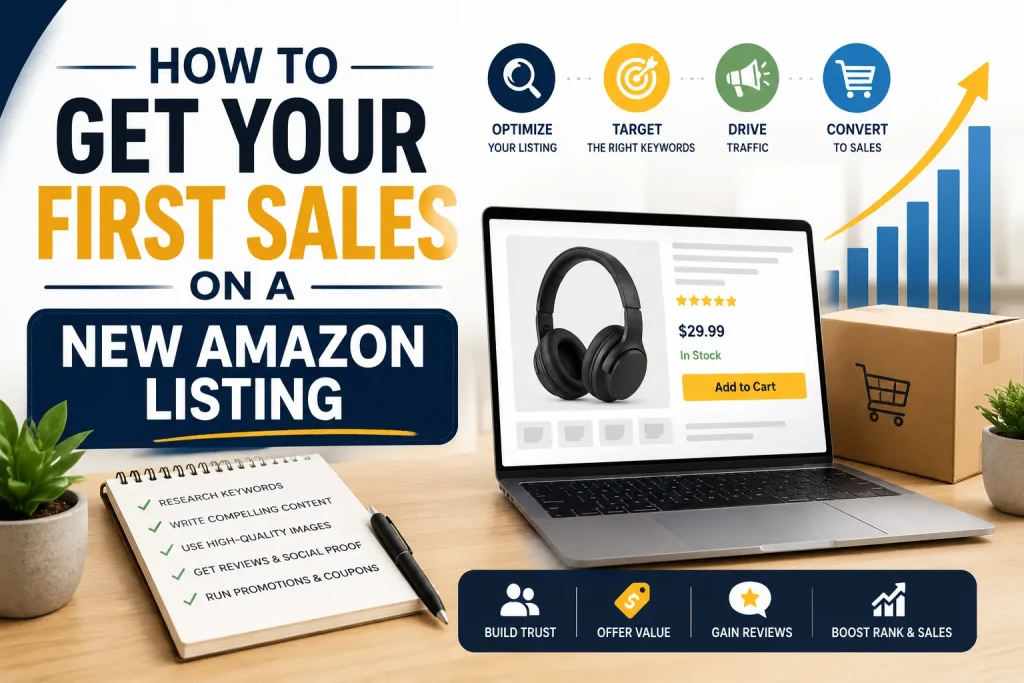
How to Get Your First Sales on a New Amazon Listing

Launching a product on Amazon is super exciting.. Getting those first few sales can feel like a huge challenge. Every successful seller starts with zero reviews, zero sales history and little visibility. The good news is that with the plan you can build momentum and turn a new listing into a money-making product. The key is to focus on creating trust improving visibility and encouraging sales from day one. Of relying on luck successful sellers use proven techniques that help their products reach the right people quickly. Start with Research Before listing your product understand the market you are entering. Study your competitors find out what they are good at and what they are not and discover ways to make your product stand out. Look at customer reviews on competing products. These reviews show what buyers love and what they wish was better. Use this information to improve your product and listing. When you know your audience and competitors you can position your product effectively. Make Your Listing Great Your listing is like a store. Every element should encourage shoppers to click and buy. A great listing should include: * A clear and keyword-focused product title * Professional images from angles * Lifestyle images showing real-world use * Detailed bullet points highlighting benefits * An engaging product description * Relevant backend search terms Write naturally while answering the questions customersre most likely to ask. Don’t stuff keywords. Use High-Quality Images Images often determine whether shoppers click on your listing or continue scrolling. Include: * A clean main image with a background * Lifestyle images * Close-up images showing product details * Infographics explaining features * Size comparison images Images should build confidence and clearly communicate your products value. Set a Competitive Price Pricing plays a role in attracting early buyers. Many successful sellers introduce a product at a lower price than competitors to encourage initial purchases. Once reviews and sales history begin to grow pricing can gradually be adjusted based on market demand. Avoid pricing low as customers may question product quality. Get More Traffic A great listing means little if nobody sees it. Use methods to drive visitors to your product including: * Amazon advertising * Email marketing * Social media promotion * Influencer collaborations * Existing customer communities Driving traffic can also help improve your products visibility within Amazon search results. Get Reviews Customer reviews create trust and improve conversion rates. Follow Amazon policies by requesting reviews through approved methods. Delivering product quality and outstanding customer service naturally increases the likelihood of receiving positive feedback. Respond quickly to customer questions. Resolve issues professionally. Focus on Customer Experience Customer satisfaction goes beyond the product itself. * Fast shipping * Accurate descriptions * Secure packaging * customer support * Order fulfillment These factors help create happy customers who are more likely to recommend your product and purchase again. Use Amazon Ads Wisely Advertising is one of the ways to generate your first sales. Begin with campaigns to identify valuable search terms. As data becomes available launch campaigns targeting your best-performing keywords. Monitor campaign performance regularly. Optimize bids based on conversion data rather than simply increasing your budget. Track Performance Track your listing performance every week. Watch metrics such as: * Click-through rate * Conversion rate * Advertising cost * Sales velocity * Organic keyword rankings * Customer feedback These insights help identify opportunities for improvement before small problems become ones. Improve Continuously Amazon success is not achieved by creating a listing and forgetting it. Regularly update your images, titles, bullet points and descriptions based on customer feedback and performance data. Testing approaches can significantly improve conversions over time. Build Brand Trust Customers are more likely to purchase from brands they recognize and trust. Create branding across your product images, packaging and messaging. A professional brand identity makes your listing look more credible and memorable. Strong branding also encourages repeat purchases and customer loyalty. Work with Experts Many new sellers struggle because they try to manage everything themselves. Partnering with an Amazon account management agency can simplify the entire process. Professional experts help optimize listings manage advertising campaigns monitor account health improve product visibility and develop long-term growth strategies. Choosing the Amazon account management agency allows sellers to avoid costly mistakes while focusing on expanding their business. As your business grows an experienced Amazon account management agency can provide insights through data-driven decisions, inventory planning listing optimization and advertising management. Working with an Amazon account management agency gives sellers a competitive advantage in todays rapidly changing marketplace. Why We Support Amazon Sellers We provide e-commerce solutions designed to help Amazon sellers grow at every stage of their journey. From listing optimization and advertising management to performance monitoring and strategic planning our experienced team focuses on helping businesses increase visibility improve conversions and achieve long-term growth. Our customized approach ensures that every seller receives solutions tailored to their business goals and marketplace challenges. Conclusion Getting your first sales, on an Amazon listing requires patience, planning and consistent improvement. Success comes from combining product research, optimized listings, competitive pricing, effective advertising, excellent customer service and ongoing performance analysis. An [Amazon account management agency] can help you achieve this.

Blog

What Makes an Amazon Store Successful?

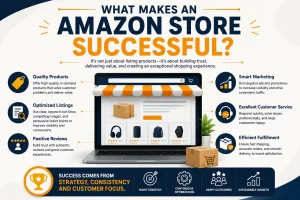
Building an Amazon store is not just about listing products and waiting for sales to happen anymore. With millions of sellers competing for customer attention you need a combination of strategy, optimization, branding and continuous improvement to be successful. The successful Amazon stores focus on delivering value to customers while maintaining strong operational performance. Whether you are launching a store or looking to improve an existing one understanding the factors that contribute to long term success can help you achieve sustainable growth and higher profits. Amazon stores that do well are the ones that keep working on getting better. High Quality Product Listings One of the important elements of a successful Amazon store is a well optimized product listing. Customers rely on product information to make purchasing decisions so every listing should provide detailed details about the product. A strong listing includes an attention grabbing product title, high quality images, informative bullet points, a detailed product description and relevant keywords. When listings are optimized properly products become easier to discover leading to visibility and better conversion rates. This is what makes a product listing successful on Amazon. Strong Keyword Strategy Amazon is like a search engine for products. If customers cannot find your products sales opportunities are lost. This is why keyword research plays a role in store success. Successful sellers identify the search terms their target audience uses. Incorporate them naturally throughout their listings. A consistent keyword strategy also helps sellers stay competitive in marketplaces where visibility can make the difference between success and failure. You need to use the keywords to get your products noticed on Amazon. Effective Advertising Campaigns Advertising is one of the ways to generate traffic and sales on Amazon. However running ads without a strategy can quickly increase costs without delivering results. Many successful sellers rely on a service to create targeted campaigns that maximize return on investment. Well managed campaigns help businesses reach the audience while controlling advertising expenses. An effective advertising strategy includes keyword targeting, bid optimization, competitor analysis, campaign monitoring and performance reporting. Working with an amazon ppc management service can help you create an advertising strategy. Competitive Pricing Pricing directly impacts customer purchasing decisions. Products priced high may struggle to compete while products priced too low can reduce profitability. Successful Amazon stores continuously monitor market trends and competitor pricing to maintain a balance between profitability and competitiveness. Dynamic pricing strategies can help sellers adapt to changing market conditions and customer expectations. Offering value than simply offering the lowest price often creates stronger customer loyalty and long term growth. You need to price your products to be successful on Amazon. Positive Customer Reviews Customer reviews are one of the trust signals on Amazon. Shoppers often read reviews before making a purchase and products with ratings generally perform better. Successful stores focus on delivering products and customer experiences to encourage positive feedback. Maintaining product quality, fast shipping and responsive customer service can help generate reviews over time. Positive reviews not improve credibility but also contribute to higher conversion rates and stronger product rankings. Getting reviews is important for your Amazon store. Inventory Management Excellence Running out of stock can negatively impact rankings and customer trust. On the hand overstocking can increase storage costs and reduce profitability. Successful Amazon stores carefully manage inventory levels using data and forecasting tools. Monitoring sales trends and seasonal demand allows sellers to maintain stock levels while avoiding unnecessary expenses. Efficient inventory management ensures product availability and a better shopping experience for customers. You need to manage your inventory to be successful on Amazon. Brand Building and Customer Trust The successful Amazon stores focus on creating a recognizable brand rather than simply selling products. Strong branding helps customers remember your business and encourages repeat purchases. Brand building can include product packaging, professional product images, enhanced brand content, clear brand messaging and excellent customer support. A trusted brand often experiences customer loyalty and greater long term success compared to stores that focus only on short term sales. Building a brand is important for your Amazon store. Working with an amazon ppc management service can help you build a strong brand. Data Driven Decision Making Successful sellers do not rely on guesswork. They use performance data to identify opportunities solve problems and improve results. Important metrics include conversion rates, advertising performance click through rates, customer feedback and sales trends. Many businesses utilize a service to analyze campaign data and identify opportunities. Data driven decisions help sellers allocate resources effectively and improve overall store performance. You need to use data to make decisions, for your Amazon store. Continuous Optimization Amazon is constantly. Successful sellers adapt to these changes. They regularly update listings monitor competitors, test advertising strategies. Improve customer experiences. Continuous optimization allows businesses to maintain rankings and stay ahead of competitors. Sellers who consistently refine their strategies are often the ones who achieve long term success. Partnering with an amazon ppc management service can help you optimize your store and achieve long term success. A successful Amazon store is built on a foundation of optimization, customer satisfaction, strategic advertising and continuous improvement. Sellers who invest in high quality listings, advertising, strong branding and data driven decision making are more likely to achieve sustainable growth.

Blog

Why Hire an Amazon Account Management Agency?

Selling on Amazon has become super competitive. Thousands of sellers join every day making it tough for businesses to stand out and grow steadily. Many sellers start by managing their accounts but Amazons ecosystem is getting more complex and thats where an Amazon Account Management Agency comes in handy. An experienced agency helps sellers tackle challenges boost performance and increase profits while business owners focus on their products and long-term goals. With an Amazon Account Management Agency you get a team of specialists working together to keep your business competitive and profitable. Understanding Amazon Account Management Amazon account management involves handling everything related to your seller account like product listings, inventory, ads, customer service and following Amazons policies. Managing all this requires time, expertise and constant attention. An Amazon Account Management Agency provides experts in areas of Amazon selling. Save Valuable Time and Resources Running an Amazon business involves daily tasks. By hiring an agency you can delegate these tasks to experts who understand Amazons marketplace. This allows you to focus on sourcing products expanding your brand and developing business opportunities. Improve Product Visibility Visibility is key to success on Amazon. An Amazon Account Management Agency does keyword research listing optimization and marketplace analysis to improve product rankings. A brand registry amazon service helps you secure protection and control over your product listings. Professional Advertising Management Amazon advertising can be effective if managed correctly. Professional account managers monitor ad performance. Make data-driven adjustments. They analyze keyword effectiveness, bidding strategies and audience targeting to improve return on investment. Better Brand Protection Building a brand requires more than just selling products. Protecting your property and maintaining brand integrity are crucial. Many agencies assist sellers with the brand registry amazon service process helping brands secure additional protection and control. Access to Marketplace Expertise Amazon frequently updates its policies, algorithms and best practices. An experienced agency stays informed about marketplace developments and adjusts strategies accordingly. Their expertise helps sellers remain compliant with Amazon requirements. Inventory and Performance Management Inventory problems can impact sales and account health. An Amazon Account Management Agency monitors inventory levels. Forecasts demand to maintain optimal stock levels. They also track performance metrics. Implement solutions before problems affect your business. Customer Experience Customer satisfaction plays a major role in Amazon success. Professional account managers oversee customer communications, review management and issue resolution. A brand registry amazon service provides access to brand-building tools that support long-term success. Strategic Growth Planning Long-term success requires more than short-term sales increases. An agency develops plans that support sustainable growth, including product expansion, marketplace diversification and pricing optimization. Increased Profitability The ultimate goal of hiring an Amazon Account Management Agency is to improve profitability. Through optimized listings, effective advertising, inventory control and strategic planning agencies help sellers generate results from their Amazon operations. By leveraging a brand registry amazon service businesses can achieve greater returns while reducing operational stress. Conclusion Hiring an Amazon Account Management Agency is an investment, for businesses that want to grow efficiently and compete effectively in todays marketplace. With the help of a brand registry amazon service you can maximize success and achieve your business goals.

Blog

Amazon FBA vs FBM: Which Is Better for Your Business

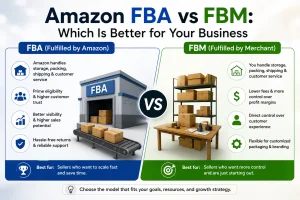
Selling things on Amazon is a way to build an online business. But when you start you have to make a decision: do you use Amazon FBA or Amazon FBM? Both ways of getting your products to customers have things about them and choosing the right one can really affect how much money you make how happy your customers are and how well your business grows in the long run. You need to understand what makes FBA and FBM different so you can pick the one that works best for your business and what you can handle. What Is Amazon FBA Amazon FBA means you send your products to Amazons warehouses. Then Amazon takes care of storing them packing them up shipping them helping customers and handling returns for you. A lot of sellers like FBA because it lets them automate a lot of their work and focus on making their business bigger. Benefits of Amazon FBA Faster Shipping and Prime Eligibility When you use FBA your products can be part of Amazon Prime, which’s really attractive to customers who want their things fast. You also have work to do because Amazon handles a lot of the logistics, shipping and customer support. This means you have time to find new products market your business and make it grow. Your products are more likely to be the choice when customers are shopping because Amazon trusts its own way of getting products to customers. As your business grows Amazon can handle orders without you needing to get more warehouse space or hire more people. What Is Amazon FBM Amazon FBM means you are in charge of storing your products packing orders shipping them helping customers and handling returns. FBM gives you control over your business and can be cheaper for some sellers. Benefits of Amazon FBM You Have Control You get to decide how your products are stored, packed and shipped. You might save money on fees because you do not have to pay Amazon to handle your products. You can store your products wherever you want and use shipping companies. You can make your packaging special. That helps people remember your brand. Comparing Amazon FBA and FBM How Much It Costs FBA costs include storing products getting them to customers and other services. These costs can add up. They also mean you have less work to do. FBM means you do not pay Amazon fees. You have to pay for storing products people to help, shipping materials and customer support. What Customers Think FBA makes it easy for customers to get their products fast and trust that they will be taken care of. FBM is only as good as you are at getting products to customers and helping them. Storing Products FBA means you have to plan so you do not store products for too long or run out. FBM means you have freedom to store products how you want. Growing Your Business FBA can help your business grow fast because Amazon handles getting products to customers. FBM can also work well. You have to be ready to handle more orders and get more help when you need it. When Amazon FBA Is the Better Choice FBA is usually better for sellers who want to focus on marketing and making their business bigger sell fast moving products need to be part of Amazon Prime do not have a lot of warehouse space and want Amazon to handle customer service and returns. Businesses that work with people who help them manage their Shopify store often choose FBA because it makes things simpler and lets them focus on selling in places online. When Amazon FBM Is the Better Choice FBM might be better for sellers who sell heavy products already have a warehouse want to be in charge of getting products to customers need special packaging and want to save money on Amazon fees. Many businesses that work with Shopify store managers use FBM when they already have a system for getting products to customers and want to make money. Can You Use Both FBA and FBM Yes you can. A lot of Amazon sellers use both FBA and FBM. They might use FBA for products that sell fast and FBM for products or ones that are only sold sometimes. This way you can be flexible. Avoid problems like not having enough products or paying too much to store them. A Shopify store management agency can help you make a plan that uses both FBA and FBM in a way that works for your business. Things to Think About Before You Choose Before you pick FBA or FBM think about these things: how big and heavy your productsre how much money you make on each product, where you will store your products how many orders you get what customers expect, what you can handle and what you want your business to look like in the long run. Every business is different so you need to choose the fulfillment model that works best for you. Final Thoughts There is no one answer to whether Amazon FBA or FBM’s better. FBA is good for sellers who want things to be easy and automated and want to be part of Amazon Prime. FBM is good for sellers who want to be, in charge and can handle getting products to customers on their own.

Blog

To Increase Amazon Sales Without Increasing Ad Spend

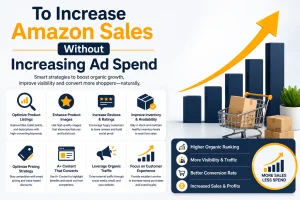
When people think about growing sales on Amazon they often think they need to spend money on advertisements. A lot of sellers believe that the only way to get sales is to spend more on ads.. This is not true. Advertising can help people see your products. It is not the only way to get more sales. Many successful Amazon sellers have found that they can grow their business by making their existing operations better of spending more on advertising. If you want to improve your sales on Amazon without spending on ads there are several things you can do. You can focus on getting more people to buy your products making your customers happy making your product listings better and looking at the data to see what is working and what is not. By doing these things you can find ways to grow your business without spending more on ads. Make Your Product Listings Your product listing is an important tool for selling on Amazon. If you make your listing better you can get more people to buy your products. Start by looking at the title of your product the bullet points, the description and the keywords you are using. Make sure they clearly tell people what your product is and what it can do. You should also use high-quality pictures because people often decide to buy a product based on how it looks. If you make your listings better you can turn more of the people who visit your page into paying customers. This means you can get sales without spending more on ads. Get More People to Buy Your Products You do not always need to get more people to visit your page to get sales. Sometimes you just need to get more of the people who are already visiting your page to buy your product. Even a small increase in the number of people who buy your product can make a difference in your sales. Look at your product page. See if there are any things that might be stopping people from buying. Some common things that might be the problem include: * product pictures * Descriptions that are not helpful * Not information about the brand * Prices that are too high * Not enough reasons for people to buy You can use Amazon Reports Management to see which products are getting a lot of visitors but not sales. This can help you focus on making those products better. Get Good Reviews Reviews are very important for selling on Amazon. Products with a lot of reviews tend to sell better than products with few reviews. You should ask customers to leave reviews and you should always respond to any problems that customers have. You should also use the feedback from customers to make your products better. If you get good reviews you can build trust with potential customers and get more sales without spending more on ads. Manage Your Inventory Well If you run out of stock it can hurt your sales. You will lose sales. Your product might not show up in search results anymore. Managing your inventory is very important for selling on Amazon. You should try to guess how stock you will need and make sure you have enough during busy times. You can use Amazon Reports Management to see how your inventory is doing and to find products that are selling fast. This can help you avoid running out of stock. Make Your Prices Competitive Your prices can affect how well your products sell. You do not always need to be the seller but your prices should be competitive. You should look at what your competitorsre charging and see how price changes affect your sales. Sometimes making changes to your prices can make a big difference in your sales. You can also try offering discounts or special deals to make your products more appealing. Use Amazon Brand Content If you are eligible you should use Amazon brand content to make your products more appealing. This can include things like high-quality pictures and detailed descriptions. This can help build trust with customers and make them more likely to buy. When customers know more about your product they are more likely to buy it. Understand Your Customers Understanding your customers is very important for growing your business. You should look at things like what products they’re buying who they are and when they are buying. This can help you find ways to improve your business and get sales. You can use Amazon Reports Management to get insights into your business and make decisions. This can help you grow your business without spending more on ads. Add Products to Your Catalog If you add more products to your catalog you can increase the average amount that customers spend and get them to come back and buy more. You should think about adding products that’re related to what you already sell. This can help you get sales without spending more on ads and make your brand stronger. Make Your Products Show Up in Search Results If your products show up near the top of search results you can get sales without spending more on ads. You should focus on things like: * Using the keywords * Getting more sales * Making customers happy * Getting reviews * Making your listings better If you do these things you can get more traffic and sales without spending more on ads. Check Your Performance Regularly Successful Amazon sellers always check their performance and make changes based on what they find. If you wait until your sales are bad it might be too late. You should check your performance regularly to find things like: * Products that are selling well * Problems with getting people to buy * Inventory risks * Pricing opportunities * Customer trends You can use Amazon Reports Management to stay on top of your business and make decisions. Final Thoughts You do not always

Scroll to Top