BizisTech | No.1 Ecommerce Marketing Agency USA

#AmazonSeller

Blog

What Should an Amazon Seller Do When Sales Suddenly Drop?

A sudden drop in Amazon sales can be really stressful especially when your products were doing well a few days or weeks ago.. A drop in sales doesn’t always mean your business is failing. Sales can go down because of changes in what customers want competition, worse advertising, issues with inventory, pricing problems, less visibility for your listings or bad product reviews. The important thing is to not make quick decisions without knowing why the sales dropped. Looking carefully at your store data can help you find the reason and build a plan to fix it. Start by figuring out when the sales drop started. The first thing to do is find out when the sales started to go down. Compare how you are doing now with how you did in the weeks and months. Check your orders, revenue, traffic, conversion rate, how your ads are doing and how each product is selling. If one product is struggling the problem might be with that listing or product. If several products are all dropping there might be an issue with your account or the market. Finding when the drop started helps you know where to look Check your product listings. Your product listing is very important for getting customers to buy. A listing that used to do might start losing visibility if competitors improve their content or get more customer engagement. Look at your product title, images, bullet points, description, keywords and how everything is presented. Make sure the information clearly explains what the product is and shows its benefits. Good listing optimization can help your products be more relevant and compete better when customers search for items. Check your pricing and competition. Price can have an impact on whether a customer buys. If competitors have lowered their prices, added discounts or made offers customers might choose their products instead. Compare your prices with products and look at the whole customer offer. Think about shipping, promotions, product quality, reviews and how value the product gives not just the price alone. You don’t always have to be the cheapest.. You should make sure customers see why your product is worth their money. Look at your advertising performance. If your advertising is not working well as before sales may drop quickly. Check if your ads are getting impressions, clicks or conversions. See which keywords are bringing in sales and which are costing you money without helping. Your advertising strategy should change as customers and competition change. Good PPC management helps sellers control spending, target better and get customers to their products. Advertising should support your listings and sales plan not work on its own. Make sure you have inventory. Not having stock is another common reason for falling sales. If you run out of products it can stop sales from growing. Make it harder to keep up. Check your stock how fast you are selling, what is coming in and what customers are likely to want. Don’t wait until you are out before ordering more. Good inventory management means watching your stock predicting what customers will want and balancing what you have with how much it costs to store. Look at your reviews and customer feedback. Customer feedback can show problems that sales data might not explain. Check for negative reviews and see what people are saying over and over. Customers might be talking about quality, packaging, size, how the product works, how fast it arrives or how it matches the listing. If people are saying the thing use that as a chance to improve. Fixing the product or the experience can help more people buy and protect your reputation. Check your account health. Sellers should also look at their account performance. Make sure there are no warnings, restrictions, listing problems or policy issues affecting their products. Even a small problem with your account can hurt visibility. Stop sales. Checking regularly makes it easier to catch issues before they get worse. Good account management helps sellers keep track of their listings, performance, customer service and other important parts of their Amazon business. Use your reports to find the problem. Data should help you decide what to do. Of just asking why sales are down look at which part of the customer journey changed. If traffic is down focus on how visible your listingsre how your keywords are doing. If traffic is still good. Orders are down check what’s happening with your prices, listings, reviews and what customers expect. Sales reports ad reports and inventory data can give you clues to make better choices. Don’t change everything at once. One of the mistakes sellers make during a sales drop is changing too many things at the same time. They might lower prices spend more on ads rewrite listings start promotions and change images at once. If sales go up they might not know which change helped. Instead focus on the problems and make small changes. Watch what happens and then move to the step. This way you can see what is working better. Think about your e-commerce strategy. Amazon should not always be the place you focus on. Sellers who run online stores might benefit from looking at their whole e-commerce plan. For example working with a Shopify store management agency can help businesses manage another sales channel improve their store handle inventory and build marketing plans outside of Amazon. A Shopify store management agency can be especially helpful for sellers who want to depend less on one marketplace and find ways to get customers. Adding a new channel should come after you understand why your Amazon sales dropped. Adding another platform won’t fix an existing problem. Make a recovery plan. Once you find the reason make a simple plan with clear steps. Start with issues like no stock listing problems account warnings or bad ads. Then work on longer-term fixes like content, better customer experience, stronger brand image and better ads. A Shopify store management agency can also help sellers who are


Blog

What Is the Best Way to Analyze an Amazon Competitor?

Selling successfully on Amazon is not about having a good product. You also need to understand what other sellers in your category are doing and why customers choose their products over yours. A detailed competitor analysis can reveal opportunities highlight weaknesses and help you build a strategy for long term growth. The best competitor analysis is not about copying another seller. It is about studying the market and using useful information to make smarter decisions for your own business. Identify Your Main Competitors The first step is finding the sellers who compete directly with your products. Look for products that target customers solve the same problem and fall within a comparable price range. Do not focus on the biggest brands. Smaller sellers can also provide insights because they may have discovered an effective pricing strategy, product feature, keyword opportunity or customer segment that larger brands have overlooked. Create a list of your relevant competitors and monitor their performance over time. This gives you a picture of the competitive environment instead of relying on occasional observations. Study Their Product Listings A competitors product listing can tell you a lot about its strategy. Examine the product title, bullet points, description, images, product features and other content that helps customers make purchasing decisions. Pay attention to how competitors explain the benefits of their products. A product may be similar to yours. Its listing might communicate the value more clearly. Customer reviews can be particularly useful. Read both negative feedback to identify what buyers appreciate and what disappoints them. Complaints about durability, packaging, size, quality, instructions or missing features can reveal opportunities for improving your product. Analyze Pricing and Promotions Price is one of the important factors in a competitive marketplace. Compare your competitors prices, discounts, coupons and promotional patterns. Of automatically lowering your price try to understand the value customers receive at different price points. A competitor with a price may succeed because of stronger branding, better product quality, superior presentation or additional features. Monitoring pricing trends can help you determine whether your current offer is competitive and where you can create value without sacrificing profitability. Research Their Keywords Keywords provide another source of competitive intelligence. Look at the terms competitors appear to target in their listings and advertising campaigns. Identify keywords that’re highly relevant to the product and understand which terms appear repeatedly across successful listings. At the time search for less competitive terms that could provide opportunities for your brand. The goal is not to copy another sellers keyword strategy word for word. Instead use competitor research to discover gaps and build a complete keyword strategy around your own customers. Examine Their Advertising Strategy Advertising can reveal how a competitor is trying to capture customers. Study the types of products they promote the keywords they appear to target and the way their advertisements position their products. Look for patterns in their messaging. Some sellers may focus heavily on price while others emphasize quality, convenience, durability or a specific customer benefit. This information can help you develop advertising campaigns that have a purpose instead of simply spending more money to compete for the same customers. Use Data to Understand Market Performance Competitor research becomes more valuable when it is combined with your own business data. Review sales performance, advertising results, conversion rates, traffic, inventory movement and other important performance indicators. Amazon Reports Management can help organize amounts of business information and turn it into useful insights. When internal performance data is compared with market observations it becomes easier to identify areas where your business is falling behind and areas where you have an advantage. Data should always support your decisions than replace strategic thinking. Find Competitor Weaknesses Every competitor has weaknesses. The key is identifying weaknesses that customers actually care about. You might discover that a competitor has product images, unclear information, slow inventory movement, inconsistent reviews, weak customer communication or limited product variations. These gaps can become opportunities for your business. Of attacking competitors directly focus on providing a better experience for customers who are dissatisfied with existing options. Monitor Competitors Regularly Competitor analysis should not be treated as a one time project. Amazon is constantly. Sellers frequently adjust prices, listings, advertising strategies and product offerings. Regular monitoring allows you to notice changes before they become major challenges. Keep track of competitor product launches, pricing changes, new keywords, customer feedback, promotional activity and listing improvements. Consistent Amazon Reports Management can also make performance monitoring more organized by helping sellers review important business information and identify changes that require attention. Turn Research Into Action Collecting competitor information is the beginning. The real value comes from turning that information into improvements. After completing your research decide what needs to change. You may need to improve your listing content, update product images adjust your pricing strategy expand your keyword targeting improve advertising or address product weaknesses identified through customer reviews. Prioritize changes based on their impact rather than trying to change everything at once. Keep Your Strategy Customer Focused The purpose of competitor analysis is ultimately to understand customers. If you become too focused on what other sellersre doing you may lose sight of the people who actually drive your business. Ask what customers want what problems they experience and what would make them choose your product. Then use competitor research to determine how you can deliver that value effectively. This approach creates a brand because your strategy is built around customer needs rather, than simply reacting to competitors. Final Thoughts The best way to analyze an Amazon competitor is to combine product research listing analysis, pricing evaluation, keyword research, advertising observation, customer feedback and business performance data. Strong Amazon Reports Management can support this process by making important business information easier to understand and turning data into actionable insights. Competitor research can then be used alongside that information to make strategic decisions.

Blog

What Should I Do First When Starting an Amazon Business?

Starting an Amazon business can feel very exciting. However the first steps you take can change how success you have later on. Many new sellers rush to pick a product and make a listing. They often do this without knowing the market the customers, the costs or the competition. I think it is much better to build a base before you spend a lot of money. Your goal should not just be to make one sale. You should try to build an Amazon business that can grow steadily and make money for a time. Start With Market Research The first step is to learn about the market you want to join. You should look at product demand what customers like, who your competitors are, prices, reviews and what is trending now. Try to find products that people want all year round of things that are only popular for a short time. Look closely at what other people’re selling and find ways your product can be better. I always suggest reading customer reviews. They show you problems that other products have not fixed yet. These small details can help you make a product and a better plan to sell it. Choose a Product With Business Potential Once you know the market find a product that can actually make you money. Before you decide think about the cost of the product, shipping, storage, fees from the marketplace, ads and the price you will sell it for. A product might sell a lot. You could still lose money if the costs are too high. You must calculate your profit margins before you buy an amount of stock. You should also think about how big or heavy the product’s if it breaks easily and if there is room to grow. Picking a product that lets you sell versions or similar items makes long term growth much easier. Understand Your Target Customer A good Amazon business starts by knowing the people who will buy your items. You need to know what they need what problems they. Why they pick one item over another. Think about what makes a person trust a seller. Good photos, info useful features, fair prices and great customer service all help people decide to buy. When you truly know your audience it is much easier to write messages that actually matter to them. Build Your Brand From the Beginning sellers should look past just selling one item. Having a brand helps people trust you and helps your business grow. This is why Amazon brand management is so important. It means creating a look that people recognize, protecting your name making your store look good and giving customers an experience. Your brand name, your photos, your packaging and how you talk to customers should all feel the same. When everything matches your business looks more professional. Create a Strong Product Listing Your product listing is one of the vital parts of your Amazon business. Before you go live make sure your title, description, features and photos clearly show why someone should buy from you. Use words that people search for. Keep the writing natural. Do not stuff your listing with many keywords or it will be hard to read. Good photos are a must. Since customers cannot touch your product your photos must show how it looks how big it is and how it works. Plan Your Inventory Carefully You should start planning your inventory before you even launch. If you buy much your money is stuck and storage costs go up. If you buy little you will run out of stock and lose sales. Try to guess how much you will sell based on your research and make a plan to restock. As you grow watch how fast you sell and change your orders based on what’s actually happening. Good planning helps you keep track of your cash and stops your sales from stopping Prepare a Launch Strategy Launching a product is more than turning a listing on. You need a plan to help people actually find your product. Ads can help show your product to the right shoppers. Good listing content will then help turn those shoppers into buyers. Watch how your ads do and change them if they are not working well. Think of your launch as a time to learn. Use your data to see what works and what needs to be fixed. Track Your Numbers From Day One Do not just look at how money you make in sales. You must track your costs, marketplace fees, ad spending, shipping costs and your actual profit. Checking your numbers often helps you catch problems before they cost you much money. It also shows you which products or ads are worth money. Let the data guide your choices of just guessing. Develop Your Brand Once your business is doing well you must protect your brand. Brand protection helps you avoid issues with products or sellers who are not allowed to sell your items. Good Amazon brand management also means watching how people see your brand and always finding ways to make the customer experience better. A strong brand should. Get better as you learn more about your customers. Keep Improving of Expecting Instant Success Success on Amazon rarely happens because of one lucky choice. It usually comes from research, testing and learning. Check your listings often read what customers say watch your ads and keep an eye on your competitors. Making changes all the time can lead to big results later. The best sellers treat their Amazon business like a ongoing job rather, than a quick project. Final Thoughts The first thing you should do when starting an Amazon business is not just to upload a product and wait. You should start by researching picking a product that makes money knowing your customers checking your costs and making a plan to launch.

Blog

Amazon Buy Box Optimization Services

Winning the Buy Box is a big deal for sellers who want to get their products seen make more sales and get more customers. When lots of sellers are offering the product the Buy Box decides which seller gets to be the main one that customers see. Having a presence in the Buy Box can make a huge difference in how customers find and buy your products. To stay eligible for the Buy Box you need to do more than just lower your prices. Things like pricing having products in stock how well you ship products how well you do as a seller how happy your customers are and how healthy your account is can all affect how well you can compete. What Are Amazon Buy Box Optimization Services Amazon Buy Box Optimization Services are designed to help sellers improve the things that affect how well they do in the Buy Box. Of just focusing on one thing these services look at pricing, inventory, shipping, account performance listing quality and customer experience all together. To make this work you need to understand how your account is doing now and find areas where you can improve. Then you need to keep an eye on things and make changes as the competition and market change. Why the Buy Box Matters for Sellers The Buy Box makes it easy for customers to buy products. Can really influence what they decide to buy. Sellers who can keep their products competitive have a chance of getting customers to notice them and make a sale. Having a Buy Box strategy can help you sell more products consistently make your products more competitive and make better use of the customers who are already looking at your products. It can also help you find weaknesses in your pricing, inventory and shipping before they hurt your growth. Key Factors That Influence Buy Box Performance When you’re trying to optimize your Buy Box performance there are things you should look at. Competitive Pricing: Price is important. Its not the only thing that matters. You need to find a price thats competitive but still makes you a profit. Looking at what your competitorsre charging can help you make smarter pricing decisions. Inventory Availability: If you’re always running out of products you’re going to lose sales. Keeping products in stock helps you stay competitive and serve your customers. Fulfillment Performance: Shipping products quickly and reliably is important for making customers happy. You should keep an eye on how you’re shipping products and make changes if you need to. Seller Performance: Making customers happy and keeping your account healthy is crucial for growing your business. You should keep an eye on things like cancellations, returns and customer complaints to find problems Product Listing Quality: Having a product listing can help you sell more products. You should make sure your listings have information relevant search terms, good images and descriptions that persuade customers to buy. How Professional Buy Box Optimization Works When you work with a professional to optimize your Buy Box performance they’ll usually start by looking at your account and products. They’ll find areas where you can improve and then analyze your competitors to see how you can do better. Then they’ll help you implement strategies to improve your pricing, inventory, listings and performance. They’ll also keep an eye on things. Make changes as the market and competition change. The Role of Amazon Brand Management Doing well in the Buy Box should be part of a business strategy. Amazon Brand Management can help you make your products more visible improve your listings build customer trust protect your brand and grow your business in the term. When you combine Amazon Brand Management with pricing analysis, inventory planning listing optimization and performance monitoring you can create an approach to succeeding on Amazon. Professional Amazon Brand Management also helps you keep your branding consistent across all your products and makes sure customers have an experience with your brand. This can make optimizing your Buy Box performance more sustainable. Benefits of Working With Experienced Professionals As your business grows and the competition gets tougher managing your Buy Box performance can get harder. Working with professionals can give you structured monitoring and strategic guidance without having to do everything yourself. A good team can analyze the market look at your competitors monitor your account performance improve your listings and find ways to make your operations better. This lets you focus on developing your products and growing your business. A data-driven Amazon Brand Management strategy can also help you connect your decisions on Amazon with your bigger business goals. Of just focusing on short-term sales you can work towards building a stronger brand making customers happier and growing your business sustainably. Common Buy Box Optimization Mistakes to Avoid One mistake is just focusing on price. Cutting your prices much can attract customers but it can also hurt your profits and make your pricing strategy unhealthy. Another mistake is ignoring your inventory. Even if you have a price you can still struggle if you’re always running out of products. You should also avoid neglecting your customer experience. If you’re not shipping products quickly cancelling orders or getting feedback you can create performance problems. Finally optimizing your Buy Box performance shouldn’t be a one-time thing. You need to keep monitoring and making changes as the market and competition change. Building a Long Term Buy Box Strategy The best strategy combines pricing with reliable inventory, dependable shipping, strong seller performance, optimized listings and consistent monitoring. You should regularly look at your performance data. Compare your products to your competitors. Trying approaches can help you find what works best for your sales and profits. A comprehensive Amazon Brand Management approach can bring all these activities together into one strategy. By keeping your branding, product performance, customer experience and operations aligned you can create a foundation for growing your business. Final Thoughts Amazon Buy Box Optimization Services can help sellers take a

Blog

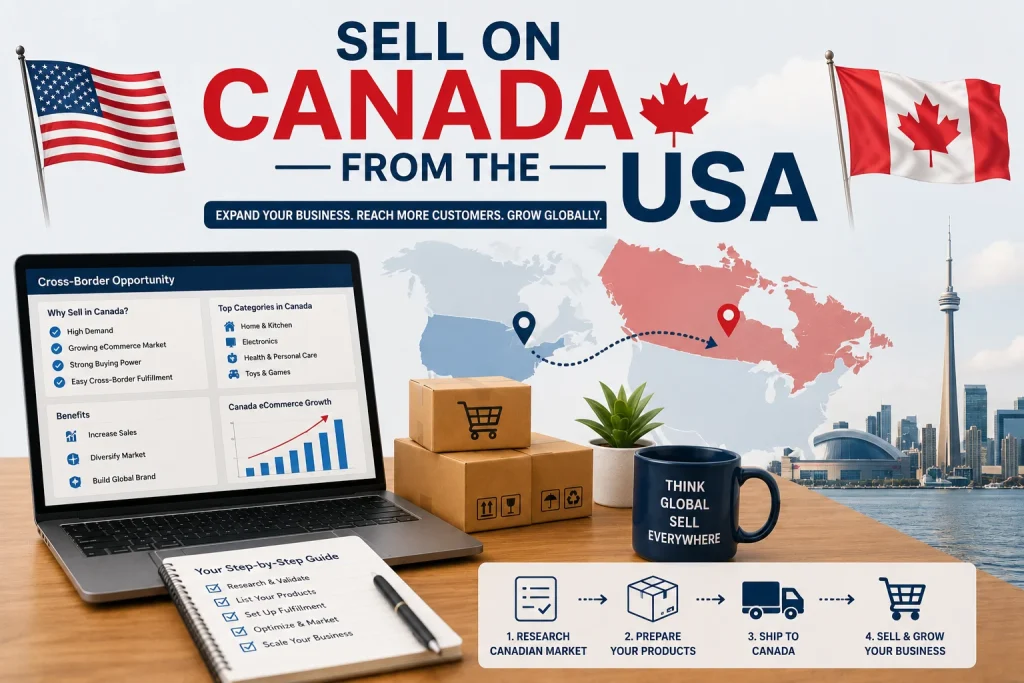
Sell on Amazon Canada from the USA

Selling on Amazon Canada from the USA can be a way for American businesses to find new customers without having to start a whole new online store. The Canadian marketplace is a place for brands that want to sell their products in another country but they need to plan carefully around things like product listings, shipping, taxes, prices and what customers expect. For sellers in the US selling in Canada is not about copying what they are already doing in the US. To be successful they need to think about what Canadian customers want and how the two marketplacesre different. Why Sell on Amazon Canada from the USA Amazon Canada lets US businesses sell to an online audience while using the products, branding and experience they already have. Selling in another country can also help businesses not rely much on one marketplace and create more chances for long-term growth. If a product is already doing well in the US Canada might be a next step. However Canadian customers have their preferences, shopping habits and expectations about shipping and prices. Understanding these differences before starting to sell can help avoid costs and problems. Prepare Your Business for Expansion Before selling in Canada look at your current Amazon business and decide which products will work well in the new marketplace. Think about how demand there is for a product how much competition there is, how much profit you can make what shipping will cost and if there are any rules or regulations that might affect you. Your product should also have something that makes it stand out from others. If a product is successful in the US because of a feature or price think about whether that will also appeal to Canadian shoppers. A good plan for expanding into Canada should also include predicting how inventory you will need and understanding how much it will cost to ship products. These things can affect how profit you make. Create a Canadian Product Listing One of the most important things to do is to create a product listing that is just for Canadian shoppers. Do not just copy your US listing without looking at the content. Your title, bullet points, product description, images and other content should clearly and naturally explain the benefits of your product. You should also think about what keywords Canadian customers use when searching for products. Pricing is also very important. Think about the difference in currency, fees, shipping costs, taxes and advertising costs when deciding how much to charge in Canada. Protect Your Brand Before Scaling As you expand into another marketplace it is more important than ever to protect your brand. Registering your brand can help you build trust and manage your brand assets effectively. An Amazon Brand Registry service can help businesses understand how to register their brand and organize the information. It can also help you develop a strategy for protecting your property and creating a consistent presence across marketplaces. For growing brands an Amazon Brand Registry service can be especially helpful when you want to have control over your product identity and customer experience. Using an Amazon Brand Registry service along with listing and brand management can help create a strong foundation for selling in another country. Choose the Right Fulfillment Strategy Fulfillment is another thing to think about when selling from the US to Canada. You need to decide how you will store, process, ship and deliver products to customers. Depending on your business you might want to consider fulfillment options that support customers directly. The right choice depends on the size of your products how sales you make what customers expect for delivery how much inventory you have and what your overall costs are. Keeping inventory closer to customers can help get products to them faster while shipping across the border might be a better balance between flexibility and cost. The important thing is to calculate all the costs of fulfillment not the cost of shipping. Understand Taxes and Marketplace Requirements Selling in another country means you have to follow rules and regulations. US businesses should research what taxes they need to pay customs requirements, product regulations, labeling requirements and other rules before starting to sell in Canada. These requirements can vary depending on what kind of products you sell and your business situation. You might want to get tax and legal advice before entering the Canadian market especially if you plan to sell a lot of products. Not following the rules can lead to costs and delays so make sure you understand them before you start selling. Build an Advertising Strategy Starting to sell a product without advertising it can make it hard to get noticed. Your advertising strategy for Canada should be based on research not just copying what you do in the US. Start by finding out what keywords Canadian customers use what products they like, what they are willing to pay and what will make them buy. Then create ads that let you track how many people click, buy and how much you spend. As you get data adjust your ads to make them work better. Monitor Inventory and Customer Experience Selling in another country means you have to keep an eye on things. Running out of inventory can hurt sales while having much inventory can increase costs. Track how fast products are selling how inventory you have how well your ads are working what customers are saying and how much profit you are making. This information can help you find problems early and make decisions. Customer service is also important. Respond quickly to customers give them information deliver products on time and communicate clearly to build trust. Use Brand Protection as Your Business Grows As your Canadian business starts to grow remember to keep protecting your brand. An Amazon Brand Registry service can help you use the resources to protect your brand and build your business. You might also want to use another Amazon Brand Registry service

Blog

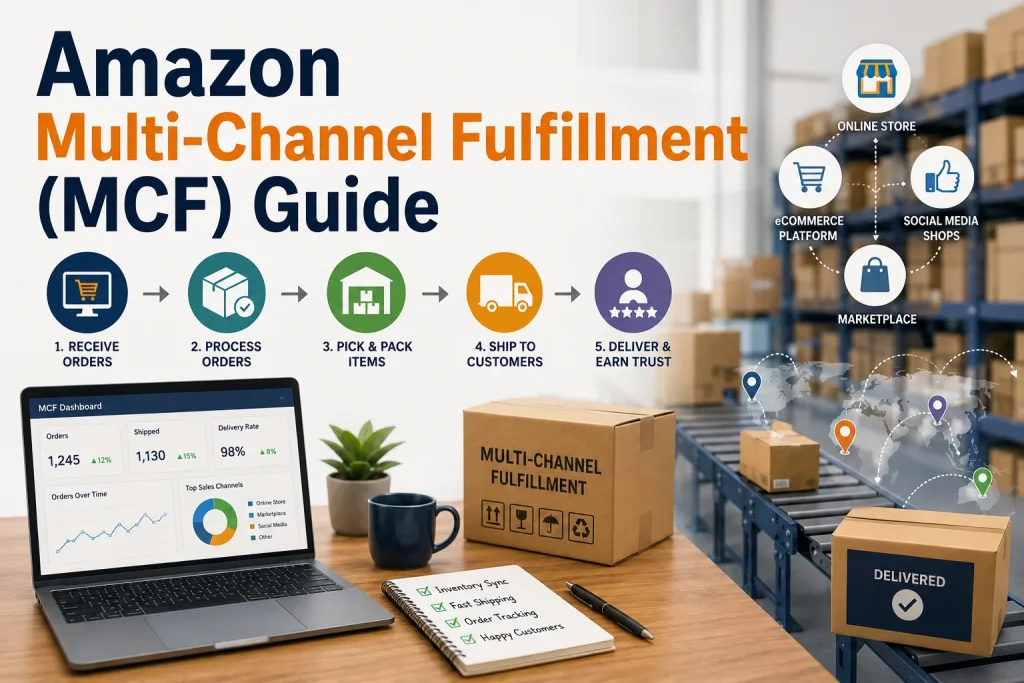
Amazon Multi-Channel Fulfillment (MCF) Guide

Understanding Amazon Multi Channel Fulfillment Amazon Multi Channel Fulfillment, commonly known as MCF, is a fulfillment solution designed for businesses that sell products across multiple ecommerce channels. Instead of managing separate warehouses, packing operations, and shipping processes for every sales channel, sellers can use one inventory system to fulfill orders placed through their website, online marketplaces, social commerce channels, and other sales platforms. MCF helps simplify the operational side of ecommerce by bringing storage, picking, packing, shipping, inventory management, and returns into a more organized fulfillment process. This can be especially valuable for growing brands that want to expand beyond a single marketplace without building their own fulfillment infrastructure. How Amazon MCF Works The basic MCF process starts with sending eligible inventory into Amazons fulfillment network. Once products are available, sellers can create fulfillment orders through the appropriate Amazon system or connect their ecommerce channels through supported integrations. When a customer places an order outside the Amazon marketplace, the order information is sent to the fulfillment system. The product is then picked, packed, and shipped to the customer. This approach allows businesses to maintain a more centralized inventory operation while selling through several channels. Amazon also provides tools for tracking orders, monitoring inventory, managing returns, and reviewing fulfillment reports. Why Businesses Use Amazon MCF Managing fulfillment independently can become complicated as order volume increases. A business may need warehouse space, employees, packaging materials, shipping contracts, inventory software, and dedicated customer support. MCF can reduce some of this operational complexity by allowing businesses to rely on an established fulfillment network. One major advantage is flexibility. Brands can sell through their own ecommerce websites while using the same fulfillment infrastructure that supports their broader ecommerce operation. Another advantage is scalability. When sales increase during seasonal events, product launches, or promotional campaigns, a reliable fulfillment process can help businesses handle higher order volumes without completely rebuilding their logistics operation. Centralized Inventory Management Inventory accuracy is one of the most important parts of successful multichannel selling. Selling through multiple platforms can create problems when stock levels are tracked separately. A centralized fulfillment strategy makes it easier to understand available inventory and plan replenishment. Businesses can monitor sales patterns, identify fast moving products, and make better purchasing decisions. Strong inventory management is also important because excess inventory can increase storage expenses while insufficient inventory can result in missed sales opportunities. The Importance of Strong Product Listings Although MCF focuses primarily on fulfillment, product information still plays an important role in multichannel ecommerce. Customers need accurate product titles, descriptions, images, specifications, and other relevant information before they decide to purchase. A professional Amazon Listing Creation service can help businesses develop clear and informative product content that supports better product presentation. Strong listings can also make it easier to maintain consistency when products are promoted across different sales channels. The goal should be to create product information that answers customer questions, highlights useful benefits, and accurately represents what the buyer will receive. MCF and Multichannel Ecommerce Growth One of the biggest opportunities with MCF is the ability to expand beyond a single marketplace. A brand can build its own website, develop social commerce opportunities, and explore additional ecommerce channels while maintaining a centralized fulfillment approach. This gives businesses greater freedom to build direct relationships with customers instead of depending entirely on one marketplace. For growing brands, this can support a broader ecommerce strategy where marketing, product listings, inventory, fulfillment, and customer experience work together. Best Practices for Using Amazon MCF Businesses should begin by understanding their sales volume and fulfillment requirements. Not every product or business model will have the same needs, so fulfillment decisions should be based on product size, demand, shipping expectations, margins, and customer locations. Inventory should also be monitored regularly. Sales forecasts can help determine when additional stock should be sent into the fulfillment network. Businesses should maintain accurate product information across every sales channel. Using an Amazon Listing Creation service can help ensure that important product details remain clear and professionally presented. Order tracking should be reviewed consistently so that shipping problems can be identified quickly. Returns should also be monitored because return patterns can reveal issues with product quality, descriptions, packaging, or customer expectations. Finally, businesses should review fulfillment reports and operating costs regularly. Growth is valuable only when fulfillment remains financially sustainable. Common MCF Mistakes to Avoid A common mistake is treating fulfillment as a separate activity from inventory planning. If demand increases unexpectedly, insufficient stock can create fulfillment delays and lost sales. Another mistake is failing to calculate the complete cost of fulfillment. Storage, handling, shipping, returns, and other operational expenses should be considered when evaluating profitability. Businesses should also avoid inconsistent product information across sales channels. Customers should receive the same essential product details regardless of where they discover the product. Using an Amazon Listing Creation service without maintaining accurate inventory and fulfillment planning can also limit results. Product content and logistics should work together as part of one ecommerce strategy. How MCF Can Improve Customer Experience Fast and reliable delivery has become an important part of online shopping. Customers increasingly expect accurate order information, reasonable delivery times, secure packaging, and straightforward returns. A well organized fulfillment process can help brands provide a more consistent experience as their order volume grows. However, fulfillment alone does not create customer satisfaction. Product quality, accurate descriptions, competitive pricing, communication, and after sales support all contribute to the overall buying experience. Building a Scalable Fulfillment Strategy A successful MCF strategy should develop alongside the business. Start by understanding current order volume, inventory requirements, customer locations, and fulfillment costs. As sales grow, review product performance and identify which products deserve greater inventory coverage. Seasonal demand should also be considered before major promotional periods. Businesses should regularly evaluate whether their fulfillment strategy continues to support their profit margins and customer expectations. An Amazon Listing Creation service can complement this strategy by helping brands maintain professional product presentation while their fulfillment operation handles the

Blog

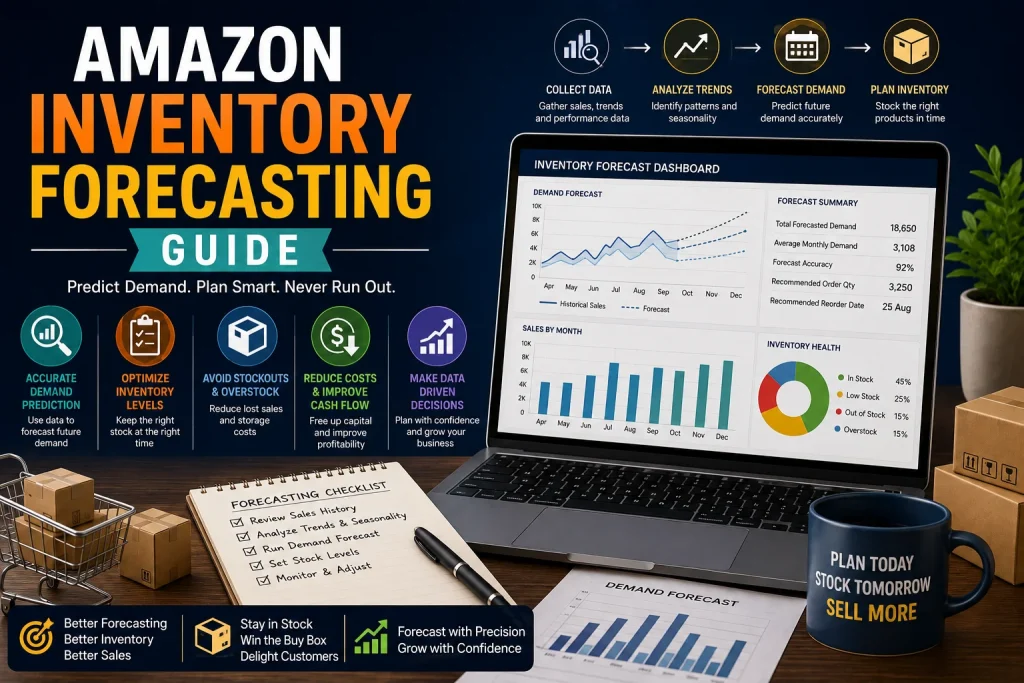
Amazon Inventory Forecasting Guide

Managing inventory successfully is one of the most important parts of running an Amazon business. Having too little stock can lead to missed sales while having too much stock can tie up money and increase storage related expenses. Amazon inventory forecasting helps sellers estimate future demand and make better decisions about when to reorder products and how much stock to keep available. A strong forecasting process allows sellers to move away from guesswork and build a more organized approach to inventory management. By studying sales patterns customer demand seasonal changes and supplier lead times sellers can prepare their inventory before problems occur. What Is Amazon Inventory Forecasting Amazon inventory forecasting is the process of predicting how much inventory a product may need in the future. The goal is to maintain enough stock to meet customer demand without purchasing unnecessary quantities. Forecasting normally involves reviewing previous sales performance current inventory levels sales velocity supplier lead times and expected changes in demand. When these factors are considered together sellers can create a more realistic inventory plan. Why Inventory Forecasting Matters Inventory problems can affect almost every part of an Amazon business. A product that goes out of stock may lose potential sales and momentum. On the other hand excess inventory can consume valuable capital and make it harder to invest in products that are performing better. Accurate forecasting helps sellers maintain a healthier balance between available stock and expected demand. It also makes purchasing decisions more predictable and allows sellers to prepare for periods when sales are likely to increase. Important Data for Inventory Forecasting Historical sales data is one of the most useful sources for forecasting. Sellers should examine how many units a product sells over different periods rather than relying on one short period of performance. Sales velocity is another important factor. Understanding the average number of units sold each day can help sellers estimate how quickly available inventory may be used. Supplier lead time should also be considered. If production shipping and receiving take several weeks sellers need to place orders early enough to prevent inventory shortages. Seasonality is equally important. Some products experience strong demand during holidays special events or particular times of the year. Ignoring these patterns can result in inaccurate forecasts. How to Calculate Future Inventory Needs A simple forecasting approach starts with average daily sales. Sellers can estimate how many units are normally sold each day and then multiply that number by the expected replenishment period. For example a product selling twenty units per day would require around six hundred units for thirty days of expected demand. Sellers should then consider safety stock to protect against unexpected increases in demand or delays in replenishment. The exact amount of safety stock depends on product demand supplier reliability and the seller’s overall business strategy. The objective is to create enough protection without turning the safety stock into unnecessary excess inventory. Using Amazon Data for Better Decisions Amazon provides inventory related information that can help sellers understand product performance and stock requirements. Sellers can review sales history inventory levels sell through performance and other available inventory indicators when making replenishment decisions. These insights become more useful when reviewed regularly. Inventory forecasting should not be treated as a one time activity because customer demand and business conditions can change quickly. The Role of Amazon Product Hunting service Amazon Product Hunting service can support inventory planning by helping sellers identify products and market opportunities with stronger potential. When a seller understands the demand characteristics of a product before investing heavily in inventory it becomes easier to build a realistic purchasing strategy. Amazon Product Hunting service can also help sellers evaluate product trends competition and market demand before committing to large quantities. This information can complement historical sales data when planning inventory for new products that do not yet have a long sales history. For established products Amazon Product Hunting service can provide additional market insight that may help sellers recognize changing demand patterns and adjust their inventory strategy accordingly. How to Manage Seasonal Demand Seasonal demand can make inventory forecasting more challenging. A product that normally sells at a steady rate may experience a major increase during holidays or promotional periods. Sellers should study previous seasonal performance whenever historical data is available. They should also consider upcoming promotions changes in pricing and market trends that could influence customer demand. Preparing inventory early is usually better than waiting until sales begin increasing. Production and shipping can take time so sellers need to consider the entire replenishment cycle before a seasonal period begins. Avoiding Overstock Overstocking may appear safer than running out of inventory but excessive stock can create its own problems. Money becomes tied up in products that may take a long time to sell and storage related expenses can increase. The solution is not simply to keep inventory as low as possible. Sellers should aim for an appropriate stock level based on expected demand replenishment time and business objectives. Regular forecasting allows sellers to identify slow moving products earlier and make better purchasing decisions before excess inventory becomes a major problem. Avoiding Stockouts Stockouts can happen when sellers wait too long before placing a new order. Even if a product is currently selling well there may be a significant delay between ordering from a supplier and making the new inventory available for customers. A reliable forecasting process helps sellers identify when existing inventory may reach a critical level. Reordering before inventory becomes dangerously low gives sellers more time to handle production shipping and receiving delays. Forecasting for New Products New products create a different challenge because there may not be enough historical sales information available. Sellers can use market research competitor performance expected demand and product launch plans to create an initial forecast. The first forecast should be treated as an estimate rather than a fixed prediction. Once real sales data becomes available sellers can compare actual performance with the original expectations and adjust future inventory orders. Amazon Product

Blog

Amazon Product Photography Best Practices

Why Product Photography Matters Product photography is one of the important parts of a successful product listing. Customers cannot physically. Examine an item before buying so images need to provide the confidence that shoppers would normally get from seeing the product in person. Clear and professional images help customers understand the products appearance, size, design, quality and practical use. Strong photography can also make a listing look more trustworthy. Help the product stand out when shoppers compare several similar options. A planned Amazon Brand Registry service strategy should therefore consider product photography as an important part of building a consistent and recognizable brand experience. Start With a Strong Main Product Image The main product image is usually the first visual shoppers see. It should clearly communicate what the customer will receive without creating confusion. Use a white background for the main image and make sure the product is sharp, centered and fully visible. Avoid objects, decorative elements, text, watermarks or anything that distracts attention from the product. The product should occupy enough of the space to remain easy to recognize on both desktop and mobile screens. High resolution photography is also important because customers often zoom in to inspect materials, finishes, textures and small product details. Show Multiple Product Angles One image rarely answers every question a customer may have. Additional images should provide perspectives and reveal details that cannot be understood from the main photograph. Consider showing the front, side, top, bottom and important close up areas when they are relevant to the product. If the product has functions or unique construction create images that make those characteristics immediately understandable. Different angles can reduce uncertainty. Give customers a more complete understanding of what they are considering. Use Lifestyle Photography Carefully Lifestyle images help customers imagine how a product fits into their lives. They can show the product being used at home at work during travel or in another environment that matches its purpose. The lifestyle scene should support the product than overpower it. Keep the product visible and make sure the image represents its actual appearance and realistic use. This type of photography can be especially useful for products where size, comfort, usability or practical application influences the buying decision. Highlight Important Features Your product images should answer customer questions before they need to read the entire listing. Use images to communicate important features such as materials, dimensions, capacity, components, compatibility, construction or special functions. Simple visual explanations can make complicated information easier to understand. If text is included in images keep it short, readable and relevant. The goal is to make the product easier to understand than filling the image with excessive information. Maintain Accurate Colors and Details Product photography should represent the product as accurately as possible. Excessive editing can create colors, textures or proportions and may lead to disappointed customers. Use lighting and accurate color correction during the editing process. Check the images on different screens to make sure the product does not appear significantly different from the physical item. Accuracy is particularly important for clothing, cosmetics, furniture, electronics, accessories and other products where color and material strongly influence purchasing decisions. Invest in Lighting Good lighting can dramatically improve product photography. Uneven lighting can create shadows, unwanted reflections and areas where important details disappear. Use consistent lighting to create a clean appearance. Reflective products may require care because excessive reflections can make surfaces difficult to see. Before taking the photographs inspect the product for dust, fingerprints, scratches, packaging marks or other distractions. Small imperfections can become more noticeable in high resolution images. Make Images Easy to Understand on Mobile shoppers browse ecommerce listings on mobile devices, where product images appear much smaller than they do on a desktop screen. Important information should therefore remain easy to recognize when the image is viewed at a size. Avoid placing details in tiny text or making the product occupy too little of the frame. A useful approach is to review every image on both desktop and mobile displays before finalizing the listing. Create a Consistent Visual Style Consistency helps create a brand experience. Product images across listings should feel like they belong to the same brand. Try to maintain lighting, composition editing quality, typography and visual presentation throughout your product catalog. An Amazon Brand Registry service can support a brand strategy but the visual identity should also be reflected naturally through product photography and listing content. Avoid Common Photography Mistakes Several simple mistakes can reduce the effectiveness of product images. Blurry photographs, lighting, excessive editing, cluttered backgrounds, inaccurate colors, awkward cropping and inconsistent image quality can make a product appear less professional. Another common mistake is showing information that does not accurately represent what the customer will receive. Every visual should match the product and its contents. Before publishing a listing review the image set as if you were a first time customer. Ask whether the photographs answer the important buying questions clearly. Connect Photography With Your Brand Strategy Product photography should not be treated as a task. It should work with your product title, product description, feature information, storefront presentation, advertising strategy and overall brand identity. For established brands visual consistency can help shoppers recognize products across listings. A strong Amazon Brand Registry service approach can complement this effort by supporting an organized and recognizable brand presence. The objective is to create a shopping experience where every visual element communicates quality, clarity and trust. Review Performance and Improve Product photography should be reviewed regularly than considered a one time task. Customer behavior, competitors, market expectations and product positioning can change over time. Monitor important listing performance indicators. Look for signs that your images may need improvement. If customers frequently ask questions about information that could be shown visually consider creating an image to address that issue. Testing photography concepts can also help identify which visual presentation communicates the product most effectively. Final Thoughts Great Amazon product photography combines quality with customer focused communication. The best images do

Blog

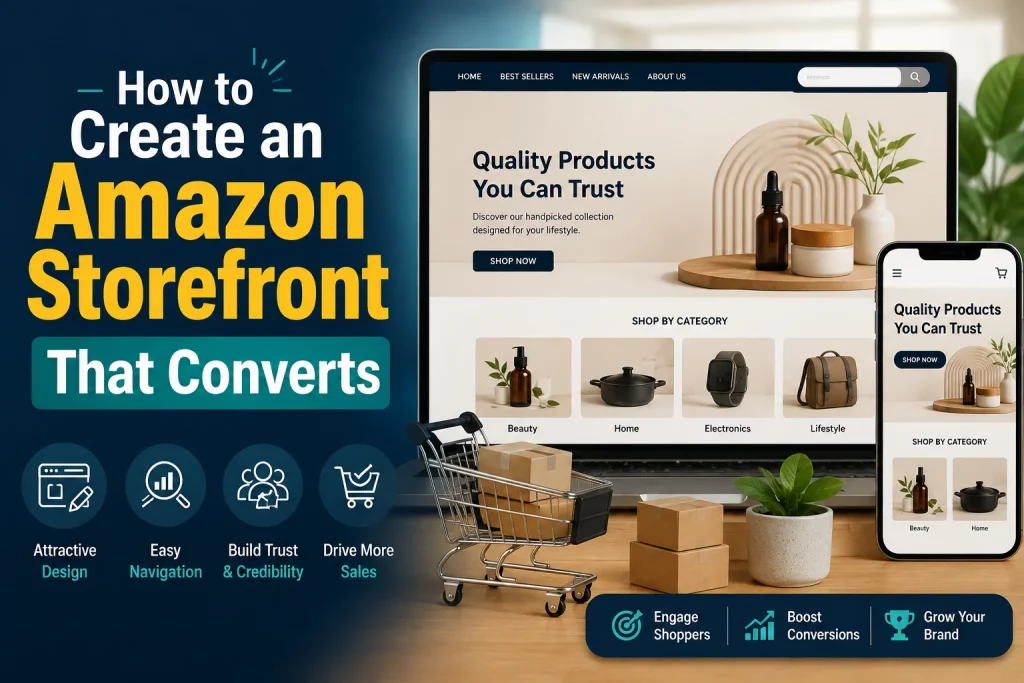
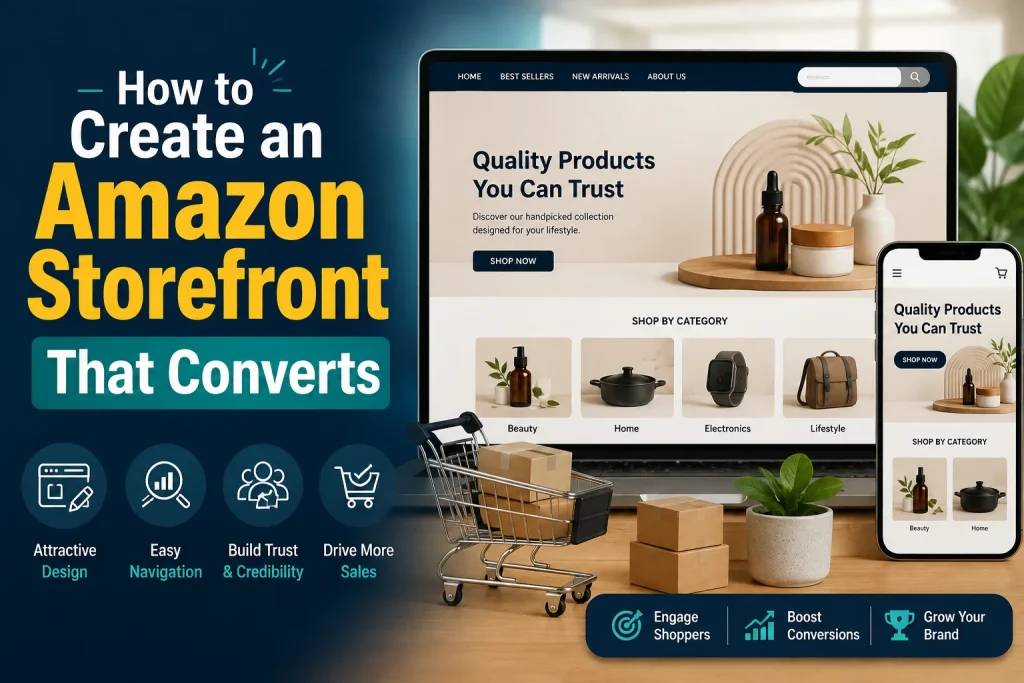
How to Create an Amazon Storefront That Converts

An Amazon Storefront is much more than just a bunch of product pages. It is like your brands online store where people can learn about your business look at your products and decide if they want to buy from you. A designed Amazon Storefront can make people feel more confident in your brand help them find your products and even increase sales. A lot of sellers make an Amazon Storefront. They do not do a good job of making it work well. A good Amazon Storefront has pictures is easy to navigate has interesting things to read and makes the shopper feel like they are important. Companies like Bizistech know that every part of an Amazon Storefront should make people want to keep looking and eventually buy something. Why an Amazon Storefront Matters Your Amazon Storefront gives your brand a look on Amazon. Of just showing one product it lets people look at all of your products and learn about your brand. The good things about having an Amazon Storefront include * People trust your brand more * It is easier for people to find your products * Your brand is well known * People buy more from you * People are more likely to come and buy from you again When your Amazon Storefront is well managed it feels organized and people can trust it. Build a Strong Brand Identity Your Amazon Storefront should tell people who you are and what your products are right away. Use the colors on every page of your Amazon Storefront. Make sure your product pictures look professional. Write headlines that’re easy to understand and interesting. Tell a story about your brand that people can relate to. When people recognize your brand they are more likely to stay on your Amazon Storefront and keep looking. Design an Easy Shopping Experience If your Amazon Storefront is confusing people will leave quickly. Every page should help people find what they are looking for. Organize your products into categories that make sense. Make groups of products for different types of people. Keep your pages clean and easy to look at. Do not give people much information at once. When it is easy to navigate people are more likely to look at products before they buy something. Use High Quality Images Pictures can really affect what people buy. Use pictures that show your products in real life. Show your products from angles. Point out the features of your products. Make sure all of your pictures look good and are consistent. Good pictures make people feel confident and think your products are valuable. Write Customer Focused Content of just talking about your products explain how they can help people. Use paragraphs that are easy to read. Talk about how your products can benefit people. Answer questions that people often ask. Point out what makes your products special. Your content should be easy to read and help people understand why your products are the choice. Feature Your Selling Products Your main page should show the products that are already popular. Show the products that people like the most. Highlight the products that’re popular during certain times of the year. Tell people about products. Offer deals when you can. Popular products can make people want to keep shopping on your Amazon Storefront. Create Multiple Store Pages of putting everything on one page make separate pages for different things. New products Best sellers Categories of products Gift ideas products Each page should have a clear purpose that helps people find what they need quickly. Optimize for Mobile Users A lot of people shop on Amazon using their phones. Make your pages clean and easy to look at. Do not use much text. Choose pictures that look good on screens. Make it easy for people to navigate. When your Amazon Storefront works on phones people have a better shopping experience. Update Your Storefront Regularly Good Amazon Storefronts are always changing. Update your pictures regularly. Add products. Get rid of products that you do not sell anymore. Update your deals. Look at how people’re shopping on your Amazon Storefront. When you keep your content fresh people are more likely to come and shop again. Monitor Performance and Improve Look at how people’re interacting with your Amazon Storefront. See how many people are visiting. See which pages are popular. See how many people are buying from you. See which products are selling the most. See how people are engaging with your Amazon Storefront. When you use data to make changes you often get results over time. Connect Your Marketplace Strategy Having a good Amazon Storefront is not enough. Sellers who sell on platforms often do better when they have a plan that works across all of them. Professional Walmart account management can help businesses keep their brand and products consistent across all platforms. When you combine Walmart account management with your ecommerce plans you can grow your business efficiently and keep everything running smoothly. Businesses that want to grow often use Walmart account management to help them do better on Amazon and other platforms. Common Storefront Mistakes A lot of sellers lose sales because they make mistakes that they can avoid. Using pictures Making navigation confusing Not updating products Writing bad descriptions Not telling a brand story Not making it work well on phones Not updating content When you avoid these mistakes people have a better shopping experience and are more likely to buy from you. How Bizistech Helps Sellers Build Better Storefronts Making an Amazon Storefront that converts well takes planning, creativity and continuous improvement. Bizistech provides ecommerce solutions that help sellers make their Amazon Storefronts better organize their products strengthen their brand and get more people engaged. When you combine this with expert Walmart account management businesses can build a presence across multiple online marketplaces and grow their business over time. Conclusion An Amazon Storefront is a valuable tool, for building a brand and increasing sales. By focusing on design, simple navigation,

Blog

How to Create an Amazon Storefront That Converts

An Amazon Storefront is much more than just a bunch of product pages. It is like your brands online store where people can learn about your business look at your products and decide if they want to buy from you. A designed Amazon Storefront can make people feel more confident in your brand help them find your products and even increase sales. A lot of sellers make an Amazon Storefront. They do not do a good job of making it work well. A good Amazon Storefront has pictures is easy to navigate has interesting things to read and makes the shopper feel like they are important. Companies like Bizistech know that every part of an Amazon Storefront should make people want to keep looking and eventually buy something. Why an Amazon Storefront Matters Your Amazon Storefront gives your brand a look on Amazon. Of just showing one product it lets people look at all of your products and learn about your brand. The good things about having an Amazon Storefront include * People trust your brand more * It is easier for people to find your products * Your brand is well known * People buy more from you * People are more likely to come and buy from you again When your Amazon Storefront is well managed it feels organized and people can trust it. Build a Strong Brand Identity Your Amazon Storefront should tell people who you are and what your products are right away. Use the colors on every page of your Amazon Storefront. Make sure your product pictures look professional. Write headlines that’re easy to understand and interesting. Tell a story about your brand that people can relate to. When people recognize your brand they are more likely to stay on your Amazon Storefront and keep looking. Design an Easy Shopping Experience If your Amazon Storefront is confusing people will leave quickly. Every page should help people find what they are looking for. Organize your products into categories that make sense. Make groups of products for different types of people. Keep your pages clean and easy to look at. Do not give people much information at once. When it is easy to navigate people are more likely to look at products before they buy something. Use High Quality Images Pictures can really affect what people buy. Use pictures that show your products in real life. Show your products from angles. Point out the features of your products. Make sure all of your pictures look good and are consistent. Good pictures make people feel confident and think your products are valuable. Write Customer Focused Content of just talking about your products explain how they can help people. Use paragraphs that are easy to read. Talk about how your products can benefit people. Answer questions that people often ask. Point out what makes your products special. Your content should be easy to read and help people understand why your products are the choice. Feature Your Selling Products Your main page should show the products that are already popular. Show the products that people like the most. Highlight the products that’re popular during certain times of the year. Tell people about products. Offer deals when you can. Popular products can make people want to keep shopping on your Amazon Storefront. Create Multiple Store Pages of putting everything on one page make separate pages for different things. New products Best sellers Categories of products Gift ideas products Each page should have a clear purpose that helps people find what they need quickly. Optimize for Mobile Users A lot of people shop on Amazon using their phones. Make your pages clean and easy to look at. Do not use much text. Choose pictures that look good on screens. Make it easy for people to navigate. When your Amazon Storefront works on phones people have a better shopping experience. Update Your Storefront Regularly Good Amazon Storefronts are always changing. Update your pictures regularly. Add products. Get rid of products that you do not sell anymore. Update your deals. Look at how people’re shopping on your Amazon Storefront. When you keep your content fresh people are more likely to come and shop again. Monitor Performance and Improve Look at how people’re interacting with your Amazon Storefront. See how many people are visiting. See which pages are popular. See how many people are buying from you. See which products are selling the most. See how people are engaging with your Amazon Storefront. When you use data to make changes you often get results over time. Connect Your Marketplace Strategy Having a good Amazon Storefront is not enough. Sellers who sell on platforms often do better when they have a plan that works across all of them. Professional Walmart account management can help businesses keep their brand and products consistent across all platforms. When you combine Walmart account management with your ecommerce plans you can grow your business efficiently and keep everything running smoothly. Businesses that want to grow often use Walmart account management to help them do better on Amazon and other platforms. Common Storefront Mistakes A lot of sellers lose sales because they make mistakes that they can avoid. Using pictures Making navigation confusing Not updating products Writing bad descriptions Not telling a brand story Not making it work well on phones Not updating content When you avoid these mistakes people have a better shopping experience and are more likely to buy from you. How Bizistech Helps Sellers Build Better Storefronts Making an Amazon Storefront that converts well takes planning, creativity and continuous improvement. Bizistech provides ecommerce solutions that help sellers make their Amazon Storefronts better organize their products strengthen their brand and get more people engaged. When you combine this with expert Walmart account management businesses can build a presence across multiple online marketplaces and grow their business over time. Conclusion An Amazon Storefront is a valuable tool, for building a brand and increasing sales. By focusing on design, simple navigation,

Scroll to Top