BizisTech | No.1 Ecommerce Marketing Agency USA

#AmazonSales

Blog

What Should an Amazon Seller Do When Sales Suddenly Drop?

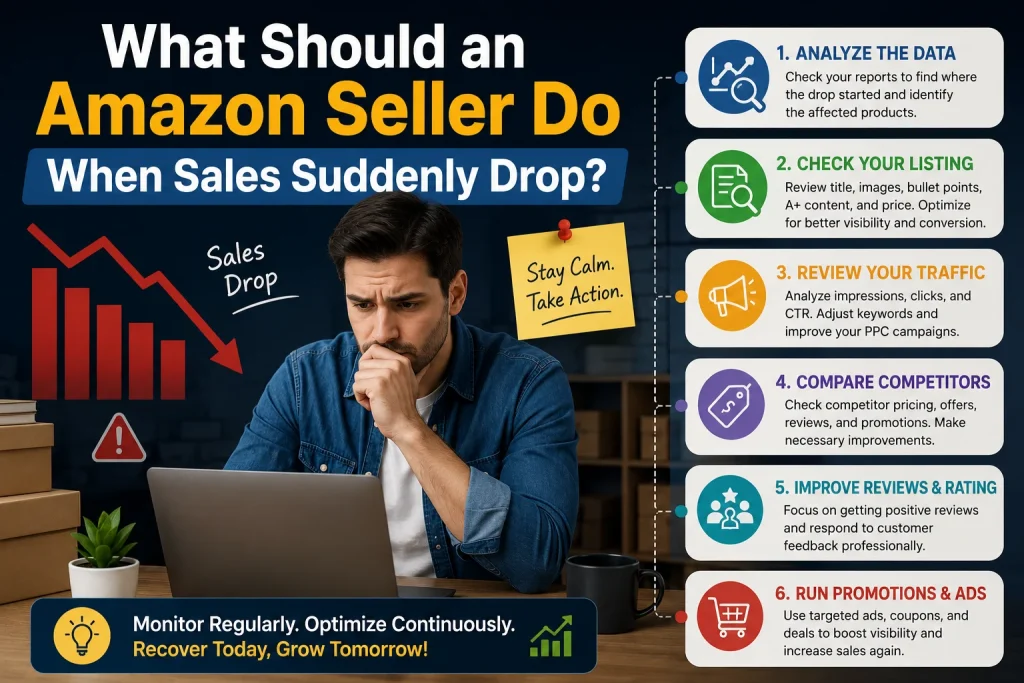
A sudden drop in Amazon sales can be really stressful especially when your products were doing well a few days or weeks ago.. A drop in sales doesn’t always mean your business is failing. Sales can go down because of changes in what customers want competition, worse advertising, issues with inventory, pricing problems, less visibility for your listings or bad product reviews. The important thing is to not make quick decisions without knowing why the sales dropped. Looking carefully at your store data can help you find the reason and build a plan to fix it. Start by figuring out when the sales drop started. The first thing to do is find out when the sales started to go down. Compare how you are doing now with how you did in the weeks and months. Check your orders, revenue, traffic, conversion rate, how your ads are doing and how each product is selling. If one product is struggling the problem might be with that listing or product. If several products are all dropping there might be an issue with your account or the market. Finding when the drop started helps you know where to look Check your product listings. Your product listing is very important for getting customers to buy. A listing that used to do might start losing visibility if competitors improve their content or get more customer engagement. Look at your product title, images, bullet points, description, keywords and how everything is presented. Make sure the information clearly explains what the product is and shows its benefits. Good listing optimization can help your products be more relevant and compete better when customers search for items. Check your pricing and competition. Price can have an impact on whether a customer buys. If competitors have lowered their prices, added discounts or made offers customers might choose their products instead. Compare your prices with products and look at the whole customer offer. Think about shipping, promotions, product quality, reviews and how value the product gives not just the price alone. You don’t always have to be the cheapest.. You should make sure customers see why your product is worth their money. Look at your advertising performance. If your advertising is not working well as before sales may drop quickly. Check if your ads are getting impressions, clicks or conversions. See which keywords are bringing in sales and which are costing you money without helping. Your advertising strategy should change as customers and competition change. Good PPC management helps sellers control spending, target better and get customers to their products. Advertising should support your listings and sales plan not work on its own. Make sure you have inventory. Not having stock is another common reason for falling sales. If you run out of products it can stop sales from growing. Make it harder to keep up. Check your stock how fast you are selling, what is coming in and what customers are likely to want. Don’t wait until you are out before ordering more. Good inventory management means watching your stock predicting what customers will want and balancing what you have with how much it costs to store. Look at your reviews and customer feedback. Customer feedback can show problems that sales data might not explain. Check for negative reviews and see what people are saying over and over. Customers might be talking about quality, packaging, size, how the product works, how fast it arrives or how it matches the listing. If people are saying the thing use that as a chance to improve. Fixing the product or the experience can help more people buy and protect your reputation. Check your account health. Sellers should also look at their account performance. Make sure there are no warnings, restrictions, listing problems or policy issues affecting their products. Even a small problem with your account can hurt visibility. Stop sales. Checking regularly makes it easier to catch issues before they get worse. Good account management helps sellers keep track of their listings, performance, customer service and other important parts of their Amazon business. Use your reports to find the problem. Data should help you decide what to do. Of just asking why sales are down look at which part of the customer journey changed. If traffic is down focus on how visible your listingsre how your keywords are doing. If traffic is still good. Orders are down check what’s happening with your prices, listings, reviews and what customers expect. Sales reports ad reports and inventory data can give you clues to make better choices. Don’t change everything at once. One of the mistakes sellers make during a sales drop is changing too many things at the same time. They might lower prices spend more on ads rewrite listings start promotions and change images at once. If sales go up they might not know which change helped. Instead focus on the problems and make small changes. Watch what happens and then move to the step. This way you can see what is working better. Think about your e-commerce strategy. Amazon should not always be the place you focus on. Sellers who run online stores might benefit from looking at their whole e-commerce plan. For example working with a Shopify store management agency can help businesses manage another sales channel improve their store handle inventory and build marketing plans outside of Amazon. A Shopify store management agency can be especially helpful for sellers who want to depend less on one marketplace and find ways to get customers. Adding a new channel should come after you understand why your Amazon sales dropped. Adding another platform won’t fix an existing problem. Make a recovery plan. Once you find the reason make a simple plan with clear steps. Start with issues like no stock listing problems account warnings or bad ads. Then work on longer-term fixes like content, better customer experience, stronger brand image and better ads. A Shopify store management agency can also help sellers who are
Blog

How to Use Amazon Promotions to Increase Sales

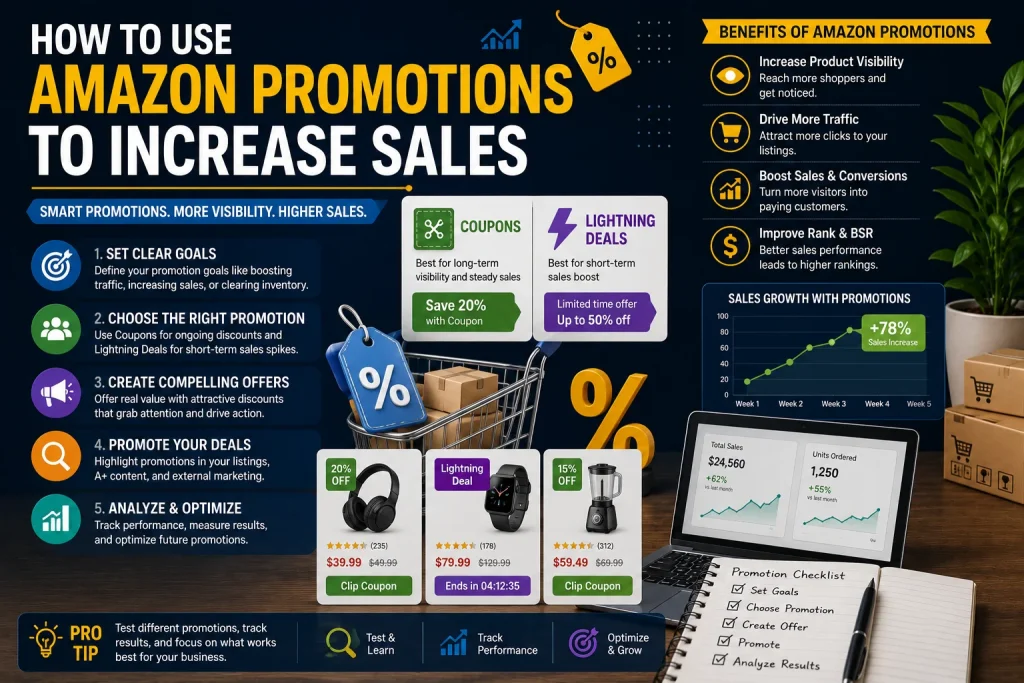
Amazon promotions can be a powerful way to attract shoppers, encourage purchases, and improve the overall performance of your products. When used correctly, promotions can help sellers create more interest around their listings while giving customers an extra reason to complete a purchase. However, successful promotions are not simply about offering a lower price. They require careful planning, clear goals, strong product listings, and regular performance monitoring. A well planned promotional strategy can support both short term sales and long term brand growth. Understand Your Promotion Goals Before creating any promotion, decide what you want to achieve. Some sellers want to increase sales volume, while others may want to introduce a new product, attract new customers, improve product visibility, or clear excess inventory. Having a specific goal makes it easier to select the right promotional approach. For example, a discount can encourage customers who are comparing similar products, while a promotion for a newly launched product can help generate early interest. A strong promotional plan should also consider your profit margin. Increasing orders is valuable, but promotions should still make financial sense for your business. Choose the Right Type of Promotion Different promotional options can serve different business purposes. Sellers may use percentage discounts, money off promotions, buy one get one offers, or other promotional incentives depending on product eligibility and marketplace requirements. The best choice depends on your product, customer behavior, pricing structure, and business objective. For example, a percentage discount may work well for products with strong demand, while a buy one get one offer may be more suitable for products that customers commonly purchase together. Create Attractive but Profitable Offers Customers are more likely to respond when they can immediately understand the value of an offer. Your promotion should be meaningful enough to encourage action without unnecessarily reducing your profits. Calculate your normal selling price, product cost, advertising expenses, fulfillment costs, and expected promotional discount before launching an offer. This helps you determine the level of discount your business can comfortably support. Effective amazon brand management also means protecting the long term value of the brand. Constantly reducing prices can train customers to wait for discounts, so promotions should be used strategically rather than continuously. Improve Your Product Listing Before Promoting A promotion can bring more shoppers to a product, but it cannot fix a weak listing. Before launching an offer, make sure your product title, images, product description, and other important information clearly communicate the value of the product. High quality images can help customers understand what they are buying, while clear product information can answer common questions and reduce hesitation. Your listing should also make the promotional value easy to recognize. When customers see a compelling offer alongside a strong product presentation, they have more reasons to consider purchasing. Target the Right Customers Not every customer responds to the same type of offer. Understanding your audience can help you create promotions that are more relevant and effective. Consider customer needs, purchasing habits, product price, seasonal demand, and previous sales performance. Promotions can be especially useful during periods when shoppers are actively looking for specific products. A customer focused approach is an important part of amazon brand management because promotions should support the overall brand experience rather than exist as isolated discounts. Use Promotions During Important Shopping Periods Timing can have a major influence on promotional performance. Certain products naturally experience higher demand during holidays, seasonal events, gifting periods, or major shopping occasions. Launching an appropriate promotion during these periods can help your product compete for customer attention. However, sellers should prepare inventory in advance because successful promotions can increase order volume quickly. Running promotions without sufficient inventory can create stock problems and negatively affect the customer experience. Combine Promotions With Advertising Promotions and advertising can work together effectively. Advertising helps bring shoppers to your product, while a compelling promotion can provide an additional reason for them to purchase. When these strategies are coordinated, sellers can create a stronger path from product discovery to conversion. For example, an advertising campaign can attract shoppers searching for relevant products, while a limited promotional offer can encourage those shoppers to make a buying decision. Monitor Your Results Launching a promotion is only the beginning. Sellers should monitor important performance indicators to understand whether the promotion is producing the desired results. Look at changes in sales, orders, conversion performance, traffic, advertising costs, and overall profitability. Compare promotional periods with normal sales periods to understand the actual impact. Data driven monitoring is also an important part of amazon brand management because it allows sellers to identify which strategies are producing meaningful results and which ones need adjustment. Avoid Common Promotional Mistakes One common mistake is offering discounts without calculating profitability. Another is running promotions too frequently, which can reduce perceived product value. Sellers should also avoid promoting products with poor listings, insufficient inventory, weak customer demand, or unresolved product quality issues. A promotion should support a strong product and customer experience. It should not be used as a substitute for proper listing optimization, inventory planning, customer service, or performance management. Build a Long Term Promotional Strategy The most successful sellers treat promotions as part of a broader sales strategy. Instead of launching random discounts, create a promotional calendar based on product launches, seasonal demand, inventory requirements, customer behavior, and business objectives. Review previous promotional results and use those insights to improve future campaigns. Over time, this process can help you understand which offers attract customers while maintaining healthy margins. Strong amazon brand management brings these activities together by focusing on brand visibility, customer experience, product performance, promotion, and sustainable growth. Final Thoughts Amazon promotions can help sellers attract attention, increase conversions, generate additional sales, and create momentum around their products. The key is to use promotions strategically rather than relying on discounts alone. Start with a clear objective, choose an appropriate offer, improve your product listing, target the right customers, coordinate promotions with advertising, maintain sufficient inventory, and carefully measure

Blog

How to Handle Slow Sales After Amazon Product Launch

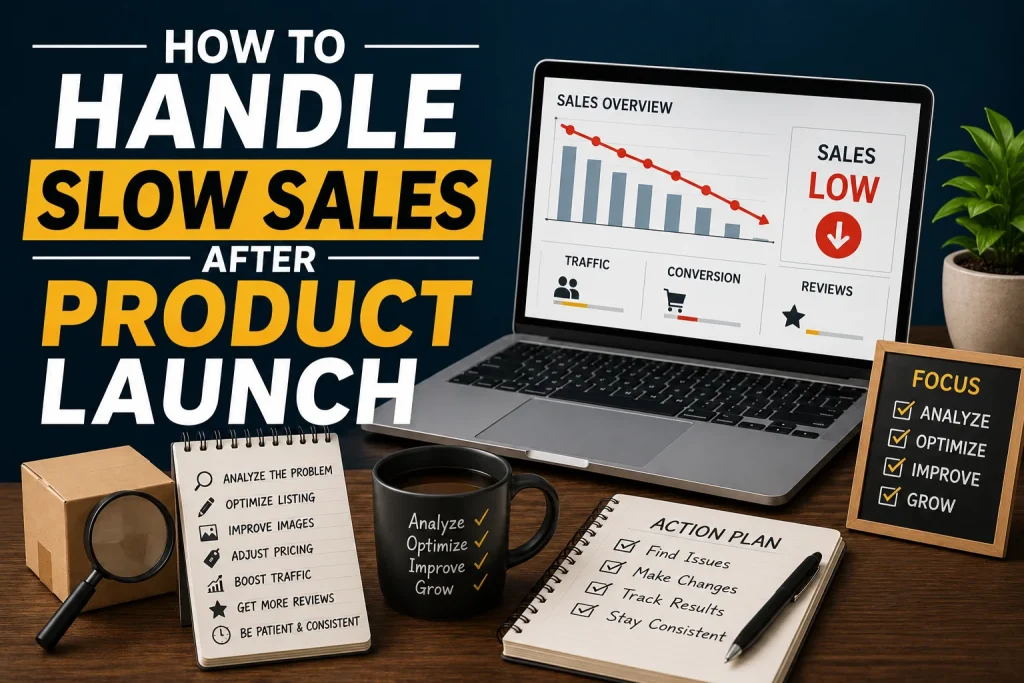
Launching a product on Amazon can be really exciting but when sales are slow after the launch it can get frustrating for sellers. A lot of sellers think that their product will take off away and they will start getting orders quickly but that does not always happen. If your product is not selling well it does not mean that it is a product. Sometimes the problem is that people are not seeing your product or your product listing is not good enough or your price is too high or people do not trust your brand. The best thing to do is to stay calm and look at the numbers. You need to figure out what is going wrong and then make some changes. Here are some things you can do to handle sales after you launch your Amazon product. Find the Real Reason Behind Slow Sales The first thing you need to do is find out why your product is not selling well. Do not try to change everything at the time because then you will not know what is working and what is not. Start by looking at how many people’re seeing your product and what they are doing when they see it. If nobody is looking at your product then you need to work on getting people to see it. If people are looking at your product but not buying it then you need to work on your product listing your price or your brand. Looking at your sales numbers can help you figure out what the problem is, of just trying things and hoping they work. Review Your Product Listing Carefully Your product listing is really important. It can make people want to buy your product or it can make them want to buy something Look at your product title your pictures, your description and your key features. Make sure you are answering all the questions that people might have when they are thinking about buying your product. Your main picture should show your product clearly. Your other pictures should show how it works and what it can do. Try to look at your listing like a customer would. Ask yourself if you can tell what the product is and why you should buy it. Improve Your Product Visibility When you launch a product on Amazon it takes time for people to start seeing it. If your product is not visible then you will not get sales. Look at the keywords you are using and make sure they are the keywords that people are using when they search for products like yours. Your advertising should also be focused on getting the right people to see your product. Do not just spend money on ads without looking at the results. The point of advertising is not just to get people to click on your ad. It is to get people to buy your product and to help your product become more popular over time. Check Your Pricing Strategy The price of your product is also really important. People often look at different products before they decide which one to buy. If your product is too expensive compared to similar products then people might not buy it.. If you lower your price too much then you might not make as much money as you want to. Look at what your competitorsre charging for their products and think about what makes your product special. You want to set a price that will attract customers. Also make sure you are making enough money. Build Customer Trust When you launch a new product on Amazon people do not know much about your brand. This is where Amazon brand management comes in. Your product listing should look professional. Be consistent with your brand. You should have pictures, helpful information and accurate descriptions. This will help people feel more confident when they are thinking about buying your product. You want to make sure that customers have an experience when they buy from you. When people trust your brand they are more likely to buy your product. Avoid Making Many Changes at Once One thing that sellers often do when they have slow sales is make a lot of changes all at once. They change the price rewrite the listing stop their ads and update their pictures all at the time. This can be. It can be hard to tell what is working and what is not. Instead you should focus on one thing at a time. Make a change see how it works and then decide what to do If you are patient and look at the numbers you will usually make decisions than if you just make emotional decisions. Use Performance Data to Guide Your Next Move Your sales numbers can tell you a lot about how your product’s doing. Look at how many people’re seeing your product how many people are clicking on it and how many people are buying it. If people are clicking on your product but not buying it then you need to work on your listing and on building trust with your customers. If not many people are seeing your product then you need to work on getting visibility. If sales are slow then you need to keep trying things and seeing what works. Amazon brand management is about understanding how your product is doing and making decisions based on real information not just guesses. Give Your Product Time to Grow Not every product is a hit away. Some products need time to get popular to get customers interested and to start selling This does not mean you should just ignore sales. It means you should give your product a chance and keep working on the things that are not working. A good launch strategy involves always looking at the numbers trying things and making improvements. With the changes slow sales can actually be a chance to build a stronger foundation, for your product. Final Thoughts

Blog

Here’s how you can increase sales on Amazon.

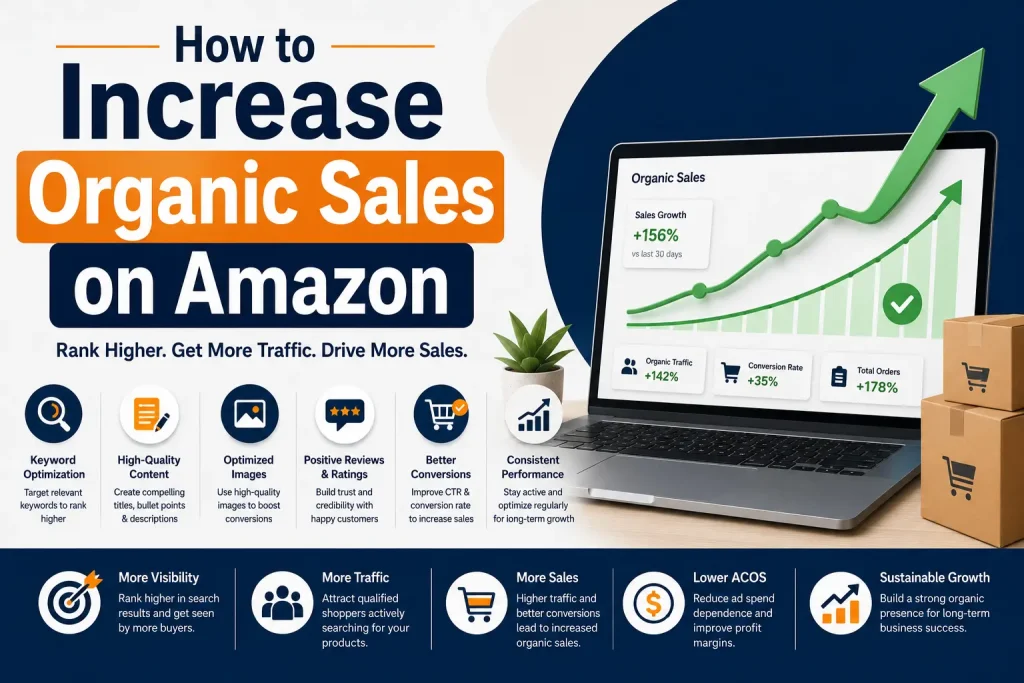
Growing your business on Amazon without relying much on paid advertising is a great way to build long term success. Organic sales on Amazon are good for you because they improve your profitability and also make your product rankings and customer trust better. When you focus on making your products better making your customers happy and always trying to improve you can have growth that lasts for years. To increase your sales on Amazon you need a plan that includes optimizing your keywords making high quality content giving great customer service and always checking how your products are doing. Here are some best practices to help you get results that last. You need to understand how Amazon ranks products. Amazon likes products that make customers happy. They look at how relevant your product’s how many sales you have made how happy your customers are, how many people buy from you and if you have enough products in stock. When your product does well in these areas Amazon shows it to people, which means more people will see it and buy from you. This makes your product ranking better over time. You should do a lot of research to find the keywords. This is important for your Amazon product. You want to find the words that customers use when they are looking for products like yours. You should look for: * keywords that a lot of people search for * Keywords that are not as popular but still relevant * Words that customers use when they are looking for something * Keywords that’re popular during certain times of the year * What keywords your competitors are using You should use these keywords in your product title, bullet points, description and backend search terms.. Do not use too many keywords because it can be hard to read and might hurt your products performance. Your product title is very important. It is often the thing that customers see. A good title should have your keyword, what kind of product it is, your brand name and what makes it special. A good title helps customers understand what you are selling before they even look at your product. It should also have the size or quantity of the product if that is important. Your bullet points should tell customers how your product can help them. They should not just list what your product can do. Each bullet point should answer questions like: * How does the product help solve a problem * Why is it better than products * What is it made of * How long will it last * Who should use it When you write bullet points that focus on the customer you can encourage them to buy your product. You should also write a description of your product. This is where you can tell your brands story and explain everything about your product. A good description should have: * What makes your product special * How to use it * Why it is quality * Who it is for * What makes it unique * Keywords that customers might use to find it * Formatting that is easy to read When you write a description you can make customers more confident in your product and more likely to buy it. Your product images are also very important. They can help customers decide whether or not to buy your product. You should include: * A main image of your product * Images of your product being used * Close up images of your product * Images that show its features * Images that compare it to things * Images of the packaging * Images that show how to use it When you have images customers can understand your product better and trust you more. You should also try to get reviews from your customers. Good reviews can help your product ranking. You can encourage customers to leave reviews by: * Giving them great customer service * Sending them their products on time * Making sure your products are quality * Responding quickly to their concerns * Making sure your product descriptions are accurate You should not try to fake reviews. Real reviews can help you build trust with customers and improve your visibility on Amazon. You should also make sure you have products in stock. If you run out of stock it can hurt your product ranking. When you plan your inventory well you can: * Keep your ranking * Not lose sales * Not have your listing suppressed * Make customers happier * Keep selling You should try to guess how many products you will sell so you can have enough in stock when you need it. You should also price your products competitively. This can influence what customers decide to buy without having to give discounts. You should look at: * What your competitors are charging * How profit you want to make * What customers are willing to pay * What is popular during times of the year * What customers expect to pay When you price your products well you can sell more and still make a profit. You should focus on making your customers happy. Amazon likes sellers who make customers happy. You should focus on: * Sending products quickly * Making sure your listings are accurate * Responding quickly to customers * Not having returns * Giving great customer support * Making sure orders are accurate When customers are happy they will come back. Buy from you again and tell their friends about you. You should also build a brand. This can help you stand out from your competitors. You can build a brand by: * Having a message * Using images * Having a brand identity * Making educational content * Giving customers information When you have a strong brand customers will trust you more and come back to buy from you again. You should also check how your products are doing regularly. Successful

Blog

How Can an Amazon Agency Help Grow Your Sales?

Selling on Amazon can be very profitable. Its also super competitive. Many sellers join every day making it hard to stand out and grow your business. Some businesses struggle with things like making their product listings look good running ads, managing inventory and dealing with customers. That’s where an experienced Amazon agency comes in. A professional Amazon agency provides the expertise, tools and strategies to help sellers increase visibility improve conversions and grow revenue. They handle the parts of selling on Amazon so business owners can focus on making new products and growing long-term. Understanding the Role of an Amazon Agency An Amazon agency is a team of specialists who manage and improve every part of your Amazon business. They know how Amazons algorithms work what customers are looking for and how advertising systems work. Their goal is to find opportunities for growth and implement strategies that help businesses achieve sales performance. Whether you’re a seller or an established brand an agency can provide customized solutions that align with your business objectives. Optimizing Product Listings for Better Visibility One of the factors affecting Amazon sales is product visibility. If customers can’t find your products they can’t buy them. An Amazon agency helps optimize product titles, bullet points, descriptions, backend keywords and images to improve search rankings. Optimized listings increase the chances of appearing in relevant search results driving more traffic to your products. Professional agencies also conduct keyword research to identify high-value search terms that potential customers are using. This ensures that your products reach the audience at the right time, which is crucial for Amazon brand management. Creating Advertising Campaigns Amazon advertising has become essential for sellers who want to compete successfully. However managing advertising campaigns requires expertise and constant monitoring. An agency develops targeted advertising strategies that maximize return on investment. They analyze keyword performance adjust bids, test campaign structures and optimize spending to generate profitable sales. By refining advertising efforts agencies help businesses attract more qualified customers while reducing unnecessary ad costs, which is a key part of Amazon brand management. Building Strong Brand Presence Success on Amazon is not about selling products. Building an trusted brand is equally important and thats where Amazon brand management comes in. Professional agencies help create a brand identity that differentiates your business from competitors. They ensure that branding elements remain consistent across product listings, storefronts and marketing campaigns. Effective Amazon brand management helps establish customer trust encourages repeat purchases and creates long-term business value. Improving Conversion Rates Getting traffic to a product page is half the battle. The real challenge is converting visitors into customers. Amazon agencies focus on improving conversion rates through high-quality content, enhanced images, compelling product descriptions and optimized customer experiences. They analyze customer behavior. Identify areas where improvements can lead to increased sales. Small adjustments in product presentation often result in improvements in overall revenue. Managing Inventory Efficiently Inventory management is a component of Amazon success. Running out of stock can lead to lost sales and lower rankings while excess inventory increases storage fees. An Amazon agency monitors inventory levels forecasts demand and helps sellers maintain stock quantities. This proactive approach ensures that products remain available when customers are ready to buy. Proper inventory planning contributes directly to consistent sales growth and better operational efficiency. Protecting and Strengthening Your Brand As businesses grow they often face challenges such as sellers, counterfeit products and pricing violations. These issues can damage customer trust and impact revenue. Professional Amazon brand management services help protect brands by monitoring listings maintaining compliance and addressing threats quickly. This protection helps preserve brand reputation and ensures a customer experience. Strong Amazon brand management also supports long-term growth by maintaining brand integrity across the marketplace. Leveraging Data for Smarter Decisions Amazon generates an amount of valuable data. However understanding and using that information effectively requires expertise. Amazon agencies analyze sales reports, customer behavior, market trends and competitor activities to make decisions. These insights help businesses identify growth opportunities improve performance and stay ahead of market changes. Data-driven strategies often lead to effective marketing efforts and stronger business outcomes. Enhancing Customer Satisfaction Customer satisfaction plays a role in Amazon success. Positive reviews, fast responses and excellent service help build credibility. Increase sales. An agency helps manage customer interactions monitor feedback and resolve issues promptly. Satisfied customers are more likely to leave reviews and become repeat buyers. This focus on customer experience contributes to brand loyalty and higher long-term profitability, which can be achieved through effective Amazon brand management. Conclusion Growing sales on Amazon requires more, than listing products and waiting for customers to arrive. It demands planning, continuous optimization, effective advertising and strong brand development all of which can be supported by Amazon brand management.

Scroll to Top