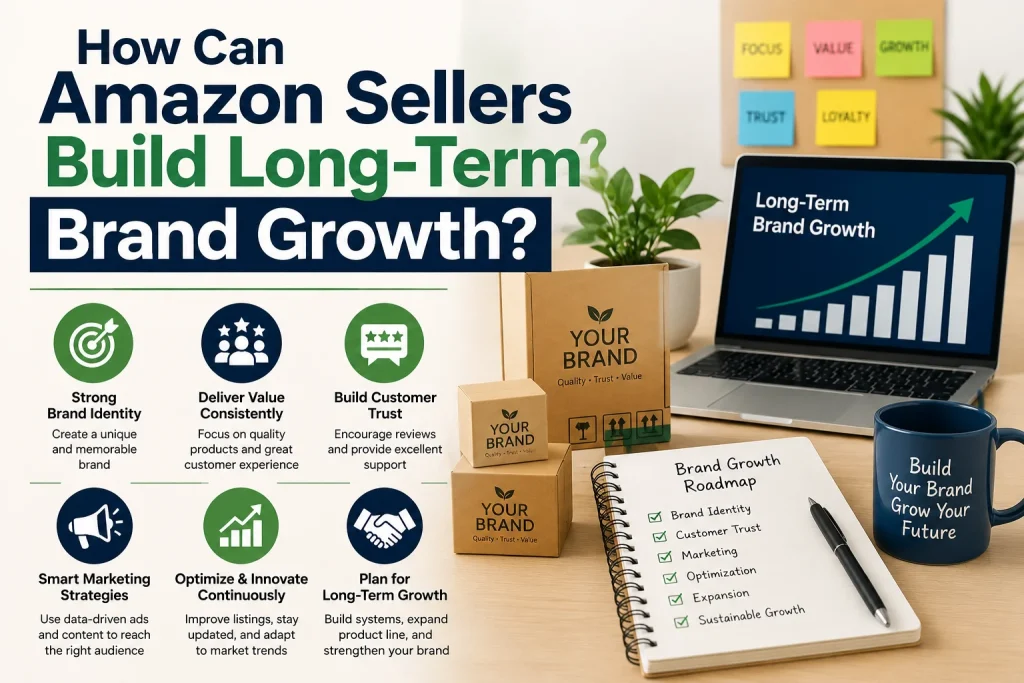
How Can Amazon Sellers Build Long-Term Brand Growth?
Building a successful Amazon business is not only about generating sales today. Long term growth comes from creating a recognizable brand that customers trust, improving the customer experience, and making smart decisions based on market data. Sellers who focus only on short term sales may struggle when competition increases, advertising costs rise, or customer expectations change. A strong brand strategy helps sellers create a business that can grow steadily over time while developing customer loyalty and a stronger position in the marketplace. Start With a Clear Brand Identity Every successful brand needs a clear identity. Sellers should understand what their brand represents, who their ideal customers are, and why customers should choose their products instead of competing options. A consistent brand identity should be reflected across product packaging, listings, images, product descriptions, and customer communication. When customers repeatedly see a familiar message and visual style, the brand becomes easier to recognize and remember. The goal should be to build a brand that customers associate with quality, reliability, and a specific solution to their needs. Protect Your Brand From the Beginning Brand protection becomes increasingly important as a business grows. Sellers should take ownership of their intellectual property and establish proper brand protection before investing heavily in marketing. An Amazon Brand Registry service can help eligible brand owners establish greater control over their brand presence and access useful brand protection features. Proper registration can also support a more organized approach to managing brand content and protecting product listings. For growing sellers, brand protection should not be treated as a one time task. It should remain part of the overall brand management strategy as new products and marketplaces are introduced. Focus on Product Quality Long term brand growth starts with the product itself. Strong advertising may bring customers to a listing, but product quality determines whether those customers become repeat buyers. Sellers should regularly review customer feedback, returns, complaints, and product reviews to identify areas for improvement. Small product improvements can make a significant difference when they are based on genuine customer needs. Instead of constantly searching for new products, successful brands can also improve existing products and create complementary products that serve the same customer base. Create Listings That Build Trust A product listing should do more than attract clicks. It should answer customer questions, explain the product clearly, and communicate why the product is worth buying. High quality images, informative descriptions, clear product benefits, and relevant search terms can help customers make confident purchasing decisions. Listings should also be reviewed regularly because customer search behavior and marketplace competition can change. Continuous optimization allows a brand to remain relevant instead of depending on an outdated listing strategy. Build Customer Loyalty Long term growth becomes easier when customers return to the same brand. Sellers should therefore think beyond the first purchase and focus on creating an experience that encourages customers to come back. Reliable product quality, accurate product information, responsive customer support, and professional brand presentation can all contribute to customer confidence. A loyal customer is valuable because repeat purchases can create more predictable revenue while reducing the need to depend entirely on acquiring new customers. Use Data to Make Better Decisions Growth should be guided by data rather than assumptions. Sellers should regularly examine sales performance, advertising results, customer behavior, inventory levels, conversion rates, and product performance. This information can reveal which products are growing, which products need improvement, and where marketing budgets are being wasted. Market research should also be continuous. Understanding changing customer preferences and competitor activity can help sellers identify new opportunities before the marketplace becomes overcrowded. Develop a Sustainable Advertising Strategy Advertising is important for increasing product visibility, but long term brands should avoid depending entirely on paid traffic. A sustainable strategy combines advertising with strong organic visibility, optimized listings, customer loyalty, and a recognizable brand identity. Advertising campaigns should be reviewed regularly to identify profitable opportunities and reduce unnecessary spending. The objective should not simply be to spend more but to generate better results from every advertising investment. Expand Your Product Portfolio Carefully Once a brand has established a strong foundation, expanding the product portfolio can create additional growth opportunities. However, expansion should be based on customer demand and brand relevance rather than adding random products. New products should complement the existing brand and provide useful solutions for the same or related audience. A carefully planned product portfolio can increase customer lifetime value and create multiple revenue opportunities within one brand. Maintain Strong Inventory Management Inventory problems can quickly damage a growing brand. Running out of stock can reduce sales momentum, while excessive inventory can increase storage expenses and tie up valuable capital. Sellers should use historical sales data, seasonal trends, product performance, and expected demand to plan inventory more effectively. Maintaining the right inventory balance helps brands remain available to customers while protecting profitability. Monitor Brand Reputation A growing brand should continuously monitor how customers perceive it. Reviews, feedback, ratings, customer questions, and complaints can provide valuable information about the overall customer experience. Instead of viewing negative feedback only as a problem, sellers can use it as an opportunity to identify weaknesses and improve their products or services. Consistent attention to reputation can help strengthen customer confidence and support sustainable growth. Keep Improving With Market Changes The Amazon marketplace continues to evolve, so a strategy that works today may not deliver the same results in the future. Customer behavior, competition, search trends, advertising costs, and marketplace expectations can all change. Successful sellers regularly review their strategies and make improvements instead of waiting for performance to decline. An Amazon Brand Registry service can be one part of this broader strategy by supporting brand protection and helping sellers make better use of available brand management capabilities. Think Beyond Short Term Sales The most valuable Amazon brands are built with a long term mindset. Sellers should focus on creating products customers want, delivering reliable experiences, protecting their brand identity, and continuously improving their marketplace presence. An Amazon