
Every year, the ecommerce landscape shifts. Consumer priorities change, new technologies drive new categories of demand, and sellers who pay attention to where the market is heading make significantly better product decisions than those who rely on last year’s data. In 2026, some of those shifts are large and structural. Others are more subtle — but no less important for sellers trying to identify where the genuine opportunities are.
This guide is built for Amazon sellers, ecommerce entrepreneurs, Shopify store owners, and anyone making product sourcing or inventory decisions in 2026. At Bizistech, we work with sellers across dozens of product categories, and the patterns we see across product research, listing performance, and advertising data all inform the analysis in this article.
What follows is not a list of products that were trending six months ago. It is a forward-looking, category-by-category breakdown of the product areas showing genuine, sustained demand heading into 2026 — with honest context about the competition, the margin dynamics, and the selling opportunities that experienced sellers will recognize and newer sellers genuinely need to understand.
Quick Answer — What Are the Hottest Selling Products in 2026?
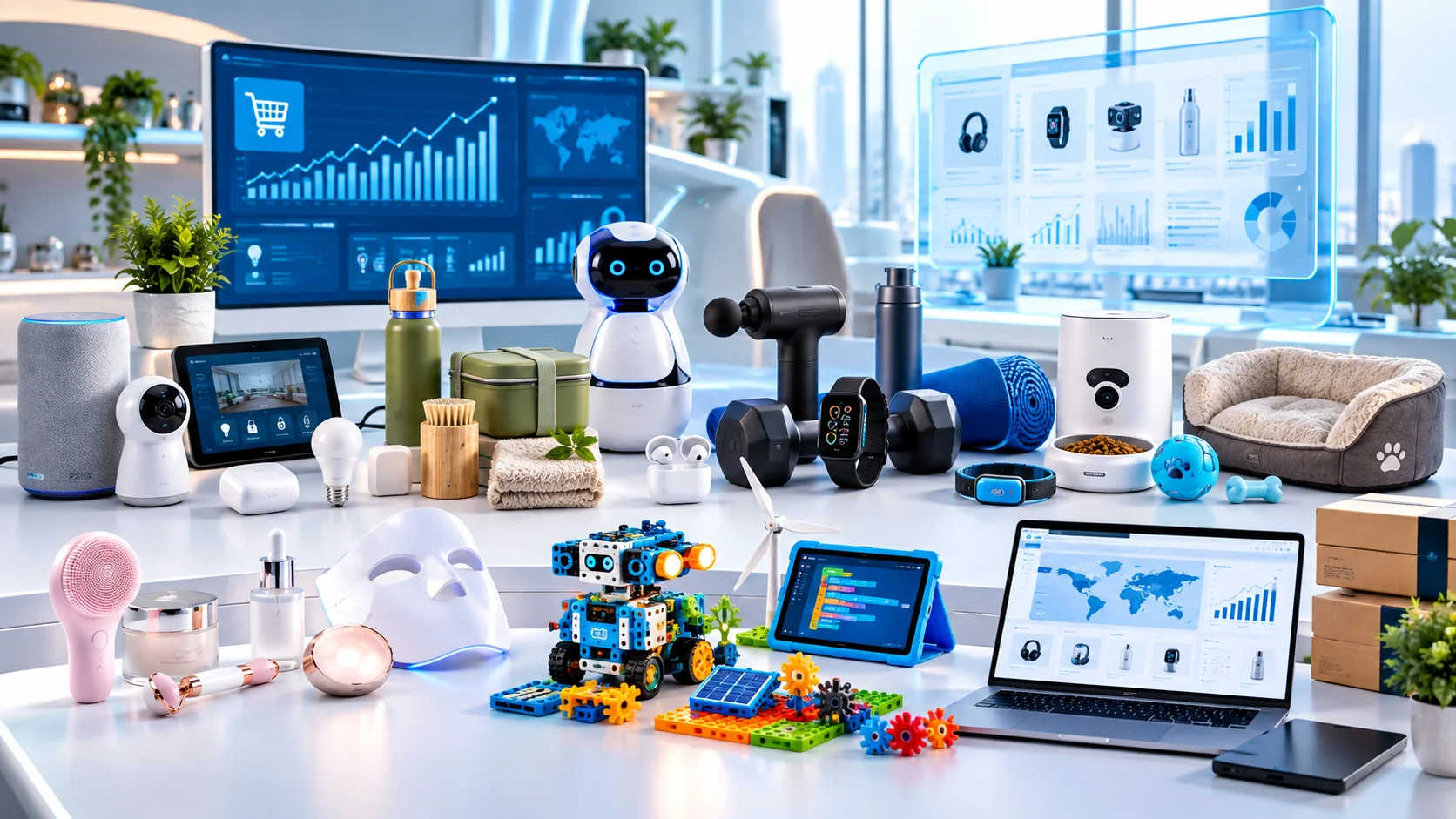
The hottest selling product categories in 2026 are health and wellness (targeted supplements, at-home monitoring devices, sleep products), smart home and organization solutions, eco-friendly everyday alternatives, pet health and technology products, AI-powered tech accessories, home fitness and outdoor gear, clean beauty and skincare devices, and STEM educational toys. Each category is driven by specific consumer behavior shifts that are structural rather than seasonal, making them more durable selling opportunities than trend-driven spikes.
How to Evaluate Whether a Trending Product Is Actually Worth Selling
Before diving into the specific categories and products, it is worth establishing a framework for evaluating any trending item — because appearing on a “hot products” list is not the same as being a profitable selling opportunity for your specific business.
Demand vs Competition — The Real Equation
Demand is only half the equation. The other half is competition — specifically, how many established sellers are already in the space, how strong their listings and review counts are, and how much advertising budget would be required to gain meaningful visibility.
A product with 50,000 monthly searches and 3 Amazon listings with under 100 reviews each is a genuinely different opportunity from a product with 200,000 monthly searches and dozens of well-established competitors each sitting on 2,000-plus reviews. The latter might seem more attractive because of the higher search volume, but the former is almost certainly a better actual opportunity for a new entrant.
When evaluating any product from this guide, the first practical step is to check the actual competitive landscape on Amazon using tools like Helium 10 or Jungle Scout — looking at how many competing listings exist, what their review counts look like, and what the average selling price implies about margin viability.
Trend vs Fad — How to Tell the Difference
This distinction matters enormously and most “trending products” articles do not address it directly. A trend is a consumer behavior shift driven by structural factors — demographic changes, technology adoption, economic shifts — that sustains demand over years. A fad is a popularity spike driven by novelty, social media virality, or a single cultural moment that peaks fast and collapses equally fast.
The practical test: check Google Trends for the relevant search terms and look at a two-to-three-year timeframe rather than just recent months. Products where search volume has been growing steadily over multiple years are trends. Products that show a massive spike in the last three months are potential fads. Both can be profitable to sell, but they require completely different strategies — and the margin for error on a fad is significantly smaller.
Margin Reality Check Before You Source
Every product opportunity needs to survive a realistic margin calculation before you commit to inventory. On Amazon specifically, your true margin after cost of goods, shipping, Amazon referral fee, FBA fulfillment fee, and advertising spend is often significantly lower than the gross margin calculation suggests.
At Bizistech, we consistently emphasize to clients that products need to show at least a 30 to 40 percent margin at their landed cost — before advertising — to remain profitable when advertising costs are factored in. Products with thinner margins can work, but they leave almost no room for the advertising investment that is increasingly necessary to gain visibility on Amazon.
Category 1 — Health, Wellness and Personal Care
Health and wellness is the most reliably growing ecommerce category in 2026 — not because it is new, but because the consumer behaviors driving it are structural and accelerating. An aging population in the US and UK, growing awareness of preventive health, and increasing willingness to spend on products that promise specific health outcomes all sustain demand in this category over the long term.
Targeted Supplements and Functional Nutrition
The broad supplement market is competitive and increasingly difficult for new entrants to gain traction in. What is working in 2026 is specificity — supplements targeting specific health concerns for specific demographic groups. Menopause support supplements, cognitive function products marketed to professionals under sustained work pressure, sleep-specific magnesium formulations, and gut health products with specific probiotic strains are all examples of the targeted positioning that cuts through in a crowded market.
The key for sellers in this space is compliance and credibility. Supplement claims are regulated, and Amazon enforces its supplement category policies with increasing rigor. Sellers who invest in proper product testing, accurate labeling, and compliant claims consistently outperform those trying to cut corners on compliance.
At-Home Health Monitoring Devices
Pulse oximeters, blood pressure monitors, continuous glucose monitors compatible with smartphone apps, and at-home sleep tracking devices are all seeing strong sustained demand. The consumer behavior driving this is a genuine shift toward proactive health monitoring — people wanting real data about their health between doctor visits rather than relying on annual checkups.
Products in this space work well on Amazon because they are searched for with high purchase intent and the product benefits are easy to communicate visually. The challenge is that many categories are dominated by established medical device brands, so private label opportunities are more limited than in supplement categories.
Mental Wellness and Sleep Products
Weighted blankets, sleep masks with blackout and comfort features, red light therapy devices, and meditation aids are all sustaining strong demand. The wellness economy around sleep quality specifically has expanded significantly — and unlike some wellness categories, the target market is broad enough (essentially anyone who struggles with sleep) that demand does not depend on niche targeting.

Category 2 — Home and Smart Living Products
The home category is one of the most consistently performing ecommerce categories, and in 2026 several specific subcategories are showing particularly strong growth.
Space Optimization and Organization Solutions
With housing costs rising and living spaces in many major markets becoming smaller or remaining the same size while households accumulate more possessions, demand for clever organization and space optimization products remains strong. Vertical storage solutions, drawer organizers, cable management systems, and modular storage products all perform consistently.
What works in this space is visual communication — products that clearly show the before-and-after transformation in their listing images consistently outperform those relying on specification-heavy descriptions. This is a category where photography quality directly drives conversion rate.
Smart Home Devices and Energy Monitors
Smart plugs, home energy monitors, smart lighting systems, and plug-in air quality sensors are all seeing demand growth driven by both technology adoption and energy cost concerns. The practical selling opportunity here is products that offer genuine utility improvements rather than novelty — items that help households reduce energy costs or improve home environment quality in measurable ways.
Competition from major brands is real in this space, but private label opportunities exist in accessories and peripherals — cases, mounts, adapters, and organizational products that work with popular smart home ecosystems.
Premium Home Comfort Products
Premium pillows, ergonomic seat cushions for work-from-home setups, aromatherapy diffusers with premium designs, and high-quality kitchen tools are all strong performers. The common thread is consumers willing to invest in home comfort as remote and hybrid work remain permanent features of many households’ daily lives.
Category 3 — Sustainable and Eco-Friendly Products
Sustainable products have shifted from niche to mainstream in ways that are now showing up clearly in Amazon search data and conversion metrics. This is no longer a category serving a small environmentally conscious minority — it is a category serving a broad consumer base that has internalized sustainability considerations into everyday purchasing decisions.
Zero-Waste Everyday Alternatives
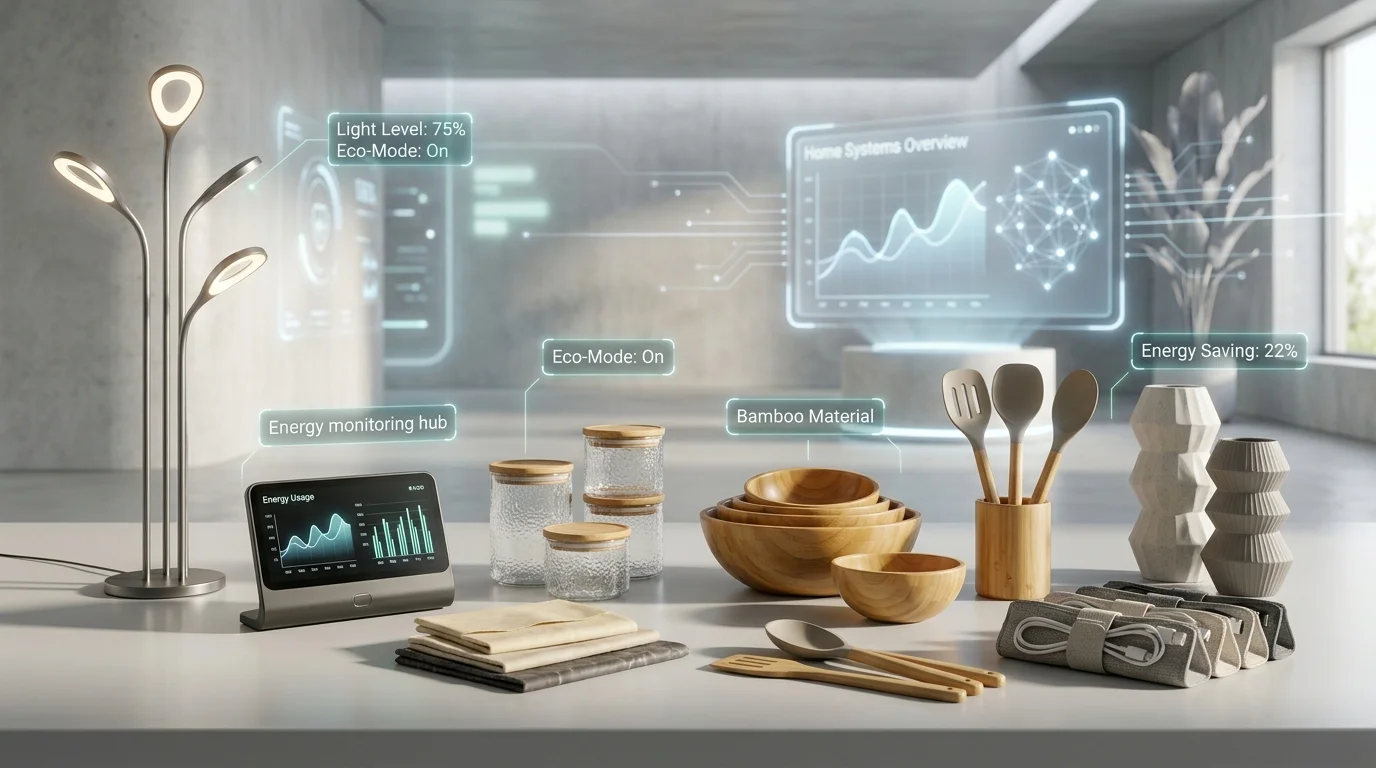
Reusable food storage solutions, silicone baking mats, bamboo kitchen tools, compostable packaging products for personal use, and stainless steel alternatives to single-use plastics are all sustaining strong demand. The consumer behavior here is structural — these are habitual purchases for products people use every day, which means strong repeat purchase rates and consistent demand curves.
Sustainable Personal Care
Shampoo bars, solid conditioners, bamboo toothbrushes, refillable deodorant systems, and plastic-free skincare packaging are all growing categories. The appeal has broadened beyond environmental consciousness — many of these products also offer cost savings over their conventional equivalents when evaluated over a period of months of use.
Why Eco Products Are Now a Mainstream Selling Opportunity
The practical implication for sellers is that positioning a product as sustainable is no longer enough by itself — the product also needs to perform comparably to conventional alternatives. Products that combine genuine sustainability with equivalent or superior performance consistently win in this category. Products that trade performance for eco credentials are increasingly struggling to maintain positive review profiles as consumers hold them to the same standard as any other product they purchase.
Category 4 — Pet Products
The pet products category is one of the most durable and fastest-growing categories in ecommerce, and its growth trajectory shows no signs of plateauing. Pet ownership is high and stable, pet owners are spending more per pet than any previous generation, and the humanization of pets — treating them as family members rather than animals — continues to drive demand for premium products across every pet care subcategory.
Pet Health and Nutrition
Premium pet foods with specific health formulations — joint support for older dogs, digestive health for cats, breed-specific nutrition — are strong performers. Supplements for pets, particularly those addressing anxiety, joint health, and coat condition, are growing rapidly.
Smart Pet Technology
GPS pet trackers, automatic pet feeders with smartphone connectivity, pet cameras with two-way audio, and smart water fountains for cats are all strong sellers. These products benefit from both the pet owner market and the gift market — they are popular gift items in holiday periods.
What Makes Pet Products a Particularly Attractive Selling Category
Pet owners are highly motivated buyers with strong emotional investment in the products they choose for their animals. This means they research carefully, are willing to pay premium prices for quality, and when they find a product that works for their pet, they become highly loyal repeat customers. For sellers, this loyalty dynamic makes pet products an unusually strong category for building sustainable repeat purchase revenue.
Category 5 — AI-Powered Gadgets and Tech Accessories
Technology accessories and AI-enhanced gadgets are sustaining strong demand driven by rapid technology adoption across consumer demographics. The key distinction for sellers in this space is between genuinely useful products that improve daily life and novelty gadgets that get purchased once, used briefly, and forgotten.
AI Audio and Communication Devices
Noise-canceling earbuds with AI-enhanced audio processing, smart speakers with expanded AI assistant capabilities, and AI transcription devices for meetings are all strong performers. These products benefit from the professional market alongside the consumer market — particularly strong during back-to-school and corporate gifting periods.
Portable Power and Charging Solutions
Portable power banks, solar charging solutions, multiple-device charging stations, and fast-charging cables consistently perform well because they are practical daily-use purchases for almost every demographic. The competitive landscape is significant, but differentiation through design quality, charge speed specifications, and multi-device compatibility creates room for well-positioned products.
Mobile Photography Accessories
Smartphone lenses, portable ring lights, phone tripods, and content creator accessories are all growing with the creator economy. Products that serve both professional content creators and casual social media users span a particularly broad addressable market.
Category 6 — Sports, Fitness and Outdoor Products
Fitness and outdoor products have sustained demand well beyond the pandemic-era peak that briefly inflated sales figures. The underlying behavior shift — more people engaging in regular exercise and outdoor activities — appears structural rather than temporary.
Home Gym and Recovery Equipment
Resistance bands, adjustable dumbbells, foam rollers, massage guns, and yoga accessories remain strong performers. The home gym category benefits from consumers who started working out at home and have maintained the habit. Recovery products specifically have seen strong growth as awareness of recovery’s role in fitness outcomes has become mainstream.
Outdoor Adventure and Camping Gear
Camping, hiking, and outdoor adventure product demand has grown significantly and shows no signs of reversing. Lightweight camping cookware, hydration products, portable solar solutions, and outdoor shelter products are all performing well. The trend toward what is being called “adventure travel” — shorter trips to outdoor locations rather than traditional resort vacations — is sustaining this category’s growth.
Wearable Fitness Technology
Fitness trackers, GPS running watches, heart rate monitors, and smart fitness accessories continue to see strong demand. The challenge is significant competition from major brands like Garmin, Fitbit, and Apple — but accessories for these devices and budget-friendly alternatives at lower price points represent viable opportunities for private label sellers.
Category 7 — Beauty and Skincare
The beauty category is large, competitive, and constantly evolving — but specific subcategories within it are showing the kind of sustained growth that represents genuine selling opportunities.
Skincare Devices and Tools
At-home LED light therapy devices, microcurrent facial tools, gua sha tools, facial rollers, and dermaplaning tools are all sustaining strong demand. These products benefit from the consumer trend toward professional skincare results achieved at home — driven partly by the costs of professional skincare treatments and partly by growing consumer sophistication about skincare science.
The key for sellers in this space is clear before-and-after communication and credible claims. Overclaiming on skincare device results has become a significant source of negative reviews — and negative reviews in beauty are particularly damaging to long-term listing performance.
Clean and Ingredient-Conscious Beauty
Beauty and skincare products with clean ingredient lists — free from sulfates, parabens, synthetic fragrances, and other increasingly avoided ingredients — continue to outperform conventional alternatives in consumer preference surveys and Amazon search data. For sellers, this means ingredient transparency in listings is not optional — it is expected.
Category 8 — Kids, Education and Learning Toys
The educational toy and STEM product category has grown significantly and shows characteristics of a structural trend rather than a fad — parents consistently prioritize educational value in toy purchases and this priority appears to be increasing rather than decreasing.
STEM and Educational Play
Coding kits for kids, science experiment sets, robotics toys, and math-focused educational games all show strong sustained demand. These products perform particularly well in the run-up to back-to-school periods and holiday gifting seasons, but their demand is not purely seasonal — they are purchased throughout the year as gifts and as educational supplements.
Screen-Free Creative Toys
As parental concern about children’s screen time remains high, screen-free creative products — art kits, building sets, sensory play materials, and craft supplies — consistently perform well. The target purchaser in this category is often a parent or grandparent looking for meaningful gifts, which means gift packaging quality and presentation play a larger role in conversion than in some other categories.
Practical Selling Scenarios — Putting This List to Work
Understanding which categories are trending is step one. Deciding what to actually do with that information requires matching the opportunity to your specific situation — your available capital, your sourcing capabilities, your existing platform presence, and your timeline.
Scenario 1 — The New Amazon Seller: For sellers starting from scratch in 2026, the most accessible entry points are within the organization products, pet accessories, and outdoor gear categories — they have genuine demand, viable private label opportunities, and price points that make unit economics work with modest initial inventory investment.
Scenario 2 — The Established Amazon Seller Expanding Their Catalog: For sellers with existing Amazon presence and established review profiles, adding complementary products in the health and wellness or beauty categories — where their existing seller credibility carries over — often produces faster results than launching in an entirely new category where they are starting from zero.
Scenario 3 — The Shopify Seller Seeking New Products: For direct-to-consumer Shopify brands, sustainable products and premium home comfort items work particularly well because they support the brand storytelling that Shopify’s direct-to-consumer model enables — something that can be harder to communicate effectively on Amazon.
At Bizistech, our product research services help sellers across all three scenarios evaluate specific opportunities against their particular situation rather than chasing generic trend lists without context.
Common Mistakes Sellers Make When Chasing Trending Products
Buying inventory before validating demand.
The most expensive mistake in ecommerce is committing to significant inventory before confirming that demand is real, that your listing can convert traffic, and that your landed cost supports a viable margin. Ordering a smaller test quantity first — even if the per-unit cost is higher — is almost always the right decision for a new product.
Choosing a product based on category growth without checking subcategory competition.
“Health and wellness is growing” is not sufficient information to justify entering the health and wellness category. The question is whether the specific product you are considering has sufficient demand and manageable competition — which requires product-level research, not category-level awareness.
Ignoring seasonality patterns.
Many trending products are seasonal — or have significant seasonal spikes that affect their viability as year-round inventory investments. A product that sells well in Q4 but barely moves in Q2 creates cash flow and storage challenges that sellers who did not anticipate them often underestimate.
Sourcing based solely on price.
The cheapest supplier is rarely the best supplier for long-term Amazon success. Quality consistency, production lead times, communication responsiveness, and experience with US market compliance requirements all matter enormously — and the cost of a bad sourcing decision in negative reviews, returns, and account health impacts consistently exceeds any per-unit savings from the lowest-price supplier.
Launching without sufficient PPC budget.
New product listings on Amazon have no organic ranking and no review history. Without advertising budget to generate the initial sales velocity needed to build ranking, even genuinely good products in strong demand categories fail to gain traction. Budgeting for a proper launch campaign is not optional.
Expert Tips for Selling Hot Products in 2026
Use Google Trends alongside Amazon data. Amazon’s own search data is valuable but limited to in-platform behavior. Google Trends shows you whether consumer interest in a product category is growing at the broader search level — which is often a leading indicator of Amazon demand growth rather than a trailing one.
Validate with TikTok before committing to inventory. Products that are already performing well on TikTok Shop or that are showing up in viral product review content are often six to twelve months away from peak Amazon demand. Entering a category at this stage — when TikTok virality is driving awareness but Amazon competition has not yet fully responded — can provide a meaningful first-mover advantage.
Look for products with repeat purchase potential. Single-purchase products generate revenue once. Products that customers re-order — supplements, consumable pet products, skincare supplies, cleaning solutions — generate lifetime customer value that dramatically improves the economics of your advertising investment.
Differentiate on presentation, not just product. In many trending categories, the underlying products are similar across multiple sellers. Differentiation through better images, more compelling A Plus content, clearer benefit communication, and superior packaging design can drive significantly higher conversion rates from the same traffic.
Work with an experienced Amazon agency for competitive categories. Entering a trending category without the right PPC strategy, listing optimization, and launch plan is a fast way to spend your budget without building the ranking that makes the investment worthwhile. At BIZisTECH, we build Amazon product launch strategies specifically designed to give new listings the best possible start in competitive markets.
Frequently Asked Questions About Hot Selling Products 2026
What are the hottest selling products in 2026?
The hottest selling product categories in 2026 are targeted health and wellness products, smart home devices, eco-friendly everyday alternatives, premium pet products, AI-enhanced tech accessories, home fitness and recovery equipment, at-home skincare devices, and educational STEM toys. Each of these categories is driven by structural consumer behavior shifts that sustain demand over time rather than short-term trend spikes.
What products should I sell on Amazon in 2026?
The best products to sell on Amazon in 2026 are those that combine genuine consumer demand with manageable competition and viable margins after all Amazon fees and advertising costs. Based on current market patterns, strong opportunities exist in targeted supplements, pet accessories, outdoor gear, organization products, and at-home wellness devices. The specific opportunity depends on your available capital, sourcing capabilities, and existing seller history.
How do I know if a trending product is worth selling?
Evaluate a trending product across three dimensions: demand (is there genuine, sustained search volume?), competition (are there too many established sellers with strong review counts?), and margin (does the math work after all costs?). Use Google Trends to assess whether the trend is growing or peaking, and use Amazon research tools like Helium 10 or Jungle Scout to assess competition and estimate sales volume.
Are health and wellness products still profitable in 2026?
Yes, but the level of competition varies significantly by subcategory. Generic multivitamins and basic protein powders are extremely competitive. Targeted formulations for specific health concerns — sleep, cognitive function, gut health, menopause support — are less crowded and support premium pricing. The key is specificity in both the product formulation and the marketing positioning.
What eco-friendly products are trending in 2026?
Top eco-friendly trending products in 2026 include reusable food storage solutions, bamboo personal care products, plastic-free kitchen tools, compostable packaging alternatives, refillable personal care systems, and sustainable home organization products. The common thread is products that offer a genuine performance equivalent to conventional alternatives while reducing waste or plastic use.
Is pet care a good niche to sell in 2026?
Pet care is one of the most consistently strong ecommerce categories. Demand is sustained year-round, pet owners are willing to pay premium prices for quality products, and repeat purchase rates are high. Specific opportunities in 2026 include pet supplements, smart pet technology, premium nutrition products, and premium comfort accessories. Competition from established brands is real but private label opportunities exist in accessories and supplement subcategories.
What tech accessories are selling best in 2026?
Top-performing tech accessories in 2026 include noise-canceling earbuds, portable power banks and charging stations, mobile photography accessories, smart home peripherals, and AI audio devices. Products that solve specific everyday problems — managing cable clutter, improving audio quality for work calls, extending battery life for travel — consistently outperform novelty gadgets in long-term sales performance.
How do I avoid picking a product that is already oversaturated?
Use Amazon research tools to check the number of competing listings, the average review count of top sellers, and the advertising cost for primary keywords. If the top 10 results all have over 1,000 reviews and sponsored ad placements are expensive, the category is likely too competitive for new entrants without significant differentiation. Look for subcategories or specific formulations where competition is less established.
Can I still make money dropshipping trending products in 2026?
Dropshipping of trending products has become increasingly difficult as Amazon’s policies have tightened around dropshipping practices and as consumer expectations around delivery speed have increased. For genuine ecommerce success in 2026, private label or wholesale sourcing with proper inventory typically outperforms pure dropshipping models. Dropshipping can work on Shopify for specific product types and markets, but it requires careful supplier selection and realistic expectations about margins.
What tools should I use to find hot selling products?
Effective product research in 2026 combines multiple data sources: Amazon Best Sellers and Movers and Shakers for in-platform demand signals, Google Trends for broader consumer interest patterns, Helium 10 or Jungle Scout for detailed Amazon market data, and TikTok’s trending products for early indicators of emerging demand. No single tool provides the complete picture — the most reliable product decisions combine insights from several sources.
Final Takeaway — Find Your Product, Build Your Strategy
The product categories in this guide represent genuine opportunities in 2026 — but opportunity is only the beginning. What separates sellers who build profitable businesses from those who chase trends and end up with stagnant inventory is execution: finding the right specific product within a strong category, sourcing it at a margin that works, launching with sufficient investment to gain visibility, and managing the account with the consistency and expertise that sustains growth over time.
At Bizistech, we help sellers at every stage of this process — from product research and sourcing guidance through listing optimization, PPC management, and full Amazon account management. The trending categories are identified. The opportunity is real. The question is whether your execution matches the opportunity.
Ready to take the next step? Get in touch with Bizistech today and let us help you find, launch, and grow your next winning product on Amazon.
Bizistech — From Product Research to Amazon Success. Every Step Done Right.
