
Amazon does not stand still. Every year the platform shifts in ways that reward sellers who prepared and punish those who did not. In 2025 and 2026 we saw AI reshape search results, advertising costs climb steadily across most categories, brand building overtake commodity selling as the dominant growth model, and the line between Amazon and the broader digital marketing world blur more than at any point in the platform’s history.
2027 is shaping up to be another significant year of change. At Bizistech we work with Amazon sellers every day — managing accounts, running campaigns, optimizing listings, and watching the platform evolve from inside the work rather than from the sidelines. The patterns we see consistently across clients and categories inform everything in this guide.
This article is for Amazon sellers, brand owners, ecommerce entrepreneurs, and marketing professionals who want to understand where the platform is heading, what the practical implications are, and what to do now to position their business for what is coming.
Quick Answer — What Are the Biggest Amazon Trends for 2027?
The ten most significant Amazon trends and predictions for 2027 are: AI-powered search and fulfillment reshaping discoverability, off-Amazon advertising expansion, video commerce becoming standard, stricter brand protection, category expansion into healthcare and grocery, rising PPC costs demanding efficiency over volume, sustainability signals affecting rankings, deeper TikTok integration, accelerating international competition, and the collapse of generic private label in favor of genuine brand building.
1. AI-Powered Everything — From Search to Fulfillment
Artificial intelligence is no longer a background feature on Amazon — it is increasingly the engine running the entire platform. By 2027, the influence of AI on how products are discovered, ranked, advertised, and fulfilled will be more pronounced than ever.
How Amazon’s AI Is Changing Product Discovery
Amazon’s search algorithm has been evolving toward semantic understanding for several years. In 2027, this evolution is expected to deepen significantly. Rather than matching keywords mechanically, Amazon’s search system is increasingly able to understand intent — recognizing that a shopper searching for “something for my aching back after long drives” is looking for lumbar support cushions even without exact keyword matches.
For sellers, this shift has significant implications. Listings optimized purely for keyword density will underperform against listings that describe the product clearly, address the use case honestly, and present information in the format Amazon’s AI can understand and extract. The technical term for this is semantic relevance — and building it into your listing strategy is no longer optional.
On the fulfillment side, Amazon’s AI is increasingly being used to predict inventory positioning, anticipating where products will be needed based on historical demand patterns. Sellers enrolled in FBA who provide accurate inventory and sales forecasts will benefit from better placement in fulfillment centers, faster delivery times, and the Prime delivery promises that drive conversion. Those who manage inventory reactively will face growing disadvantages.
What This Means for Sellers in Practice
In practice, the most important adaptation is treating your listing as a communication to both humans and AI systems simultaneously. This means clear, specific product descriptions that accurately reflect use cases, natural keyword integration rather than stuffing, and structured content — bullet points, clear titles, specific feature statements — that AI can parse efficiently.
At Bizistech, we have been building our listing optimization work around semantic relevance principles for the past two years, and the performance gap between listings built this way and those built on older keyword-density models continues to widen.

2. The Rise of Amazon’s Own Advertising Network Beyond Its Marketplace
Amazon Advertising has grown into one of the most powerful digital advertising networks in the world — and in 2027, its reach beyond the Amazon marketplace itself is expected to continue expanding significantly.
Off-Amazon DSP Expansion
Amazon’s Demand Side Platform allows brands to reach Amazon shoppers across third-party websites, streaming services, apps, and connected TV. In 2027, this off-Amazon advertising reach is becoming an important part of complete brand strategies — not just for large brands with enterprise budgets, but increasingly for mid-sized sellers who want to build brand awareness outside the competitive Amazon marketplace itself.
Amazon’s first-party data advantage — its ability to target people based on their actual purchase behavior, not just their browsing patterns — makes its DSP significantly more precise than most other programmatic advertising options. A brand selling outdoor cooking equipment can reach people who have actually purchased camping gear in the last 90 days. That targeting precision is genuinely difficult to replicate elsewhere.
How Sellers Should Respond
For most Amazon sellers, DSP is not yet a primary channel — but awareness of its existence and growing sophistication matters. The sellers building multi-touch advertising strategies in 2027, combining Sponsored Products with Sponsored Brands with DSP touchpoints, are creating brand presence that compounds over time in ways that single-channel approaches cannot.
For smaller sellers, the more immediate opportunity is making sure their Amazon Attribution tracking is set up to understand which external channels — social media, email, Google — are driving Amazon sales. This data, which is free to access, informs smarter budget allocation across every channel.
3. Video and Interactive Content Becoming Non-Negotiable
If you are still managing your Amazon presence without video, 2027 is the year that gap becomes genuinely expensive. Video content on Amazon — in listing galleries, through Amazon Live, in Sponsored Brands video ads, and increasingly through social commerce integration — is driving conversion improvements that static image-only listings simply cannot match.
Amazon Live and Shoppable Video in 2027
Amazon Live — the platform’s native live shopping feature — is expected to grow significantly in 2027, particularly as Amazon deepens its connections with creator content and social commerce audiences. The format allows sellers and creators to demonstrate products in real time, answer audience questions, and drive immediate purchases through the live stream.
Early adopters of Amazon Live have consistently reported conversion improvements on featured products during and after live sessions. The format is particularly effective for products that benefit from demonstration — beauty, kitchen tools, fitness equipment, home goods — but creative sellers have found applications in almost every category.
What Sellers Without Video Will Lose
In competitive categories, listings with video content in the gallery already convert at meaningfully higher rates than those without. By 2027, the presence of video is expected to shift from a differentiator to a baseline expectation — particularly for products in premium price points where buyers want to see the item thoroughly before committing.
At Bizistech, we advise clients in competitive categories to treat video production as a listing investment, not a nice-to-have. A single well-produced sixty-second product video can serve the listing gallery, sponsored brand video campaigns, and social media simultaneously — making the per-channel cost significantly more manageable than it initially appears.
4. Brand Registry and IP Protection Getting Stricter — and More Powerful
Amazon Brand Registry has existed since 2017, but its capabilities and the platform’s enforcement of IP violations have been expanding consistently. In 2027, this trend continues — with new anti-counterfeiting tools, stricter requirements for sellers making brand claims, and increased consequences for policy violations.
New Anti-Counterfeit Capabilities
Amazon’s Project Zero and Transparency programs — which allow brands to serialize individual product units with unique codes that Amazon scans before fulfillment — are expected to see expanded adoption in 2027 as more brands recognize the protection they offer. These programs make it significantly harder for counterfeit sellers to operate within Amazon’s fulfillment network.
For brands experiencing counterfeiting problems, enrollment in these programs has become one of the most effective protective measures available on the platform. The barrier to enrollment is primarily operational — generating and applying unique codes to every unit — but for brands where counterfeiting represents a meaningful revenue threat, this operational investment is well justified.
Why Unregistered Brands Are at Growing Risk
The inverse of stronger brand protection is increasing vulnerability for sellers operating without trademark protection and Brand Registry enrollment. As Amazon’s detection and enforcement capabilities improve, disputes over listing ownership, brand name usage, and intellectual property become more consequential.
Sellers who have been building a brand identity on Amazon without securing the underlying trademark are in a progressively more vulnerable position. The cost of trademark registration — typically a few hundred dollars per class through national patent offices — is minimal compared to the cost of losing a listing or an account to a more legally protected competitor.

5. Amazon’s Push Into Healthcare, Grocery, and Services
Amazon’s category expansion beyond traditional retail continues accelerating. Amazon Pharmacy, Amazon Fresh, Amazon Home Services, and related offerings are all growing — and their growth has implications for third-party sellers in adjacent categories.
What Category Expansion Means for Third-Party Sellers
For sellers in health and wellness categories, Amazon Pharmacy’s expansion creates both competitive pressure and opportunity. The competitive pressure comes from Amazon’s own healthcare services establishing direct purchasing relationships with consumers. The opportunity comes from the expanded consumer awareness and comfort with purchasing health-related products on Amazon that these services create.
Similarly, Amazon Fresh’s grocery expansion brings new audiences to Amazon who then discover other categories. A household that starts buying groceries through Amazon Prime is incrementally more likely to buy other household products through Amazon as their trust and habit around the platform deepens.
In practice, the most important implication for sellers is that Amazon’s category expansion is bringing more first-time Amazon buyers into the ecosystem — and first-time buyers in one category often become repeat buyers across many categories over time.
6. Rising Advertising Costs and the Shift to Efficiency-Driven PPC
Amazon advertising costs have been rising across most categories for several consecutive years, and there is no credible prediction suggesting this trend reverses in 2027. As more sellers enter the marketplace and established sellers invest more heavily in advertising, the auction dynamics that determine cost-per-click continue to push prices higher.
Why ROAS Will Matter More Than Volume
The response to rising advertising costs is not — as some sellers assume — to simply increase spend proportionally. The correct response is to become significantly more efficient with every dollar spent. In 2027, the sellers building the strongest Amazon businesses are not necessarily the ones spending the most on advertising. They are the ones achieving the strongest return on advertising spend through tighter campaign structures, more rigorous negative keyword management, better listing conversion rates, and more sophisticated understanding of how their advertising spend affects organic ranking.
The specific metrics to obsess over in 2027 are not total ad spend and total sales — they are TACoS (Total Advertising Cost of Sale, which includes both paid and organic sales in the denominator), conversion rate by campaign and keyword, and the organic ranking trajectory of your most important search terms. These three metrics together tell you far more about whether your advertising program is working efficiently than any single-channel metric does.
How Bizistech Approaches PPC Efficiency in 2027
At Bizistech, our PPC management approach in 2027 is centered on efficiency architecture — building campaign structures that give Amazon’s algorithm clear, specific signals while maintaining the human oversight needed to prevent automated systems from optimizing toward the wrong objectives. We combine smart bidding where it makes sense with strict manual control over campaign structure, negative keywords, and budget allocation to ensure every client’s ad spend is working as hard as possible toward their actual business goals.

7. Sustainability Signals Becoming Ranking and Conversion Factors
Amazon’s Climate Pledge Friendly program — which highlights products meeting recognized sustainability certifications — has grown from a niche feature to a meaningful conversion factor in certain categories, and its influence is expected to deepen in 2027.
The Climate Pledge Friendly Program’s Growing Influence
Data from Amazon’s own reporting suggests that Climate Pledge Friendly badged products see meaningfully higher engagement from the growing segment of environmentally conscious Amazon shoppers. While sustainability certification does not yet appear to be a direct ranking signal in Amazon’s search algorithm, it does influence conversion rate — and conversion rate is a direct ranking signal.
The practical implication for sellers in appropriate categories is that pursuing relevant sustainability certifications produces compounding benefits: improved appeal to a growing buyer segment, improved conversion rate, improved ranking from better conversion, and differentiation from competitors who have not made the same investment.
8. Social Commerce Integration Deepening Between Amazon and TikTok
The relationship between Amazon and TikTok has become one of the most interesting dynamics in ecommerce. The Amazon-TikTok partnership, which allows TikTok users to purchase Amazon products directly within the TikTok app, represents a meaningful new traffic channel — and one that many Amazon sellers are not yet using effectively.
The Amazon-TikTok Relationship in 2027
By 2027, the Amazon-TikTok integration is expected to be more developed and more widely adopted by brands. Sellers who have established TikTok presences and creator relationships are finding that product demonstrations and reviews on TikTok drive Amazon sales in measurable ways — both through direct in-app purchase links and through awareness that translates to Amazon searches.
The type of content that works on TikTok for Amazon product discovery is specific: authentic demonstrations of the product solving a real problem, user-generated style content rather than polished advertising, and short-form video that communicates the key benefit within the first three seconds.
Practical Steps for Sellers
In practice, the most accessible starting point for most Amazon sellers is Amazon Attribution tagging — creating tracked links for any TikTok content featuring your products so you can measure the actual Amazon sales impact. This data tells you which content is working and justifies further investment in the channel.
For sellers with Brand Registry access, the Amazon Influencer Program provides a more formal structure for working with TikTok creators to drive traffic to your listings — worth exploring for brands in categories where visual product demonstration adds clear purchase value.
9. Internationalization — More Sellers, More Markets, More Competition
Amazon’s global marketplace continues expanding, and the flow of sellers across borders is accelerating in both directions. More sellers from China, India, and Southeast Asia are entering US and European markets. More Western brands are entering Amazon’s Asian marketplaces. And Amazon itself is building out marketplace infrastructure in new territories.
Emerging Markets Amazon Is Prioritizing
In 2027, Amazon’s emerging market expansion is particularly notable in the Middle East, where Amazon.ae has established strong consumer adoption, and in select Latin American markets where the fundamentals for marketplace growth are increasingly in place. For brands targeting global growth, these markets offer lower competition levels than mature Western marketplaces while benefiting from Amazon’s established logistics and consumer trust infrastructure.
Opportunities for Brands Ready to Scale Globally
For brands already succeeding on Amazon.com, international expansion represents one of the clearest growth levers available. Amazon’s Global Selling program simplifies the mechanics of listing internationally, though genuine success still requires market-specific keyword research, listing localization, and an understanding of local buyer expectations.
At Bizistech, we help brands evaluate international expansion opportunities with clear eyes — understanding both the genuine opportunity and the additional complexity that managing multiple marketplaces introduces.
10. The Death of the Generic Private Label — And the Rise of Genuine Brands
Perhaps the most significant structural shift in Amazon selling in 2027 is one that has been building for several years: the collapse of the undifferentiated private label model and the rise of genuine brand building as the dominant success model on the platform.
Why Brand Equity Now Matters More Than Price
For much of Amazon’s seller history, the private label model worked on a relatively simple formula: find a product with demand, source a version from a manufacturer, create a listing better than existing competitors, rank through PPC investment, and generate sustainable revenue. This model still works — but it works far less reliably than it once did, and the margin requirements to make it viable are increasingly demanding.
The competition from well-funded Chinese brands, the increasing sophistication of existing sellers in most categories, and the algorithm’s growing preference for conversion-rate-rich products that demonstrate genuine consumer preference all work against undifferentiated products competing purely on price and keyword targeting.
What consistently works in 2027 is genuine brand equity — a differentiated product that solves a specific problem better than alternatives, presented within a cohesive brand story, backed by a real review base from satisfied customers, and marketed through channels that build brand awareness beyond the Amazon search results page.
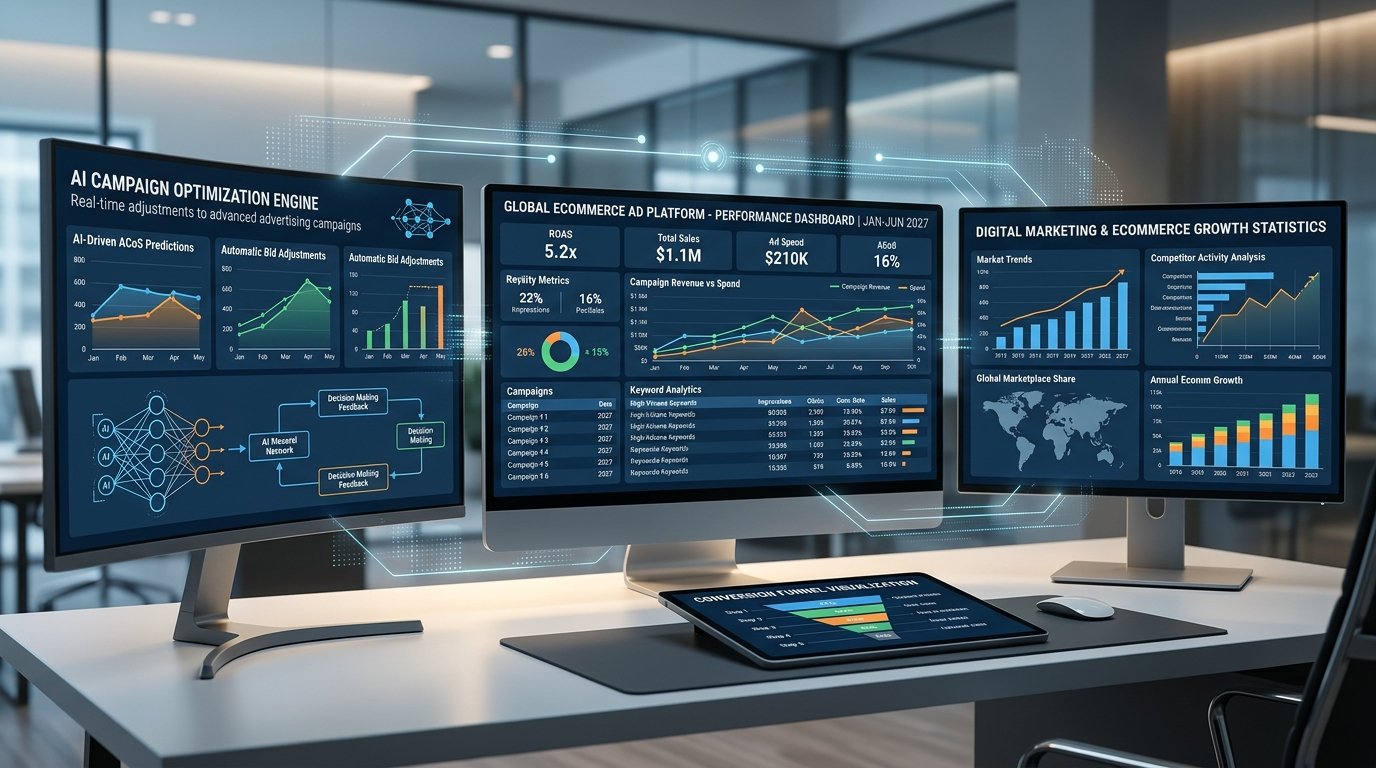
What This Means for Your Strategy
For sellers already building genuine brands, this trend represents opportunity — the commoditized competition that once crowded your category is becoming less viable, and the barriers to entry for new competitors are rising.
For sellers still operating on pure commodity models, 2027 is an important inflection point. The investment required to transition from commodity to brand — in product development, branding, photography, content, and marketing — is real, but it is significantly less than the cost of continuing to compete as a commodity seller in a market where that model is becoming progressively more difficult.
Common Mistakes Sellers Make When Preparing for Amazon Changes
Understanding trends is one thing. Responding to them correctly is another. Here are the mistakes sellers most commonly make when facing Amazon’s evolution.
Chasing trends without auditing their foundation first. Every trend above — video, sustainability, brand building, international expansion — requires a strong foundation to build on. Sellers who pursue TikTok integration or international expansion before their core listing quality, PPC efficiency, and account health are solid consistently underperform compared to sellers who strengthen their foundation first.
Treating every trend as equally relevant to their business. Not all of the trends in this guide apply equally to every category, every product type, or every stage of business development. A seller with one product doing $8,000 per month needs to prioritize very differently than a brand with a 40-product catalog doing $500,000 per month. Context determines priority.
Reacting to changes rather than anticipating them. The sellers who win on Amazon in 2027 are the ones who started preparing in 2025 and 2026. Brand Registry enrollment, trademark protection, video content production, and international readiness all take time to execute correctly. Starting these preparations after they become urgent is always more expensive and less effective than starting them ahead of the curve.
Ignoring the efficiency imperative in advertising. Increasing ad spend in response to rising costs without addressing underlying efficiency is one of the most common and most costly mistakes in Amazon advertising. Before increasing any budget, audit your conversion rate, your negative keyword coverage, and your campaign structure to ensure additional spend has somewhere efficient to go.
Expert Tips for Staying Ahead on Amazon in 2027
Prioritize listing quality as your primary competitive moat. In an environment where algorithm changes, advertising costs, and competitive dynamics all shift regularly, a listing that genuinely converts visitors into buyers more effectively than alternatives is the most durable competitive advantage available.
Build your brand beyond Amazon. An Amazon business that exists entirely within Amazon’s ecosystem is vulnerable to every platform change, policy update, and algorithm shift. Building brand presence through social media, email, and direct content creates resilience that Amazon-only businesses do not have.
Invest in your data infrastructure now. Amazon Attribution, Brand Analytics, and proper conversion tracking across every channel give you the data needed to make smart decisions as conditions change. Sellers without good data are forced to guess. Sellers with good data can adapt confidently.
Work with specialists who live in the Amazon ecosystem daily. The complexity of staying ahead on Amazon in 2027 — across advertising, listing optimization, account health, brand building, and now social commerce integration — is genuinely beyond what most sellers can manage effectively on their own. Partnering with an experienced amazon account management agency like Bizistech is increasingly the difference between sellers who adapt successfully and those who fall behind.
Frequently Asked Questions About Amazon Trends 2027
What will Amazon change most in 2027?
The most significant changes in 2027 are expected in AI-powered search and product discovery, advertising sophistication and cost, and the continued shift toward brand-driven versus commodity selling models. Amazon’s platform is rewarding genuine brand equity and penalizing undifferentiated products more aggressively than at any previous point.
Will Amazon PPC costs keep rising in 2027?
Based on current trends, yes — average cost-per-click rates across most categories are expected to continue rising in 2027 as more sellers invest in advertising and competition for premium placements intensifies. The appropriate response is improving advertising efficiency rather than simply increasing spend.
Is private label still worth starting on Amazon in 2027?
Private label can still be viable in 2027, but the definition of what makes it viable has changed. Generic private label competing purely on price is increasingly difficult. Private label built around a genuine differentiation — a real product improvement, a specific underserved audience, or a coherent brand identity — can still build a profitable business, but requires more upfront investment and strategic thinking than was necessary in earlier years.
How important is video for Amazon sellers in 2027?
Video has shifted from a differentiator to increasingly a baseline requirement in competitive categories. Listings with video in the gallery convert at meaningfully higher rates, and Sponsored Brands video campaigns consistently outperform static image alternatives in click-through rate and brand recall.
What is Amazon doing with AI in 2027?
Amazon is applying AI across multiple aspects of its platform — search result ranking, product recommendations, inventory positioning, fraud detection, and advertising optimization. The most seller-relevant AI development is in search, where semantic understanding is increasingly allowing Amazon to match products to shopper intent based on meaning rather than just keyword matching.
Should I expand to international Amazon markets in 2027?
For brands already succeeding on their primary marketplace, international expansion to lower-competition markets like Amazon.ae or specific European marketplaces represents a genuine growth opportunity. However, international expansion requires market-specific listing localization, keyword research, and compliance work — it is not simply a matter of enabling additional marketplaces in Seller Central.
How does sustainability affect Amazon rankings?
Sustainability certifications recognized by Amazon’s Climate Pledge Friendly program do not appear to be a direct ranking signal, but they do improve conversion rate — and conversion rate is a significant ranking signal. Products with sustainability badges also benefit from specific filtering options that allow environmentally conscious shoppers to find them more easily.

What does Amazon’s healthcare expansion mean for sellers?
Amazon Pharmacy and Amazon’s broader healthcare expansion primarily affects sellers in health and wellness adjacent categories. The main implication is increased consumer comfort with purchasing health-related products through Amazon — which expands the addressable market for legitimate sellers in these categories while also increasing scrutiny of compliance and quality claims.
How is TikTok changing Amazon selling?
The Amazon-TikTok integration is creating a new discovery-to-purchase pathway where content on TikTok drives direct Amazon purchases. Sellers who establish creator relationships and attribute TikTok-sourced traffic through Amazon Attribution are finding measurable incremental sales from the channel — particularly for visually demonstrable products.
What should small Amazon sellers focus on in 2027?
Small sellers should prioritize: strengthening core listing quality, ensuring Brand Registry enrollment with proper trademark protection, building efficiency in their advertising rather than simply increasing spend, and establishing at least minimal presence on one social platform to reduce total dependence on Amazon’s internal traffic. These fundamentals provide more resilience against platform changes than any single trending tactic.
Final Takeaway — What to Do Now
Amazon in 2027 rewards sellers who think like brand builders, act like data analysts, and plan like strategists. The ten trends in this guide — AI, advertising expansion, video, brand protection, category expansion, advertising efficiency, sustainability, social commerce, internationalization, and the end of generic private label — all point in the same direction: the bar for what it takes to build a successful Amazon business is rising, and it will continue rising.
The sellers who will look back on 2027 as a breakthrough year are the ones taking action now — enrolling in Brand Registry, tightening their advertising structures, investing in listing quality and video content, building brand presence beyond Amazon’s walls, and partnering with experienced teams who can execute across all of these dimensions simultaneously.
At Bizistech, this is exactly what we help our clients do — not just managing the day-to-day mechanics of their Amazon accounts, but building the strategic foundation that makes those accounts genuinely valuable and defensible over time.
Ready to prepare your Amazon business for 2027? Get in touch with Bizistech today for a free account audit and a clear strategy built around where the platform is heading — not just where it has been.
Bizistech — Amazon Strategy for 2027 and Beyond.
