
Amazon advertising has grown into one of the most competitive and technical parts of running a business on the marketplace. Bidding auctions that once rewarded simple keyword targeting are now shaped by machine learning, AI-driven shopping assistants like Rufus, and an expanding set of ad placements across search results, product pages, and Amazon-owned streaming inventory. For sellers and brand owners, that shift has made an amazon ppc management service less of a luxury and more of an operational necessity.
This guide is written for small business owners, in-house marketing managers, and agency evaluators who want a clear, practical understanding of what amazon ppc management actually involves in 2027 — what it costs, what a competent service provider does day to day, and how to tell a strong partner from a mediocre one before signing a contract. It reflects how PPC management is genuinely practiced across the industry rather than repeating generic marketing claims, and it’s equally useful whether you’re hiring your first agency or reassessing an existing one.
Quick Answer
An amazon ppc management service handles the ongoing strategy, bid management, keyword research, campaign structuring, and reporting behind a seller’s Sponsored Products, Sponsored Brands, Sponsored Display, and Sponsored TV campaigns. In 2027, pricing typically falls into three models — a percentage of ad spend (commonly in the 10–20% range), a flat monthly fee, or a hybrid retainer-plus-performance structure — with cost usually driven more by account complexity and catalog size than by ad spend alone. The right choice depends on your monthly ad budget, catalog size, and whether you need strategic decision-making or just execution support.
What Is an Amazon PPC Management Service?
An amazon ppc management service is the ongoing, hands-on management of a seller or brand’s paid advertising presence on Amazon. It goes well beyond simply turning campaigns on and letting Amazon’s automatic settings run. In practice, it covers:
- Campaign structure and architecture — organizing products into logical ad groups so performance data stays clean and actionable
- Keyword and product-target research — finding the search terms and competitor ASINs worth bidding on
- Bid management — adjusting bids up or down based on performance, often multiple times a week
- Negative keyword and negative target mining — cutting spend on searches that don’t convert
- Budget pacing — making sure campaigns don’t run out of budget mid-day on high-traffic dates, or overspend on low-value hours
- Placement and dayparting optimization — shifting bids by placement (top of search, product pages, rest of search) and by time of day
- Creative management for Sponsored Brands — headline copy, video assets, and Store spotlight ads
- Reporting and analysis — translating raw campaign data into decisions, not just dashboards
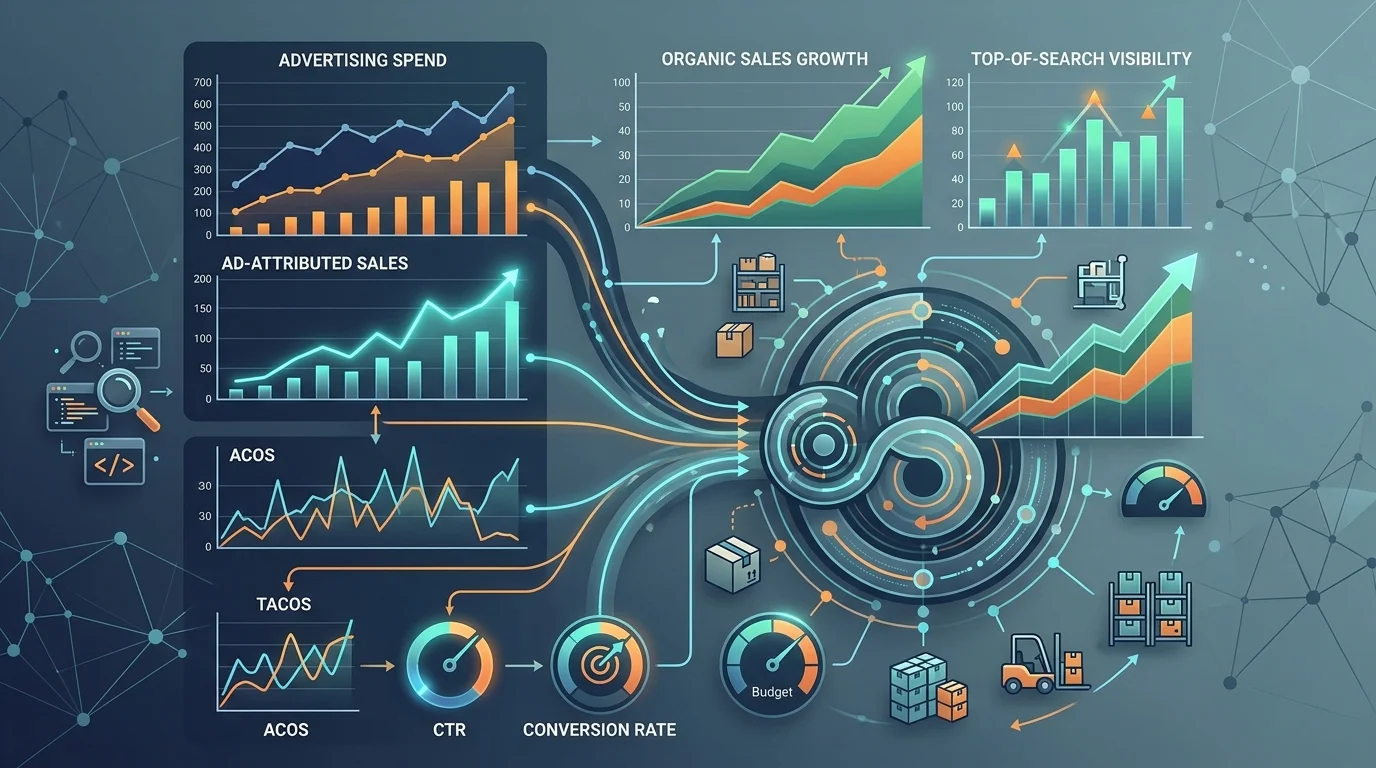
A useful way to think about it: organic ranking on Amazon is heavily influenced by sales velocity, and PPC is one of the main levers used to generate that velocity for new or underperforming products. A well-run PPC account isn’t just buying visibility — it’s feeding the organic ranking flywheel.
Why Amazon PPC Management Matters More in 2027
A few structural shifts explain why doing this well — and doing it consistently — has become harder than it was even a couple of years ago.
Rising competition and CPCs
As more brands launch on Amazon, the auction for popular keywords gets more crowded, and cost-per-click tends to climb over time in competitive categories. Static, “set once” bidding strategies lose efficiency faster than they used to, which is why near-continuous bid adjustment has become table stakes rather than a value-add.
AI-driven shopping changes how customers search
Amazon’s AI shopping assistant, Rufus, and similar generative shopping features change how customers phrase queries and how products get surfaced to them. Search behavior is shifting toward more conversational, longer queries, which affects which keywords and targets are actually worth bidding on. PPC strategy that hasn’t adapted its keyword research approach to this shift is working with a narrower, more stagnant picture of demand than the account actually faces.
Expanding ad inventory
Sponsored TV placements — including inventory on Fire TV — and broader off-Amazon retail media placements through Amazon DSP have widened the surface area a PPC strategy needs to cover. Managing that well requires familiarity with more ad types than Sponsored Products alone, which is part of why many brands find it harder to keep pace in-house.

Defensive advertising is no longer optional
Competitors bidding on your own brand terms, or on your best-selling ASINs, is common. A management service isn’t only about acquiring new-to-brand customers — it’s also about protecting the search real estate around your own listings.
The Main Types of Amazon PPC Campaigns
| Campaign type | What it does | Typical use case |
| Sponsored Products | Ads for individual product listings in search results and on product pages | Core driver of sales and organic ranking velocity |
| Sponsored Brands | Headline ads, video, and Store-linked ads featuring multiple products or a brand logo | Brand awareness and multi-product discovery |
| Sponsored Display | Audience- and product-targeted ads on and off Amazon, including retargeting | Re-engaging past viewers and conquesting competitor pages |
| Sponsored TV | Video ad placements across Fire TV and other streaming inventory | Upper-funnel brand awareness for larger budgets |
Most accounts start with Sponsored Products, since it has the most direct line to sales and organic rank. Sponsored Brands and Sponsored Display are typically layered in once the core Sponsored Products campaigns are stable, and Sponsored TV tends to make sense only once ad budgets are large enough to justify the higher production and spend requirements.
What a Professional Amazon PPC Management Service Actually Does
The difference between a service that’s genuinely earning its fee and one that’s coasting on automatic campaigns usually shows up in the weekly and monthly workflow, not in the pitch deck. In practice, that workflow includes:
- Auditing the existing account structure and identifying wasted spend before making any changes
- Rebuilding or refining campaign architecture — commonly separating manual and automatic campaigns, and isolating high-intent keywords into their own tightly controlled ad groups
- Mining search term reports weekly to find new keyword opportunities and to add negative keywords for irrelevant traffic
- Adjusting bids based on a defined strategy — whether rule-based thresholds or algorithmic bid tools — rather than gut feel
- Reallocating budget toward what’s working and away from what isn’t, especially around inventory constraints
- Testing Sponsored Brands creative and headline variations where relevant
- Producing reporting that ties spend to ACOS, TACOS, and business-level outcomes, not just impressions and clicks
A point that’s often skipped in marketing copy: PPC performance is capped by the quality of the underlying listing. A management service that only touches bids and keywords, while ignoring a listing with a weak main image or a poor conversion rate, will struggle to hit efficiency targets no matter how well the campaigns themselves are run. Strong providers flag listing-level issues even when listing optimization isn’t formally part of their scope.
In-House vs. Freelancer vs. Agency: Which Fits Your Business?
| Option | Strengths | Trade-offs |
| In-house hire | Full context on the brand, no handoff friction, dedicated attention | Single point of failure, hiring/training cost, may lack breadth across ad types |
| Freelancer | Lower cost, flexible, often highly specialized | Limited bandwidth, no backup coverage, variable tooling access |
| Agency | Broader expertise across campaign types, established processes, tooling access | Less individual attention on very small accounts, onboarding time |
As a rough guide: very small accounts with a handful of SKUs and a modest budget often do fine with a skilled freelancer or a lean in-house owner. Brands scaling across multiple ad types, multiple marketplaces, or a larger catalog tend to get more consistent results from an agency simply because the workload outgrows what one generalist can keep on top of. Larger, well-funded brands sometimes combine both — an in-house strategist working alongside an agency’s execution team.
How Much Does Amazon PPC Management Cost in 2027?
Pricing in this space generally falls into three structures:
Percentage of ad spend
Commonly somewhere in the 10–20% of monthly ad spend range, though the exact figure varies by provider and account complexity. This model scales naturally with the account, but it can become expensive at high spend levels, and it can create a subtle incentive misalignment if a provider isn’t disciplined — more spend isn’t automatically more efficient.
Flat monthly fee
A fixed retainer regardless of spend level. This tends to suit accounts with either very high ad spend, where a percentage fee would be disproportionate, or very low ad spend, where a percentage fee would be too small to justify the work involved.
Hybrid retainer plus performance
A smaller base retainer combined with a performance component tied to efficiency metrics like ACOS or TACOS improvement. This is less common but appeals to brands that want the provider’s incentives more directly tied to outcomes rather than spend volume.
Beyond the fee structure itself, it’s worth clarifying upfront whether there’s a setup fee, what the minimum contract term is, and whether the management fee is charged on top of ad spend or is meant to be inclusive of it — ambiguity here is a common source of billing disputes later.
What to Look for in an Amazon PPC Management Service
- Clear separation between management fee and actual ad spend in every proposal and invoice
- A defined process for keyword research, bid strategy, and reporting cadence — not just “we’ll optimize your campaigns”
- Willingness to share a sample report or dashboard before you sign
- Realistic language about outcomes — be cautious of guaranteed ACOS numbers or promised sales multiples, since Amazon Ads outcomes can’t be guaranteed by any provider
- Familiarity with Amazon Ads API-based or algorithmic bid tools, in addition to manual management, for accounts with meaningful spend
- A dedicated point of contact rather than a rotating pool of account managers
- Reasonable contract terms — long lock-in periods with no performance review checkpoints are a caution flag
- Some working knowledge of listing optimization, since PPC efficiency is tied to conversion rate on the page the ad sends traffic to
Common Amazon PPC Mistakes Brands Still Make
- Treating ACOS as the only metric that matters, while ignoring TACOS and overall profitability
- Chasing top-of-search placement with aggressive bids without checking whether the resulting sales are actually profitable
- Letting search term reports go unreviewed, so irrelevant clicks keep draining budget
- Leaving campaigns running unchanged during stockouts, wasting spend on ads for products that can’t be purchased
- Setting PPC budgets without checking them against inventory and FBA capacity, leading to stockouts driven partly by the ads’ own success
- Treating a management service as “set and forget” rather than reviewing reporting and asking questions
Amazon PPC Trends Shaping 2027
A few developments are worth watching as they continue to mature:
- Algorithmic and AI-assisted bidding tools are becoming more capable, shifting the value a management service provides from manual bid adjustments toward strategy, guardrails, and interpretation of automated decisions
- Rufus and generative shopping surfaces are changing keyword relevance signals, making broader, more conversational keyword research more important than narrow exact-match lists alone
- Retail media growth through Amazon DSP is extending advertising reach beyond Amazon’s own properties, which changes how upper-funnel budget gets allocated
- Brand Store quality and video content are playing a larger role, since more ad placements link through to Store pages rather than standalone product listings
- Privacy and first-party data shifts are gradually changing how retargeting and audience-based Sponsored Display campaigns are built
When You Might Not Need to Outsource PPC
Outsourcing isn’t automatically the right call for every seller. It tends to make less sense when:
- Ad spend is minimal — a few hundred dollars a month rarely justifies most providers’ minimum engagement, whether fee-based or percentage-based
- The catalog is a single product or a very small handful of SKUs, which a motivated owner can reasonably manage manually
- There’s already an in-house team member with genuine Amazon Ads experience and the bandwidth to stay on top of it weekly
In these cases, investing time in learning Amazon Ads directly — or bringing in a service for a one-time audit and setup rather than ongoing management — is often the more sensible starting point.
The KPIs That Actually Matter
| Metric | What it measures | Why it matters |
| ACOS | Ad spend as a percentage of ad-attributed sales | Shows efficiency of a specific campaign, but not the full profitability picture |
| TACOS | Total ad spend as a percentage of total sales (ad + organic) | Shows whether PPC is genuinely growing the business, not just cannibalizing organic sales |
| CTR | Click-through rate on ad impressions | Signals whether the ad creative and targeting are relevant to the audience seeing it |
| CVR | Conversion rate on ad clicks | Reflects listing quality as much as campaign quality |
| Top-of-search impression share | How often your ads win the most visible placement for relevant terms | Indicates competitive positioning on priority keywords |
A well-run account tracks ACOS and TACOS together, not ACOS alone — a campaign with a high ACOS on a brand-new product launch can still be a good investment if it’s driving organic rank movement that lowers overall customer acquisition cost over time.
FAQs
How much does Amazon PPC management cost in 2027?
Most providers charge either a percentage of ad spend (commonly 10–20%), a flat monthly fee, or a hybrid of both. The right structure depends on your monthly ad spend and account complexity — ask for a clear breakdown before signing.
What’s a good ACOS for Amazon PPC?
There’s no universal “good” number — it depends on your product margins and whether the campaign is meant to defend, acquire, or launch. A more useful practice is tracking ACOS alongside TACOS and overall profitability rather than chasing a single target in isolation.
Do I need Sponsored Brands and Sponsored Display, or just Sponsored Products?
Most accounts start with Sponsored Products since it has the most direct impact on sales and organic rank, then layer in Sponsored Brands and Sponsored Display once those core campaigns are stable and budget allows.
How long before Amazon PPC results show up?
Early signals like impressions and click data appear within days, but meaningful optimization typically needs several weeks of data to make confident bid and keyword decisions, since Amazon’s algorithms need time to learn from performance.
Can I manage Amazon PPC in-house before hiring an agency?
Yes — for small catalogs and modest budgets, in-house management is often reasonable, especially with a team member willing to learn the platform properly. Outsourcing tends to make more sense as spend, catalog size, or ad-type complexity grows.
What’s the difference between ACOS and TACOS?
ACOS measures ad spend against ad-attributed sales only. TACOS measures total ad spend against total sales, including organic. TACOS gives a clearer view of whether PPC is genuinely growing the business rather than just shifting sales that would have happened anyway.
Do PPC management services control my ad spend budget, or just campaign settings?
This varies by provider and should be clarified in the contract. Some manage bids and structure while you set the overall budget; others recommend and adjust budget levels directly. Get this in writing before starting.
What happens if I stop paying for PPC management?
Campaigns generally keep running on whatever settings were last configured, but without ongoing bid adjustments and search term review, efficiency typically drifts over time as market conditions change.
Is a percentage-of-spend fee always more expensive than a flat fee?
Not necessarily — it depends on your spend level. Percentage fees can be cheaper at low spend and more expensive at high spend compared to an equivalent flat fee, which is why it’s worth comparing both structures against your actual budget.
How is AI changing Amazon PPC strategy in 2027?
Algorithmic bidding tools are handling more of the routine bid adjustments, while Amazon’s AI shopping features like Rufus are shifting search behavior toward more conversational queries — both trends push the value of a management service toward strategy and keyword breadth rather than manual bid-tweaking alone.
Final Takeaway
A strong amazon ppc management service in 2027 is judged less by the ad types it can technically run and more by whether it treats PPC as one connected system — bids, keywords, budget, listing quality, and inventory all feeding into the same outcome, rather than isolated levers pulled in a vacuum. Before hiring or renewing with a provider, get clarity on their pricing structure, their process, and how they define success beyond ACOS alone. If you’re currently unsure whether your account is being managed well, a straightforward first step is requesting an outside audit of the current campaign structure and spend efficiency before committing to any long-term contract.
